
What Is A Hydraulic Cylinder and How to Avoid Costly Breakdowns
A hydraulic cylinder is a mechanical actuator that converts fluid pressure into powerful, linear force to push, pull, or lift heavy industrial loads. By understanding its internal mechanics, common failure modes, and proactive maintenance strategies, you can prevent sudden equipment failures and maximize operational efficiency. Let us dive deep into the specific engineering questions that determine the lifespan of your hydraulic machinery.
What Is A Hydraulic Cylinder Core Function?
A hydraulic cylinder operates as the muscle of your heavy machinery, utilizing pressurized fluid to generate immense linear force. When high-pressure oil enters the cylinder barrel, it pushes against the internal piston, which forces the chrome-plated piston rod to extend outward. This simple yet highly efficient mechanical transfer allows automated systems to lift components weighing multiple tons with pinpoint precision.
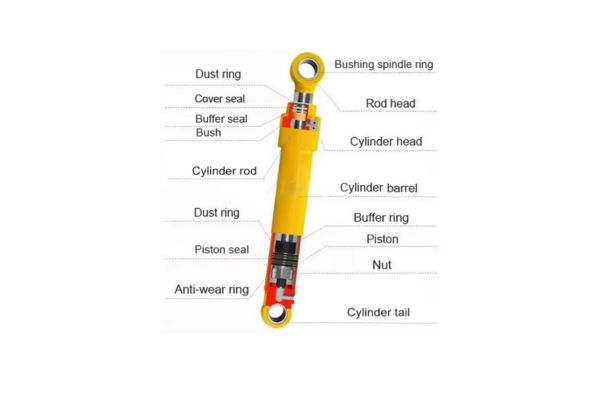
- High-pressure fluid enters a sealed steel chamber.
- The internal piston moves linearly along the seamless barrel.
- Kinetic energy is transferred directly to your external mechanical load.
The ratio between fluid volume and surface area determines your system’s overall speed and lifting capacity. When you match the correct bore size to your system pressure, your equipment operates smoothly without overheating.
| Operating Parameter | Industrial Standard | Maintenance Impact |
| Standard Fluid Pressure | 2,000 to 3,000 PSI | High pressure increases seal wear rates |
| Linear Stroke Velocity | 0.1 to 0.5 meters/sec | Excess speed creates destructive internal friction |
| Fluid Temperature Range | -20°C to 80°C | Temperature spikes accelerate oil degradation |
Why Do Hydraulic Cylinder Seals Fail Prematurely?
Fluid leaks around the rod gland are the most visible indicator that your internal seals have degraded. Seals fail primarily due to extreme heat, structural misalignment, or abrasive particulate matter entering the cylinder assembly. When particulate debris bypasses the outer wiper seal, it scores the delicate polyurethane material, creating paths for oil to escape.
You might think your seals are fine just because there is no oil on the floor.
- Extreme system heat hardens flexible rubber sealing elements.
- Fine abrasive dust creates micro-tears along the sealing lip.
- Sideloading forces distort the rod, crushing one side of the seal ring.
This is where hidden damage begins to destroy your operational efficiency.
Once a seal loses its tight interference fit, internal fluid bypass allows oil to flow backward across the piston head. This hidden internal leakage dramatically reduces your machine’s holding power, causing heavy loads to drift dangerously during operation.
| Seal Material Type | Maximum Temperature | Common Failure Root Cause |
| Polyurethane (PU) | 100°C | Chemical degradation from incompatible fluids |
| Nitrile Rubber (NBR) | 120°C | Permanent hardening and cracking from age |
| Fluorocarbon (Viton) | 200°C | Physical tearing caused by structural sideloading |
How Can You Prevent Piston Rod Scoring?
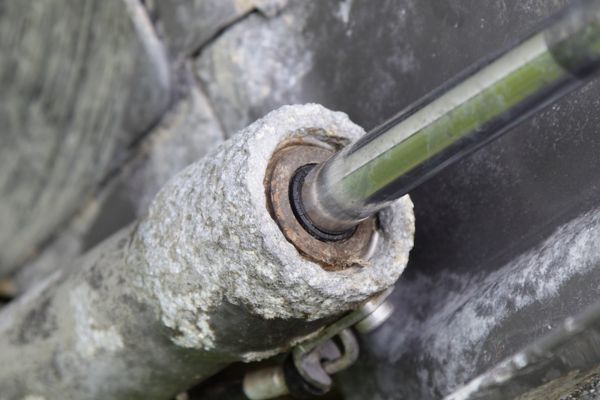
The piston rod is exposed to harsh environmental elements every single time the hydraulic cylinder extends to perform a stroke. If your operating environment contains fly ash, metal shavings, or corrosive moisture, these contaminants will stick to the exposed metal surface. As the rod retracts, it carries those sharp particles directly through the rod gland, scoring both the metal surface and the internal seals.
It gets worse if your rods are not regularly inspected.
- Airborne abrasive particles stick to the exposed grease film.
- Minor surface scratches develop into deep, destructive longitudinal grooves.
- Corrosive moisture pits the outer chrome layer, destroying the smooth finish.
Protecting the moving metal surfaces should be your top maintenance priority.
Installing heavy-duty rod boots or protective bellows keeps abrasive grit away from the precision-ground chrome surface. Additionally, choosing cylinders with a thicker chrome plating layer ensures the rod can withstand accidental impacts without pitting or flaking.
| Rod Protection Method | Best Application Environment | Primary Maintenance Benefit |
| Protective Fabric Bellows | High-dust manufacturing plants | Prevents abrasive grit from reaching the gland |
| Metallic Scraper Rings | Scrap yards and welding bays | Removes hardened debris and slag from the rod |
| Increased Chrome Layer | Highly corrosive chemical processing | Prevents moisture from pitting the underlying steel |
What Causes A Hydraulic Cylinder To Drift?
Cylinder drift occurs when an extended cylinder slowly retracts on its own while holding a heavy load under static conditions. This movement indicates that fluid is slowly escaping from the pressurized side of the cylinder chamber to the unpressurized side. Drift is typically caused by worn piston seals, or it can point to a leaking external control valve.

Think about how much production time is lost to constant manual adjustments.
- Worn piston rings allow high-pressure oil to seep into the return line.
- Internal directional control valves fail to seal the fluid ports completely.
- Trapped air bubbles compress inside the fluid, causing erratic rod movement.
Isolating the physical root cause requires a systematic pressure test.
By blocking the fluid return lines while the cylinder is under load, you can see if the rod continues to creep downward. If the drift stops during this test, your issue lies within the control valves rather than the cylinder body.
| Failure Indicator | Probable Root Cause | Recommended Corrective Action |
| Steady Rod Creep | Internal piston seal bypass | Replace the internal piston seals and wear rings |
| Rapid Sudden Drift | Broken control valve spring | Inspect and rebuild the directional control valve |
| Spongy Rod Movement | Trapped air inside the barrel | Bleed the hydraulic system through the end-port valves |
How Do You Measure Cylinder Bore Accurately?
To find a correct replacement part, you must know how to measure the bore of a hydraulic cylinder accurately before placing an order. The bore diameter refers specifically to the inside diameter of the main cylinder barrel, not the outside diameter of the steel tube. Measuring the outside tube instead of the inner bore will result in ordering a replacement cylinder that is far too small for your machinery.
Getting this single measurement wrong can halt your entire repair project.
- Remove the cylinder head to gain clear access to the inner barrel.
- Insert an internal dial caliper deep inside the polished steel bore.
- Measure across the exact center point to find the true inside diameter.
A precise measurement ensures your system maintains its original engineering specifications.
Using a digital inside micrometer allows you to check for structural ovality or uneven wear along the internal barrel walls. If the bore measurements vary by more than a few thousandths of an inch, the barrel must be honed or replaced entirely.
| Component Part | Correct Measurement Tool | Critical Dimensional Target |
| Inner Barrel Bore | Inside micrometer / Dial caliper | True inside diameter of the polished tube |
| Piston Rod Diameter | Outside digital micrometer | Thickness of the chrome-plated moving rod |
| Total Stroke Length | Standard industrial tape measure | Distance between fully retracted and fully extended states |
Why Is Hydraulic Oil Contamination So Dangerous?
Microscopic particles suspended inside your hydraulic fluid act like liquid sandpaper, grinding away at internal metal tolerances over time. Contamination is the leading cause of premature failure in high-pressure fluid power systems. When these tiny metal flakes and dirt particles circulate through the cylinder, they quickly destroy the polished finishes of your internal components.
You cannot rely on your eyes to check for fluid cleanliness.
- Microscopic silt bypasses standard coarse fluid intake strainers.
- Particle accumulation scores the internal walls of the cylinder barrel.
- Silt build-up jams the tight tolerances inside directional control valves.
Maintaining strict fluid filtration standards preserves your system’s overall operating life.
Implementing a regular oil analysis program allows your team to catch elevated particulate counts before component scoring begins. Upgrading to high-efficiency beta-rated glass fiber filters ensures that even sub-micron particles are trapped before they reach your cylinder.
| Fluid Cleanliness Class | Target Particle Size | Recommended Filtration System |
| ISO 16/13 / Clean | 4 to 6 microns | High-efficiency 3-micron glass fiber filters |
| ISO 19/15 / Marginal | 6 to 14 microns | Standard 10-micron cellulose paper filters |
| ISO 22/18 / Critical | Over 14 microns | Coarse system strainers / Immediate oil flushing |
Keeping your hydraulic fluid perfectly clean protects your internal cylinder components from destructive abrasive wear.
What Are The Benefits Of Single Acting Design?
A single acting hydraulic cylinder relies on pressurized fluid to extend the rod in one direction, using an internal spring or external force to retract it. This design uses fewer internal seals and only a single fluid port, making it highly reliable and inexpensive to maintain. These units are perfect for straightforward industrial applications that only require force in a single direction, such as lifting platforms.
You will find this simplified layout saves considerable space in tight machinery setups.
- Pressurized fluid enters through a single intake port to extend the rod.
- Mechanical springs or gravity compress the rod back into the barrel.
- Fewer moving parts drastically lower your long-term maintenance costs.
Simplicity translates directly into operational reliability on the factory floor.
Because there is no fluid pressure on the return stroke, these cylinders run cool and rarely experience internal bypass issues. For vertical lifting tasks where gravity handles the retraction, this design provides a robust, cost-effective alternative to complex double-acting units.
| Design Advantage | Industrial Application | Cost Impact |
| Fewer Sealing Elements | Automated lifting jacks | Lower repair kit costs and faster rebuild times |
| Single Fluid Line | Mobile material handling | Reduced plumbing complexity and lower hose costs |
| Mechanical Spring Return | Emergency clamping fixtures | Failsafe mechanical retraction during power losses |
When Should You Choose A Tie Rod Cylinder?
A tie rod hydraulic cylinder uses high-strength threaded steel rods to secure the end caps firmly to the main cylinder barrel structure. This classic configuration is widely used across industrial manufacturing plants because it can be disassembled easily using standard hand tools. This makes servicing internal components simple right on the factory floor without requiring specialized hydraulic presses.
You can save hours of maintenance labor by choosing the right structural configuration.
- Threaded tie rods absorb intense structural tension during peak pressure cycles.
- Standardized mounting dimensions allow for quick drop-in machine replacements.
- The modular design allows you to service seals without removing the entire barrel.
Easy serviceability makes these units ideal for continuous industrial production lines.
Because the entire unit can be taken apart by removing a few standard nuts, your team can replace worn seals and get the machine back online within an hour. This accessibility eliminates long production delays when an internal seal eventually wears out.
| Structural Feature | Maintenance Advantage | Common Machinery Use |
| Threaded Exterior Rods | Even tension distribution prevents barrel warping | Plastics injection molding machines |
| Removable End Caps | Quick access to internal piston components | Industrial stamping and pressing lines |
| NFPA Standard Mounts | Universal compatibility with existing machinery | Factory automation and assembly conveyor lines |
How Does Sideloading Destroy Industrial Cylinders?
Sideloading occurs when an external mechanical force pushes against the side of the piston rod instead of traveling perfectly straight along the cylinder axis. This lateral force pushes the internal piston unevenly against the inner walls of the steel barrel. This uneven pressure causes rapid, localized wear on the guide bushings, piston wear bands, and primary rod seals.
You must fix mechanical alignment issues before they ruin your equipment.
- Lateral external forces push the rod out of its center axis line.
- Internal metal guide wear bands crush under intense localized pressure.
- The piston rod rubs hard against the gland, causing metal-to-metal contact.
Correcting your mechanical connections prevents catastrophic structural failure.
Installing spherical clevis eyes or self-aligning mounts allows the cylinder body to pivot slightly to absorb shifting lateral angles during its stroke. This small design adjustment keeps the internal forces tracking perfectly straight down the center of the barrel.
| Alignment Component | Function | Preventative Benefit |
| Spherical Clevis Eye | Allows multi-directional pivoting at connection points | Eliminates bending stress on the piston rod |
| Internal Wear Rings | Absorbs minor lateral forces inside the barrel | Prevents the piston from scratching the inner tube |
| Pivot Pin Mounts | Allows smooth single-axis movement during extension | Eliminates torsional twisting forces along the barrel |
What Maintenance Routine Extends Cylinder Lifespan?
A proactive maintenance routine is your strongest defense against sudden hydraulic breakdowns on the production floor. Waiting for an oil leak to appear before checking your fluid systems means you are already losing money to component wear. A simple weekly inspection routine catches minor issues—like loose fittings or slight rod discoloration—before they turn into major failures.

It takes very little time to set up a comprehensive monitoring schedule.
- Check fluid clarity and temperature daily during peak operating shifts.
- Wipe exposed piston rods clean weekly to inspect for micro-cracks.
- Check the torque on all structural mounting bolts every single month.
Consistent inspection keeps your automated machinery running smoothly year after year.
Documenting your system baseline pressures helps your maintenance team spot slow performance declines before a valve or seal fails completely. Taking care of your fluid system ensures your machinery delivers reliable, full-rated power every time you start the line.
| Inspection Interval | Target Component | Maintenance Objective |
| Daily Shift Check | Gland seal area | Look for trace oil films indicating early seal wear |
| Weekly Maintenance | Exposed piston rod | Check for surface scoring or signs of sideloading |
| Monthly Audit | Main mounting pins | Inspect for physical distortion or mounting play |
Conclusion
Preventing unexpected breakdowns requires a deep understanding of what a hydraulic cylinder is and how it responds to real-world industrial stress. By monitoring seal health, maintaining strict fluid cleanliness, and checking mechanical alignment, you protect your production lines from costly downtime. Taking these proactive steps ensures your equipment delivers consistent, reliable force month after month.
At Topa, we build heavy-duty, high-precision fluid power components engineered to withstand the harshest industrial operating environments. Whether your production lines require custom double-acting configurations or rugged single-acting designs, our engineering team delivers the exact performance specifications your machinery demands. Contact us today to optimize your hydraulic systems and eliminate unexpected production downtime.
Frequently Asked Questions
Can I replace a single hydraulic cylinder seal without rebuilding the whole unit?
No, it is highly recommended to replace all internal seals at the same time using a complete rebuild kit. If one seal has worn out from operation, the other internal rings have experienced the same wear and will likely fail shortly afterward.
What is the best way to remove trapped air from a newly installed cylinder?
The best approach is to cycle the cylinder through its full extension and retraction stroke multiple times under zero mechanical load. Trapped air naturally rises to the top of the oil column and escapes back into the fluid reservoir through the return lines.
How do I know if internal fluid bypass is occurring inside my cylinder barrel?
You can detect internal bypass by extending the cylinder completely and tracking if the rod creeps backward while the control valves are closed. Another reliable method is to touch the cylinder barrel near the piston head after it has been running under heavy load for an hour.
How often should I test the cleanliness of my hydraulic fluid supply?
You should conduct a formal fluid analysis every three to six months, depending on how many hours your production machinery runs. Facilities operating in high-dust environments or running continuous 24-hour production shifts require quarterly fluid testing to track microscopic particulate build-up.
Can I run standard industrial cylinders beyond their maximum rated operating pressure?
No, exceeding the maximum rated pressure can warp the steel barrel, snap the tie rods, or blow out the primary gland seals. Operating above engineering limits creates extreme mechanical stress that can lead to sudden, dangerous structural failures on your shop floor.