
Hydraulic Cylinders for OEM,
Replacement & Custom Projects
Topa supplies hydraulic cylinders for equipment manufacturers, repair companies, distributors, and replacement projects. Send drawings, old samples, or cylinder photos for fast matching.
Hydraulic Cylinder Product Range
Choose the right hydraulic cylinder type fast—each option below is designed for a specific duty cycle, mounting style, and working environment.

Double Acting Hydraulic Cylinders
For controlled extension and retraction when you need power in both directions.

Single Acting Hydraulic Cylinders
For push-only jobs where gravity or external force handles the return stroke.

Telescopic Hydraulic Cylinders
For long stroke travel when you have limited retracted installation length.

Tie Rod Hydraulic Cylinders
For industrial systems that need standardized sizes and easy field servicing.

Welded Hydraulic Cylinders
For mobile and heavy-duty equipment that runs in dirt, shock, and high cycle work.

Custom Hydraulic Cylinders
For OEM projects that require special dimensions, mounts, ports, or seal systems.
How to Match a Replacement Hydraulic Cylinder
Old cylinders can often be replaced if the key dimensions, mounting style, port details, and working conditions are confirmed before production. Send the information below to help Topa check fitment and reduce replacement mistakes.
To Quote or Match Your Cylinder, Please Send:
Pin-to-pin length
Stroke length
Bore size
Rod diameter
Mounting type
Port thread
Port position and direction
Working pressure
Machine model or application
Old cylinder photos or drawings
Key Dimensions to Confirm
Need to Replace an Old Hydraulic Cylinder?
Download the measurement sheet and send it with photos or drawings. Topa can help check replacement dimensions before quotation.
Common Hydraulic Cylinder Problems Customers Notice First
Many replacement problems do not start from the cylinder body itself. They often come from missing dimensions, wrong port direction, seal mismatch, side load, or unclear working conditions before production. These are the issues customers usually notice during installation or after short use.
“The new cylinder fits, but the hose angle is wrong.”
Possible cause: Port orientation was not confirmed before machining.
Result: Hose twisting, installation delay, rework cost, or early hose damage.
“The cylinder leaks again after short use.”
Possible cause: Seal material, groove design, rod scoring, contamination, or oil temperature mismatch.
Result: Repeat repair, machine downtime, oil loss, and customer complaints.
“The stroke is close, but the machine does not move correctly.”
Possible cause: Closed length, stroke, mounting geometry, or pin-to-pin size was not matched correctly.
Result: Limited movement, unsafe operation, repeated adjustment, or installation failure.
“The cylinder works, but it drifts under load.”
Possible cause: Internal leakage, worn piston seals, valve leakage, or pressure holding requirement was not checked.
Result: Unstable lifting, unsafe load holding, poor machine control, and repeat service calls.
How Topa Solves These Hydraulic Cylinder Problems
Many cylinder problems can be reduced before production if the right dimensions, port details, working conditions, and quality control points are confirmed early. Topa helps customers turn unclear replacement risks into clear production requirements.
Port or thread mismatch
The cylinder looks correct, but the hose, adapter, or port thread cannot connect during installation.
Port Verification Before Machining
Confirm BSPP, NPT, SAE, or metric thread, port direction, port position, and hose routing before production to reduce assembly mistakes.
Early seal leakage
The cylinder leaks again after short use, even though it was newly replaced or repaired.
Seal System Matching
Match seal material with working pressure, oil temperature, oil type, dust level, movement frequency, and duty cycle before assembly.
Rod scoring or surface damage
The piston rod gets scratched, corroded, or damaged quickly in outdoor or dirty working conditions.
Rod Surface Control
Control rod material, chrome thickness, surface finish, wiper structure, corrosion protection, and packing protection before shipment.
Cylinder drift under load
The machine cannot hold position, or the cylinder slowly moves under load after lifting.
Pressure Holding Check
Review piston seal design, internal leakage risk, working pressure, valve condition, load holding requirement, and test requirements.
Have a Cylinder Problem That Is Not Listed?
Send your cylinder photos, machine application, port details, and working conditions. Topa can help review the matching points before production.
Download Hydraulic Cylinder Engineering Resources
Use these practical documents to confirm cylinder dimensions, replacement details, OEM specifications, and application requirements before sending an inquiry.
Hydraulic Cylinder Measurement Checklist
For replacement matching and old cylinder confirmation. Use it to record pin-to-pin length, stroke, bore, rod diameter, mounting type, port thread, and port direction.
OEM Hydraulic Cylinder Specification Sheet
For bore, stroke, rod, mount, port, pressure, seal, material, surface treatment, working environment, and batch production requirements.
Hydraulic Cylinder Application Selection Guide
For construction, agriculture, trailer, material handling, and industrial projects. Use it to compare cylinder functions, working conditions, and application risks.
Applications & Industry Solutions
Pick the scenario that matches your equipment. Each solution highlights the typical load, environment, and configuration choices that prevent early failure.
 Construction
Excavators, Loaders, Earthmoving
Built for shock load, dust, and high-cycle operation on job sites.
- Welded design + stronger mounts for impact
- Rod protection + wiper strategy for dirt
 Agriculture
Tractors, Harvesters, Implements
Designed for mud, moisture, and frequent outdoor storage.
- Corrosion control for rod and barrel
- Mounting guidance to reduce misalignment
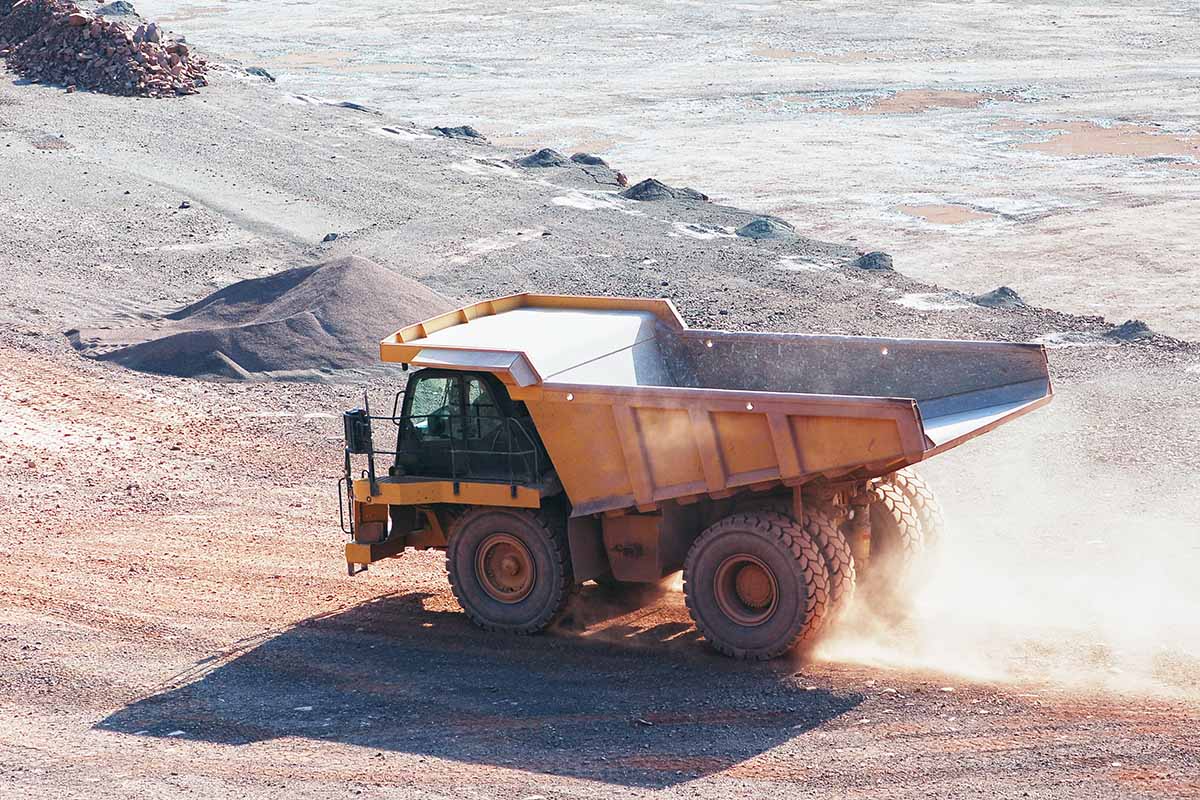 Mining
Dumpers, Crushers, Quarry Equipment
Focused on heavy loads, abrasion, and harsh contamination.
- Reinforced sealing + abrasion-resistant rod
- Cushioning to reduce end-of-stroke impact
 Industrial
Presses, Automation, Production Lines
Built for stable motion, repeat accuracy, and easy servicing.
- Tie-rod options for maintenance access
- Port orientation for clean hose routing
 Truck / Trailer
Tippers, Hoists, Tailgates
Optimized for lifting duty cycles and compact installation.
- Telescopic options for long stroke
- Stable lead time for fleet projects
 Handling
Forklifts, Stackers, Platforms
Designed for smooth control, safety, and stable performance.
- Seals matched to frequent start-stop cycles
- Cushioning to reduce end impact
Critical Components That Determine Cylinder Reliability
These are the parts that most often decide leak rate, wear speed, and service life. Use this checklist to specify the right configuration for your application.

1 Cylinder Barrel (Tube + Bore Finish)
Bore straightness and honing quality directly affect seal wear, internal leakage, and smooth motion under pressure.
2 Piston Rod (Material + Surface Protection)
Rod hardness and surface finish decide whether the wiper can keep dirt out and whether seals get cut by scoring.
3 Sealing System (Leak Control + Contamination Protection)
Seal material must match temperature and fluid type; the wrong combination leads to leakage, blowout, and fast wear.
4 Mounting (Alignment + Side-Load Management)
The right mount transfers load correctly; the wrong mount introduces side load that bends rods and destroys bearings.
Materials & Manufacturing Choices That Protect Reliability
Cylinder life is decided by a few key process controls. These are the choices that most often separate stable OEM supply from repeated leakage and early wear.
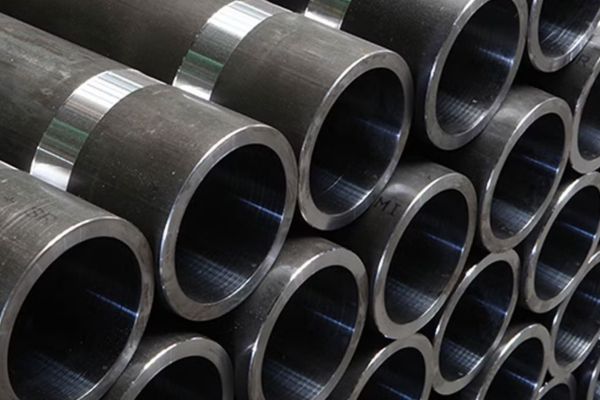
Tube Honing (Bore Finish)
Bore straightness and surface finish decide seal wear and internal leakage under pressure.
- Stable bore geometry for smooth motion
- Better seal life in long duty cycles

Rod Chrome & Induction Hardening
Rod surface protection prevents corrosion, scoring, and seal cutting in dirt, mud, and salt exposure.
- Reduced wear on wiper and rod seal
- Better resistance to side-load damage

Welding Standard (Strength & Safety)
Controlled welding prevents cracks, leakage paths, and mounting failures under shock load.
- Weld consistency for repeat OEM batches
- Less risk of mount cracking in cycles

Surface Treatment (Corrosion Control)
Coating selection protects the barrel and mounts from rust that spreads into seals and fasteners.
- Outdoor / wet / chemical environment options
- Longer service intervals with less rust
Why OEMs and Repair Suppliers Work with Topa
For hydraulic cylinder buyers, the real risk is not only unit price. Rework, wrong dimensions, port mismatch, leakage, unstable batches, and slow response can all increase your total cost. Topa helps reduce these risks before production starts.
Drawing Review Before Production
Before machining starts, Topa checks the details that often cause replacement or OEM assembly problems.
- Confirm bore, stroke, rod diameter, and closed length before quotation.
- Check mounting width, pin hole size, and installation space.
- Review port thread, port direction, and hose routing before machining.
Flexible Custom Production
Topa supports standard cylinders, replacement cylinders, and custom hydraulic cylinder projects based on drawings or samples.
- Custom bore, stroke, rod, mounting, port, seal, and surface finish.
- Support for old cylinder photos, drawings, or sample-based matching.
- Trial orders can be used before batch production for new projects.
Stable Supply for Repeat Orders
For OEMs, distributors, and repair suppliers, repeat order stability is more valuable than one-time low pricing.
- Keep confirmed drawings, inspection points, and production records.
- Control tube honing, rod surface finish, seal assembly, and test points.
- Support planned production for seasonal or repeat replacement demand.
After-Sales Response for Field Issues
If a cylinder has leakage, installation, port, or performance issues, Topa helps review the cause instead of leaving customers alone.
- Review customer photos, videos, application details, and working conditions.
- Help check seal, rod, port, mounting, pressure, and contamination risks.
- Provide feedback for future batches, replacements, or design updates.
Want to Check If Topa Fits Your Cylinder Project?
Send your drawing, old cylinder photos, application, quantity, and delivery requirement. Topa can review the key matching points and provide a clear quotation plan.
Manufacturing Capacity to Support Your Growth
Our production infrastructure and partner network ensure consistent supply for both prototype orders and high-volume OEM programs.


Precision machining with repeatable tolerances for stable assembly quality.
Flexible capacity for samples, batch orders, and long-term OEM supply.
Experience supporting construction, agriculture, and industrial machinery.
Continuous improvement across design, welding, assembly, and inspection.
Complete Manufacturing Capabilities
In-House Facilities
Key processes controlled internally for stable quality and lead time.
Partner Network
Qualified partners for special treatments and volume scaling.
Material Sourcing
Traceable tube and rod materials with consistent mechanical properties.
Inventory Management
Stocked materials enable faster turnaround on repeat programs.
Hydraulic Cylinder Manufacturing Process
From tube honing to final testing, each step is controlled to keep dimensions stable, seals lasting longer, and batch quality repeatable for OEM supply.

Material Inspection & Traceability
Tube and rod materials are checked for dimensions and consistency before production to reduce batch variation.

Tube Cutting, Boring & Honing
Honed bores improve surface finish and straightness, helping seals last longer with less leakage risk.

Rod Machining & Surface Treatment
Rod turning plus chrome / hardening options improve wear and corrosion resistance in harsh environments.

Head / End-Cap Processing
Precision machining keeps alignment stable and reduces side-load issues caused by assembly tolerance stack-up.

Clean Assembly (Seals & Bearings)
Seal kits are selected by pressure, temperature, and contamination level to prevent early leakage and scoring.

Testing, Final Inspection & Packing
Function checks and key dimension inspection confirm consistency; packing protects rod surface and ports in transit.
What Our Long-Term Partners Say
Feedback from equipment makers who care about consistent cylinder quality, stable lead times, and fast engineering response.
We buy welded cylinders for our excavator attachments line. What matters most is consistency across batches. Bore and rod dimensions stay within spec, the rod finish is uniform, and seals run stable in real work conditions. Their team confirms key tolerances before production, which reduces rework during assembly.
The engineering support is why we continue. We had recurring issues from side load at the mounting point. Their engineers reviewed the geometry, recommended changes, and matched a bearing solution for the load path. After the update, field failures dropped and communication stayed consistent.
Stable lead time is key for our production plan. Our custom telescopic cylinders ship on schedule, and the packing protects rods and ports well for overseas transport. Receiving checks are smoother, and we can keep inventory planning under control.
Export Logistics Designed for Global Customers
Packaging, documentation, and freight coordination are built to reduce damage risk and keep your production plan on schedule.

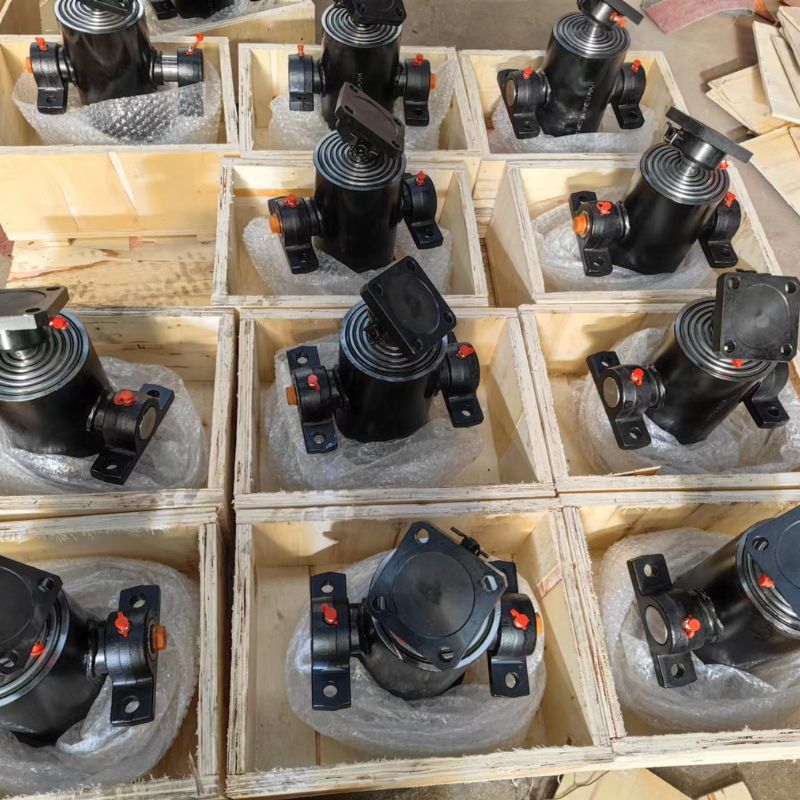
Export-Grade Packaging
Protection focused on rod surface, ports, and impact resistance.
- Wooden crates + internal bracing
- VCI anti-rust wrap for ocean transit
- Rod/port caps to keep contamination out

Clear Labeling & Packing List
Easy receiving and faster customs clearance.
- Part No. / Qty / handling marks
- Packing list with key specs
- Optional local-language labels

Sea & Air Freight Options
Choose the best balance of cost and speed for your program.
- Sea freight for volume orders
- Air freight for urgent downtime
- Export docs handled by our team

Delivery Time Management
Keep your assembly plan predictable with status updates.
- Typical production: 4–6 weeks
- Expedited slots (case-by-case)
- Tracking + proactive delay notice
Before You Send a Hydraulic Cylinder Inquiry
A clear inquiry helps reduce quotation time, drawing mistakes, replacement mismatch, and repeated confirmation. Before sending your hydraulic cylinder request, prepare the key details below so Topa can check the right solution faster.
Confirm These Details Before Quotation
Confirm the Working Pressure
Confirm Stroke and Closed Length
Confirm Bore and Rod Diameter
Confirm Mounting Width and Pin Hole Size
Confirm Port Thread and Port Direction
Confirm Operating Environment
Confirm Quantity and Delivery Schedule
Send Photos If No Drawing Is Available
What Should You Send to Topa?
Send old cylinder photos, pin-to-pin length, stroke, rod size, bore size, and port thread.
Send drawings, pressure, quantity, material request, surface treatment, and test requirements.
Send application, load, installation space, mounting style, port direction, and working environment.
Hydraulic Cylinder FAQ
Common questions about hydraulic cylinder replacement, repair, customization, pressure requirements, installation, and OEM supply support.
What information is needed for a hydraulic cylinder quote?
Please provide bore size, stroke, rod diameter, mounting type, working pressure, port thread, closed length, quantity, and machine application. Drawings or old cylinder photos help confirm replacement dimensions faster.
Can you manufacture hydraulic cylinders from customer drawings?
Yes. Topa supports OEM and custom hydraulic cylinder production according to technical drawings, samples, or machine requirements. We can also modify stroke, port direction, and mounting style.
Can you replace discontinued OEM hydraulic cylinders?
Yes. If the original hydraulic cylinder is discontinued, Topa can help develop a compatible replacement based on dimensions, machine model, old samples, or installation structure.
How do you reduce hydraulic cylinder leakage risk?
Leakage risk can be reduced through proper seal selection, rod surface treatment, accurate machining tolerances, pressure testing, and correct installation alignment.
Do you test hydraulic cylinders before shipment?
Yes. Hydraulic cylinders are inspected for dimensions, pressure resistance, leakage performance, welding quality, and assembly condition before shipment.
What causes hydraulic cylinder rod bending?
Rod bending is usually caused by side loading, overload conditions, incorrect installation alignment, impact force, or using the wrong cylinder size for the machine application.
Can you support small hydraulic cylinder trial orders?
Yes. Trial orders are suitable for replacement verification, new machine development, distributor testing, and OEM project evaluation before batch purchasing.
Can Topa provide custom packaging and private labels?
Yes. Topa supports private labels, custom part numbers, export cartons, wooden cases, barcode labels, and neutral packaging for distributors and OEM customers.
Work Directly with a Hydraulic Cylinder Manufacturer
Topa designs and manufactures hydraulic cylinders for construction equipment, agricultural machinery, lifting systems, and industrial applications. Our engineering team evaluates working pressure, load conditions, stroke requirements, and mounting geometry to ensure each cylinder is properly matched to its application. From drawing review to final testing, every cylinder is built for stable performance, long service life, and reliable field operation.
- Custom bore, stroke, pressure rating, ports, and mounting configurations
- Side-load analysis, sealing selection, and durability-focused design optimization
- Stable production capacity with dedicated cylinder machining and assembly lines
- 100% pressure testing, traceable records, and responsive after-sales support