
Why Do 3-Point Hitch Cylinder Mounting Bores Wear Out Fast?
Mounting bores wear out fast primarily due to excessive sideloading, abrasive environmental contamination, and the utilization of pins with improper hardness ratings.
Imagine your heavy tractor implement shaking violently because the pivot points have become oval-shaped “slop holes.” This mechanical play creates imprecise control and forces your 3-point hitch lift cylinder mounting to absorb loads it wasn’t designed for, leading to total equipment failure. Upgrading to precision-engineered components and maintaining strict service intervals offers a permanent solution to this recurring failure and saves your operation thousands in downtime.

Why Does Sideloading Destroy Mounting Bores?
Sideloading destroys mounting bores by concentrating hydraulic force on one side of the pivot axis rather than distributing it evenly across the surface. This misalignment often results from incorrect 3-point hitch lift cylinder mounting where the cylinder is forced to push at an unnatural angle.
Does Misalignment Cause Oval Bores?
Misalignment often stems from bent rods or worn implement frames that shift the cylinder’s line of action. When the cylinder operates at an angle, the bore faces lateral stresses that strip away metal at every stroke.
Even a few degrees of tilt can multiply the pressure on the bore wall.
- Bent cylinder rods
- Worn implement frames
- Imbalanced implement loads
- Loose mounting hardware
Maintaining perfect axial alignment is the most effective way to prevent lateral bore deformation and ensure long-term stability.
| Alignment Status | Impact on Bore | Maintenance Action | |
|---|---|---|---|
| Perfectly Axial | Uniform Wear | Regular Lubrication | |
| Slight Misalignment | Edge Loading | Realignment Check | |
| Severe Sideloading | Oval Deformation | Hardware Replacement |
Can Poor Lubrication Shorten Component Life?
Inadequate lubrication causes direct metal-to-metal contact, leading to rapid frictional heat and surface galling between the pin and the mount. Proper maintenance of the 3-point hitch lift cylinder mounting points ensures that 3-point hitch lift cylinders operate within their designed friction limits.
What Happens When Pins Run Dry?
When pins run dry, they begin to microscopically weld to the bore surface before tearing away during movement. This process acts like sandpaper, grinding down the bore every time the hitch is raised or lowered.
Without a protective grease film, the metal surfaces will destroy each other in a matter of weeks.
- Increased frictional heat
- Surface pitting and galling
- Metal flake contamination
- Total joint seizure
Establishing a proactive greasing schedule prevents the dry-running conditions that lead to severe surface degradation and “belled” openings.
How Does Contamination Erode Bore Surfaces?
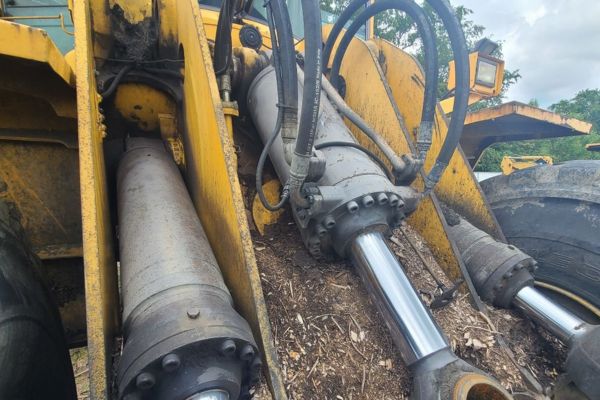
Environmental contamination introduces abrasive particles into the tight tolerances of the mounting bore, creating a grinding compound effect. Any debris that enters the 3-point hitch lift cylinder mounting area will eventually thin the metal walls until the structural integrity fails.
Are Abrasive Particles Destroying The Surface?
Abrasive particles like dust and sand embed themselves into the softer metal of the bore and gouge the surface as the pin rotates. These deep scratches then become catch points for more debris, creating a self-accelerating wear cycle.
Once dirt enters the pivot, it turns your expensive grease into a destructive polishing paste.
- Field dust and grit
- Crop residue buildup
- Moisture and rust
- Chemical fertilizer residue
Utilizing protective boots or shielding mounting points from direct debris contact can significantly reduce the intake of abrasive contaminants.
| Contaminant Type | Wear Severity | Prevention Method | |
|---|---|---|---|
| Fine Field Dust | Moderate | Frequent Flushing | |
| Sand and Grit | High | Protective Seals | |
| Corrosive Slurry | Extreme | Special Coatings | |
| Crop Debris | Low | Visual Inspection |
Is Material Hardness Mismatch Causing Failure?
Material hardness mismatch causes failure when a hardened pin rotates against a softer mounting bore, making the bore the sacrificial component. This is why replacing 3-point hitch lift cylinder mounting hardware is common, as 3-point hitch lift cylinders often use pins that are significantly harder than the frame metal.
Why Is Differential Wear So Common?
Differential wear occurs because it is easier for manufacturers to harden a small pin than an entire mounting bracket. Consequently, the expensive-to-repair frame or cylinder mount becomes the part that wears out first.
If your pin is too hard and your mount is too soft, the mount will always lose the battle.
- Mild steel mounts
- Heat-treated alloy pins
- Lack of sacrificial bushings
- Budget-grade iron frames
Installing hardened bushings allows the inevitable wear to occur on a replaceable part rather than the permanent equipment frame.
| Material Pair | Compatibility | Primary Wear Site | |
|---|---|---|---|
| Hard Pin / Soft Bore | Poor | Bore Wall | |
| Hard Pin / Hard Bore | Good | Surface Scuffing | |
| Hard Pin / Bronze Bushing | Excellent | Bushing (Sacrificial) | |
| Soft Pin / Soft Bore | Moderate | Both Components |
Do Shock Loads Lead To Permanent Deformation?
Shock loads lead to permanent deformation by sending sudden spikes of force through the hydraulic system that exceed the material’s yield strength. These events often occur during 3-point hitch lift cylinder mounting operations when an implement hits a hidden obstacle in the soil.
Can Impact Force Crush The Bore?
Impact force delivers a massive amount of energy that can crush the metal grain structure, causing the bore to lose its round shape instantly. Once the bore is oval, the pin begins to “hammer” the opening further with every subsequent movement.
A single high-speed impact can cause more damage than five years of normal use.
- Hitting rocks or stumps
- Fast transport over rough roads
- Dropping heavy implements
- Hydraulic surge events
Integrating hydraulic cushions or relief valves can mitigate the impact of sudden shock loads on your mounting hardware.
Why Is Vibration A Critical Wear Factor?
Vibration is a critical wear factor because it causes the pin to oscillate rapidly, creating thousands of micro-impacts that destroy the surface finish.
Is Harmonic Resonance Tearing Your Mounts?
Harmonic resonance occurs when the frequency of the tractor engine or ground speed matches the natural frequency of the hitch. This causes the vibration to amplify, shaking the pins with violent intensity and quickly widening the bore.
Vibration is a silent killer that removes metal atom by atom through a process called fretting.
- High-RPM engine vibration
- Tire tread harmonic patterns
- Unbalanced implement rotors
- High-speed road transport
Damping the mounting system or changing operating speeds can help break the cycle of harmonic vibration and extend component life.
| Vibration Level | Wear Type | Resulting Slop | |
|---|---|---|---|
| Low (Idle) | Fretting | Microscopic | |
| Medium (Work) | Pecking | Measurable | |
| High (Transport) | Scouring | Significant | |
| Extreme (Resonant) | Hammering | Catastrophic |
Are Worn Bushings Accelerating Mount Damage?
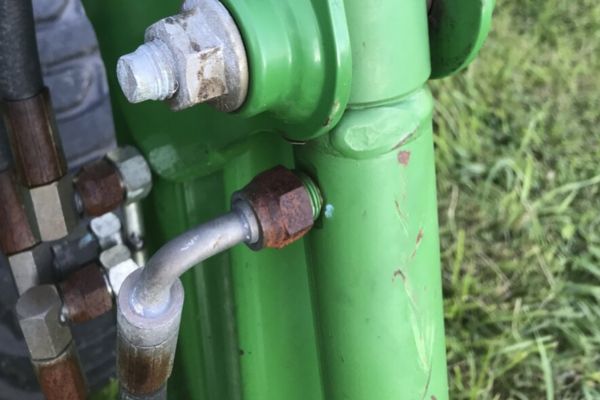
Worn bushings accelerate mount damage when they are allowed to fail completely, leaving the pin to ride directly on the main equipment frame. Regular inspection of the 3-point hitch lift cylinder mounting will reveal if these sacrificial parts need replacement before they cause permanent damage.
When Is It Too Late For Replacement?
It is too late for a simple bushing replacement once the mounting bore itself has become oversized or lost its circular geometry. At this stage, a new bushing will spin within the mount, necessitating expensive welding or machining repairs.
Bushings are meant to be destroyed so your tractor frame doesn’t have to be.
- Cracked bushing walls
- Bushing “spinning” in bore
- Visible metal shavings
- Excessive joint play
Establishing a proactive maintenance schedule for all sacrificial wear parts is the only way to avoid catastrophic repair costs.
Does Undersized Hardware Create Excess Stress?
Undersized hardware creates excess stress by providing insufficient surface area to distribute the heavy hydraulic loads of the hitch.
Does Tolerance Slop Create Impact Force?
Even a small amount of initial tolerance slop allows the pin to gain momentum before striking the bore wall during direction changes. These small “hammer blows” occur thousands of times, doing far more damage than a steady, constant load.
A loose fit today is a broken mount tomorrow.
- Improper pin diameter
- Thin-walled brackets
- Low-grade mounting bolts
- Worn-out hitch balls
Starting with tight, precision-engineered tolerances eliminates the hammering effect that destroys mounting bores over time.
Can Hydraulic Drift Increase Pivot Friction?
Hydraulic drift increases pivot friction by forcing the operator to make constant, jerky corrections that pulse pressure through the mounts. If the 3-point hitch lift cylinder mounting is subject to these frequent shifts, the pin will constantly grind against the bore surface.
Is Internal Leakage Stressing The Pivot?
Internal leakage causes the cylinder to “creep,” which results in unstable implement height and irregular loading on the mounting pins. Smooth, consistent hydraulic operation is far easier on mounting hardware than constant repositioning and sudden pressure spikes.
Consider this: Every time the hitch “jumps,” the mounting bore takes the hit.
- Worn piston seals
- Leaking control valves
- Bubbles in hydraulic fluid
- Thermal expansion cycles
Fixing internal seal leaks reduces the frequency of corrective movements that fatigue the mounting bores and destroy tolerances.
| Drift Rate | Correction Frequency | Mount Stress | |
|---|---|---|---|
| Zero Drift | None | Minimal | |
| Slow Creep | Occasional | Low | |
| Rapid Drop | Constant | High | |
| Jerky Motion | Violent | Extreme |
Will Custom Designs Solve Chronic Wear Issues?
Custom designs solve chronic wear issues by utilizing superior materials and wider bearing surfaces tailored to extreme duty cycles.
How Does Enhanced Geometry Extend Life?
Enhanced geometry involves widening the mount to distribute stress more effectively across a larger area of the bore. By increasing the contact surface, the PSI on the metal is reduced, which significantly slows the rate of metal fatigue.
The reality? Generic parts are built for the average user, but your operation may require much more.
- Heat-treated alloy steel
- Integrated lubrication ports
- Widened bearing surfaces
- Precision interference fits
Custom engineering transforms the pivot point from a failure-prone joint into a durable mechanical interface that outlasts the tractor.
| Feature | Standard Mount | Custom Design | Operational Benefit | |
|---|---|---|---|---|
| Bore Width | Narrow | Optimized Wide | Lower Surface PSI | |
| Material | Mild Steel | Hardened Alloy | High Yield Strength | |
| Lubrication | Simple Zerk | Internal Channels | 100% Coverage | |
| Fitment | Loose | Precision | Zero Hammering |
Conclusion
Wear at the mounting bore is not just a maintenance nuisance; it is a sign of mechanical stress that threatens your entire operation. By addressing the root causes of wear—from material hardness to lubrication strategy—you can significantly extend the life of your equipment. High-performance machinery deserves high-performance mounting solutions that stand up to the rigors of the field.
We believe that every component, no matter how small, should be engineered for maximum durability and precision. Our focus is on providing robust, industrial-grade solutions that eliminate downtime and maximize productivity for our partners. To optimize your equipment for the most demanding environments, contact us today to discuss your specific hydraulic needs.
FAQ
Can I repair an oval mounting bore without replacing the whole frame?
Yes, oval bores can often be repaired through a process called “boring and bushing,” which restores the original diameter.
How often should I grease my 3-point hitch mounting bores?
In heavy agricultural use, you should grease these points every 8 to 10 hours of operation to flush out contaminants.
What is the best material for a replacement bushing?
Hardened steel bushings are the best choice for high-impact 3-point hitch applications due to their superior durability and cost balance.
Why does my hitch rattle even after I replaced the pins?
If the rattle persists, the mounting bores themselves are likely oversized or oval, meaning new pins cannot fit securely.
Does implement weight affect bore wear exponentially?
Yes, doubling implement weight more than doubles the wear rate because of the increased surface pressure and friction-generated heat.