
How to Measure Hydraulic Steering Cylinder Sizes Correctly?
To ensure your equipment operates safely and efficiently, you must match the bore, rod diameter, stroke, and mounting dimensions exactly. You might think a slightly different cylinder will work, but even a small deviation creates massive pressure imbalances. This leads to blown seals or steering lag that puts your operators at risk. Sourcing the correct hydraulic steering cylinder sizes is the only way to restore factory performance.

Why are specific hydraulic steering cylinder sizes critical for safety?
Matching specific dimensions ensures that your steering system responds with the intended force and precision during heavy operation. Using incorrect hydraulic steering cylinder sizes can cause the vehicle to pull unexpectedly or fail to turn under load. You must prioritize these measurements to maintain the mechanical integrity of your steering linkage.
Maintaining System Equilibrium
- Prevents pump cavitation.
- Reduces seal friction.
- Ensures consistent response.
Matching these core metrics ensures the system maintains the original steering torque without putting undue stress on the pump. If you deviate from the factory specs, you risk a catastrophic failure in the field.
| Metric | Safety Impact | |
|---|---|---|
| Bore Size | Turning Force | |
| Rod Diameter | Structural Integrity |
Accurate sizing is the primary foundation for long-term steering reliability and operator safety.
How do you measure hydraulic steering cylinder sizes for a custom replacement?
You measure the internal bore, rod diameter, and retracted length using precision calipers and a tape measure to get the right hydraulic steering cylinder sizes . You must disassemble the unit or refer to the technical manual to ensure you are not just measuring the outer casing. Getting these dimensions wrong leads to a component that physically will not fit your existing brackets.
Measuring the Internal Barrel
- Measure the inside diameter.
- Use a digital caliper.
- Clean the surface first.
The bore is the most critical measurement for determining the power of your steering system. It refers strictly to the internal diameter of the cylinder barrel rather than the outside.
What role does the bore play in hydraulic steering cylinder sizes?
The bore size directly determines the total force and steering capacity your system can generate at a specific pressure. If you change this aspect of your hydraulic steering cylinder sizes, you will either lose steering power or overwhelm your hydraulic pump. You must ensure the new bore matches the original to keep the steering feel consistent and predictable.
Calculating Output Force
- Bore area defines thrust.
- Larger bores move slower.
- Smaller bores lack power.
The surface area of the piston, derived from the bore size, dictates how much force the cylinder exerts. Matching this size exactly is non-negotiable for maintaining the original handling characteristics of your tractor or loader.
| Bore Change | Force Result | Speed Result | |
|---|---|---|---|
| Increase | Higher Power | Slower Response | |
| Decrease | Lower Power | Faster Response |
A perfect bore match is the only way to guarantee that your steering remains powerful yet responsive.
Why must rod diameters in hydraulic steering cylinder sizes match the original?
The rod diameter must match to ensure the cylinder fits through the existing gland and maintains the correct fluid displacement for hydraulic steering cylinder sizes . If the rod is too thick, it will reduce the fluid volume on the retraction side, causing the steering to move faster in one direction than the other. You need this balance to maintain safe control of your vehicle at all speeds.
Ensuring Balanced Speed
- Rod volume affects timing.
- Diameter ensures seal fit.
- Correct sizing prevents bending.
While a thicker rod provides higher strength, it also alters the displacement of the hydraulic fluid. If the rod diameter is not matched exactly, you will experience an annoying speed bias between left and right turns.
| Rod Dimension | Function | Mismatch Risk | |
|---|---|---|---|
| Diameter | Displacement | Unbalanced Steering | |
| Hardness | Wear Resistance | Rapid Seal Failure |
Matching the rod diameter preserves the hydraulic timing required for symmetrical steering performance.
How do retracted and extended lengths impact sizes?
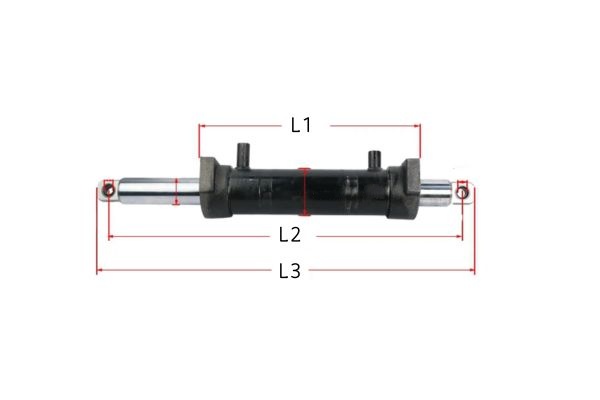
Retracted and extended lengths determine the physical fitment and the total range of motion within your steering linkage. If your hydraulic steering cylinder sizes do not account for the pin-to-pin distance, you will find it impossible to bolt the unit into your machine. You must measure from the center of each mounting hole to ensure the unit aligns with your factory brackets.
Checking Pin to Pin Distance
- Retracted is the closed length.
- Extended is the open length.
- Measure from hole centers.
The retracted length, or “closed” length, tells you if the cylinder will physically fit into the mounting space when the wheels are straight. An incorrect extended length can lead to mechanical interference or prevent the gear from reaching its full turn.
| Length Type | Start Point | End Point | |
|---|---|---|---|
| Retracted | Base Pin Center | Rod Pin Center | |
| Extended | Base Pin Center | Rod Pin Center (Open) |
Which stroke measurements are non-negotiable for hydraulic steering cylinder sizes?
The stroke must match the travel limits of your steering linkage to prevent the internal piston from bottoming out and damaging hydraulic steering cylinder sizes . If the stroke is too short, you will suffer from a restricted turning radius that makes maneuvering difficult. You must calculate the stroke by subtracting the retracted length from the extended length for an exact match.

Calculating Total Travel
- Stroke equals total travel.
- Must match linkage limits.
- Prevents structural stress.
If the stroke is even slightly too long, the cylinder may attempt to push the steering linkage beyond its mechanical stops. This often leads to bent tie rods or fractured mounting points that are expensive to repair.
How do port configurations affect the compatibility of hydraulic steering cylinder sizes?
Port sizes and locations must be identical to the original design to ensure your existing hoses can reach and connect to the new hydraulic steering cylinder sizes. You need to identify whether the threads are NPT, SAE, or JIC to avoid cross-threading and dangerous leaks. You should also check the “clocking” or orientation of the ports to ensure they do not interfere with other engine components.
Verifying Thread Integrity
- Thread types must match.
- Port location prevents kinks.
- Incorrect ports cause leaks.
Ports are the entry and exit points for high-pressure fluid, and even a minor thread mismatch will lead to a failure under load. If the ports are in the wrong position, your existing hydraulic hoses may be too short to reach the new connections.
| Port Feature | Verification Tool | Consequence | |
|---|---|---|---|
| Thread Type | Thread Pitch Gauge | High Pressure Leak | |
| Orientation | Visual Alignment | Hose Interference |
Standardizing port specs is the only way to ensure a “plug-and-play” installation without modifying your hose assembly.
Why is mounting style vital when selecting hydraulic steering cylinder sizes?
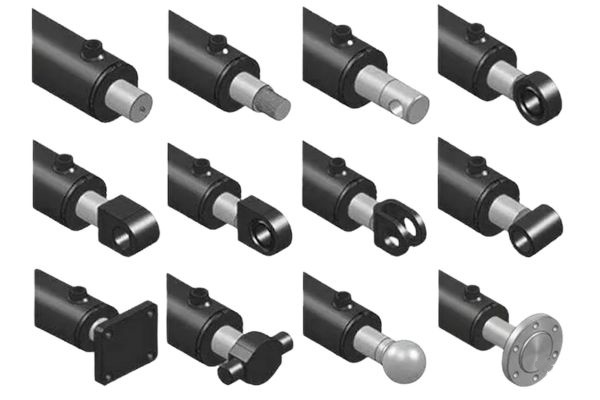
The mounting style dictates how the cylinder attaches to the frame, making it a critical part of hydraulic steering cylinder sizes . You will typically find clevis ends, tangs, or spherical bearings on steering units. If the mounting style or the pin hole diameter does not match, you will be unable to secure the cylinder without dangerous modifications.
Choosing the Right End
- Clevis needs specific gaps.
- Tangs must match thickness.
- Pin holes must be snug.
Substituting a different mounting style is rarely possible without significant welding or machining on your machine’s frame. The mounting style also dictates the degrees of freedom the cylinder has; an incorrect choice can cause the rod to bind and snap.
| Mount Type | Key Dimension | Primary Risk | |
|---|---|---|---|
| Clevis End | Slot Width | Pin Shearing | |
| Tang End | Plate Thickness | Mounting Play |
Ensuring a perfect mounting match prevents vibration and premature wear on the cylinder’s pivot points.
What pressure ratings must align with your hydraulic steering cylinder sizes?
A replacement cylinder must be rated for at least the maximum relief pressure of your pump to maintain the safety of your hydraulic steering cylinder sizes. Using a cylinder with a lower PSI rating than your system’s output is a recipe for a catastrophic burst. You should always check the manufacturer’s data plate to verify that the working pressure meets or exceeds your machinery’s requirements.
Assessing PSI Requirements
- Match pump relief pressure.
- Safety factor is essential.
- Higher ratings are safer.
Hydraulic steering systems operate at intense pressures, and the cylinder is the primary point of stress. A mismatched pressure rating can lead to barrel deformation or seal blowouts that leave you without steering in an instant.
How can you avoid common errors?
You can avoid common errors by double-checking all measurements with digital tools and referring to the original equipment manufacturer’s specifications for hydraulic steering cylinder sizes . Many people make the mistake of measuring the outer barrel diameter instead of the bore, which leads to purchasing an underpowered unit. You must be methodical and patient during the measurement process to ensure total compatibility.
Avoiding Measurement Tactics
- Measure twice before ordering.
- Use precision calipers only.
- Refer to part numbers.
Common errors often include forgetting to account for the thickness of the mounting bushings or neglecting the port thread pitch. Always measure when the cylinder is clean and at room temperature to get the most accurate readings possible.
Conclusion
Matching hydraulic steering cylinder sizes exactly is the only way to ensure the safety, speed, and power of your heavy equipment. By verifying the bore, rod, stroke, and mounting dimensions, you eliminate the risk of mechanical binding and hydraulic imbalance. This systematic approach prevents costly downtime and ensures your machinery remains a reliable asset on the job site.
At Topa, we specialize in high-precision manufacturing to guarantee that every replacement part fits perfectly the first time. Our commitment to quality ensures that your steering systems perform at factory standards, even in the harshest environments. For professional guidance or a custom quote, contact us today and let our experts secure the right components for your fleet.
FAQ
Can I upgrade to a larger bore size?
Generally, no, because a larger bore will increase steering power but significantly slow down the response time of your steering wheel. This could create a dangerous delay when you need to make quick adjustments in tight spaces.
What’s the best way to measure a rod?
The most effective method is to use a digital micrometer on a clean, un-pitted section of the rod while it is extended. Measuring near the rod end might give an inaccurate reading if the metal has been deformed or worn down over years of service.
How do I know if my port threads are metric or NPT?
Use a thread pitch gauge to determine the number of threads per inch or the distance between peaks in millimeters. Attempting to force a metric fitting into an NPT port will permanently damage the threads and cause high-pressure leaks.
Can I use a cylinder with a slightly longer stroke?
It is not recommended, as a longer stroke can force your steering linkage beyond its mechanical limits. This extra travel often results in bent tie rods, cracked mounting brackets, or internal damage to the cylinder itself.
How do I know if the mounting style is compatible?
Check the width of the mounting slot and the diameter of the pin hole against your existing hardware using a caliper. If there is any “play” or if the slot is too narrow, the cylinder will not operate smoothly and will likely fail prematurely.