
How to Understand Hydraulic Cylinder Meaning in Heavy Machinery
You are standing in the middle of a high-stakes construction project when a 40-ton excavator suddenly freezes, its massive boom drifting downward uncontrollably because a critical fluid boundary has failed. When heavy equipment breaks down in peak seasons, field operations stall, logistics budgets bleed, and project managers face thousands of dollars in hourly downtime losses. The root of these catastrophic engineering failures usually comes down to a lack of understanding regarding fluid power components, specifically how minor surface wear translates into systemic failure. To truly master machine operation and keep your fleet running smoothly, you must look beyond basic parts catalogs and analyze the precise mechanics of fluid movement.
+------------------+     +-------------------+     +------------------+
|  Hydraulic Pump  | --> | Directional Valve | --> | Actuator Barrel  |
| (Creates Flow)   |     |  (Directs Fluid)  |     | (Builds Pressure)|
+------------------+     +-------------------+     +------------------+
                                                            |
                                                            v
                                                   +------------------+
                                                   | Linear Movement  |
                                                   |  (Moves Payload) |
                                                   +------------------+
Why Does Understanding Hydraulic Cylinder Meaning Prevent Costly Fleet Downtime?
What Is a Hydraulic Cylinder and How Does It Convert Fluid Power into Mechanical Force?
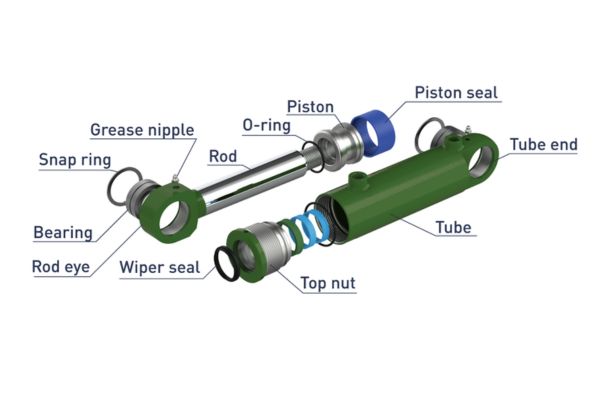
To understand hydraulic cylinder meaning in heavy machinery, you must look at how a system handles confined pressurized oil to generate immense directional work. When high-pressure fluid enters the internal chamber of a steel barrel, it pushes directly against the cross-sectional area of a piston face.
- Pressurized oil enters the cap end port to initiate linear extension.
- The expanding fluid forces the internal piston across the honed barrel surface.
- The rod moves outward, transferring high tonnage to external machine structures.
This linear motion is the driving force behind excavator buckets, bulldozer blades, and crane booms. Understanding this basic hydraulic calculation allows maintenance teams to size replacement systems correctly without causing low-pressure performance drops or high-pressure system bursts.
How Do Linear Actuators Direct Heavy Equipment Field Operations?
Linear actuators serve as the structural backbone for complex directional movements across all heavy machinery platforms. Without these systems, rotating power from hydraulic pumps could never turn into the precise linear movements required to dig deep trenches or lift heavy payloads.
It is worth noting that a machine’s actual working efficiency depends completely on how well these actuators maintain fluid containment under severe structural load cycles.
[Hydraulic Actuator Input] ---> [Piston Surface Displacement] ---> [High-Tonnage Linear Output]
Actuator Operational Force Profiles
| Machinery Application | Typical Operating Pressures (PSI) | Primary Cylinder Configuration | Critical Mechanical Function |
| Crawler Excavators | 4,500 – 5,800 | Welded Double-Acting | Bucket Curl & Boom Lift |
| Agricultural Tractors | 2,500 – 3,200 | Tie-Rod / Medium Welded | 3-Point Hitch Implement Control |
| Artificially Articulated Loaders | 3,000 – 4,000 | Heavy Welded Double-Acting | Steering Pivot & Loader Arm Lift |
What Are the Essential Components That Define a Hydraulic Actuator?
Why Do Cylinder Tubes and Piston Rods Bear the Highest Mechanical Stress?
The hydraulic cylinder tube and the piston rod form the primary pressure boundary and mechanical link of the actuator, making them highly vulnerable to structural fatigue. The cylinder tube must feature a micro-honed internal surface finish to prevent friction from tearing up internal seals.
Meanwhile, the piston rod is precision-ground from high-tensile carbon steel and coated with hard chrome plating to resist environmental corrosion and surface scratching.
- The seamless barrel must withstand high internal hoop stress without expanding.
- The hard-chromed rod resists stone impacts and abrasive dust in the field.
- Precision end caps secure the entire structural envelope under high pressure.
When these components experience structural overloading or fluid contamination, surface scratching quickly ruins the internal dynamic interfaces.
[Pressurized Honed Barrel] <--> [Dynamic Piston Seal Interface] <--> [Chromed Actuator Rod]
This structural breakdown creates a clear path for external fluid leaks and severe internal pressure bypasses.
How Do Glyd Rings and Wiper Seals Mitigate Hydraulic Fluid Bypassing?
Dynamic sealing systems are what maintain internal pressure separation and prevent external debris from entering the hydraulic fluid supply. A high-performance piston sealing system typically combines a low-friction PTFE Glyd ring with an elastomeric energizer ring.
The elastomeric element keeps constant pressure on the PTFE ring, forcing it tightly against the honed barrel surface to block oil from slipping past. On the outside of the system, a high-durability polyurethane wiper seal cleans dirt and mud off the extending rod, protecting the internal sealing lips from premature wear.
Dynamic Seal Architecture Specifications
| Seal Component Type | Primary Material Base | Critical Operational Role | Maximum Pressure Rating |
| Piston Glyd Ring | PTFE Compound / NBR | Prevents fluid from bypassing the piston | Up to 6,000 PSI |
| Rod U-Cup Seal | Polyurethane (PU) | Seals pressurized oil inside the rod gland | Up to 5,000 PSI |
| Gland Wiper Seal | Heavy-Duty Polyurethane | Scrapes external dirt off the extending rod | Atmospheric |
How Do Single-Acting and Double-Acting Hydraulic Cylinders Diverge in Function?
Why Does Plunger Cylinder Design Depend on External Mechanical Forces to Retract?
Single-acting hydraulic cylinders only utilize fluid power to drive linear movement in one direction. These systems feature a single fluid port that pumps oil into the cap end to extend the heavy plunger rod.
Now, think about what happens when you need the cylinder to retract.

- The directional control valve opens to route fluid back to the reservoir.
- External mechanical loads or gravity press down on the extended rod.
- The fluid drains from the single chamber as the plunger drops.
Because these designs lack fluid ports on the rod end, they cannot pull or lift payloads manually. This single-acting setup is ideal for dump truck hoist mechanisms and heavy vertical lift platforms where gravity handles the retraction phase naturally.
How Do Dual-Port Hydraulic Systems Execute Symmetric Force Profiles?
Double-acting hydraulic cylinders utilize fluid power to drive precision linear movement during both the extension and retraction cycles. These advanced systems feature dual fluid ports positioned at opposite ends of the actuator barrel.
This dual-port layout lets the machine operator shift high-pressure fluid between the cap end and the rod end instantly.
[Cap-End Port Pressurization] --> Cylinder Extends with High Pulling Force
[Rod-End Port Pressurization] --> Cylinder Retracts with High Linear Speed
When high-pressure fluid enters the rod end port, it acts directly on the annular ring area around the rod, pulling the piston back into the barrel with high speed. This dual-action design provides the precise, two-way control needed to run excavator arms, steering systems, and material handling attachments safely.
Dual-Port System Mechanics
| Flow Port Configuration | Internal Pressurization Zone | Resulting Output Metric | Typical Machinery Use Case |
| Cap End Port Active | Full Piston Cross-Section | Maximum Push Tonnage | Heavy Excavation Digging |
| Rod End Port Active | Annular Ring Cross-Section | High Retraction Speed | Rapid Attachment Return |
What Is the Engineering Difference Between Tie-Rod and Welded Hydraulic Cylinders?
Why Do High-Pressure Heavy Machinery Designs Reject Standard Tie-Rod Actuators?
Tie-rod hydraulic cylinders use high-tensile steel rods on the outside of the barrel to clamp the end caps securely against the main tube. While this bolt-together design makes field repairs simple, these systems frequently fail when pushed past 3,000 PSI.
The problem is that long tie-rods flex and stretch when hit with high shock loads or extreme pressure spikes.
- High internal pressure spikes cause structural tie-rods to stretch out.
- The mating seals between the end caps and barrel begin to separate.
- High-pressure oil blows past the gaps, causing severe fluid loss.
Because of this stretching issue, heavy machinery designers reject tie-rod setups for high-tonnage earthmoving equipment, preferring more robust structural housings instead.
How Do Welded End Caps Expand the Structural Load Envelopes of Excavators?
Welded hydraulic cylinders feature heavy end caps welded directly to the steel barrel, creating a single, solid pressure vessel. This heavy-duty design eliminates bolt-together joints entirely, preventing the body from flexing under high operational stresses.
This robust construction allows welded actuators to run safely at pressures over 5,000 PSI.
[Heavy Forged End Cap] ==(Continuous Structural Weld)==> [Thick-Walled Actuator Barrel]
By welding the end caps directly to the barrel, manufacturers can shrink the cylinder’s outer dimensions, making it much easier to mount inside tight machine frames. This space-saving design is why welded cylinders are used exclusively on excavator booms, mining equipment, and heavy front-end loaders.
Structural Housing Comparisons
| Cylinder Structural Style | Maximum Safe Pressure (PSI) | Shock Load Resistance | Common Structural Maintenance Need |
| Clamped Tie-Rod | 2,500 – 3,000 | Low to Medium | Regular tie-rod nut torque inspections |
| Solid Welded Body | 5,000 – 6,000+ | Extremely High | Specialized gland thread cleaning |
How to Decipher Core Hydraulic Actuator Dimensional Technical Specifications?
What Are Cylinder Bore Diameters, Stroke Lengths, and Rod Clearances?
Sizing a hydraulic actuator accurately requires checking three major internal dimensions: the bore diameter, the stroke length, and the rod clearance. The cylinder bore is the true inside diameter of the barrel, and it determines how much raw push force the system can build at a specific operating pressure.
- The internal bore diameter dictates the available surface area for force generation.
- The stroke length defines the maximum linear travel of the rod.
- The rod diameter dictates the cylinder’s resistance to structural buckling.
To calculate push force, use the standard fluid power formula: F = P*A
Where F is the output force, P is the working pressure, and A is the piston surface area. Sizing these dimensions correctly prevents low-power output and structural rod bending under heavy field loads.
How Do Pin-to-Pin Distances and Clevis Mounting Geometry Determine Equipment Compatibility?
The pin-to-pin distance defines the total length between the mounting pin centers when the actuator rod is fully retracted. If this dimension is off by even a few millimeters, the replacement cylinder will not fit into the machine frame or it will limit the machine’s moving angles.
[Retracted Mounting Position] <--- (Pin-to-Pin Center Distance) ---> [Extended Stop Position]
When ordering replacement parts, you must match the clevis mounting geometry, the pin hole diameters, and the port layout exactly. Keeping these mounting specs aligned ensures the new cylinder drops into the machine frame easily, lines up perfectly with the existing hoses, and operates safely without binding.
Critical Actuator Dimensional Metrics
| Dimensional Parameter | Precise Physical Measurement Zone | Primary Operational Target |
| Internal Bore | Inside wall-to-wall barrel diameter | Controls total output push tonnage |
| Rod Clearance | Outside diameter of the hardened shaft | Resists structural bending under load |
| Closed Length | Retracted pin-center to pin-center distance | Ensures exact mounting fitment inside frames |
What Technical Failure Modes Cause Hydraulic Cylinder Power Loss?
Why Is Internal Leakage the Leading Cause of Unintentional Boom Sinking?
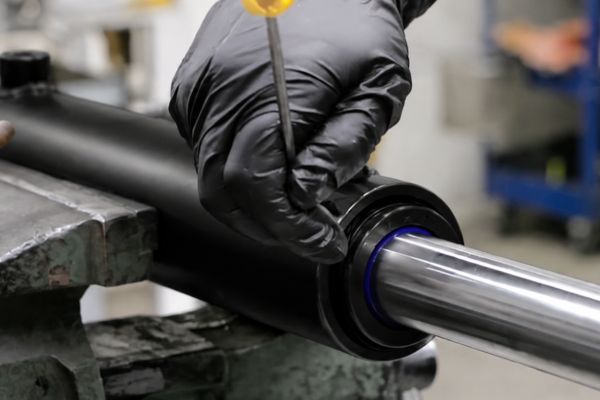
Internal leakage happens when worn piston seals let high-pressure fluid slip across the piston into the low-pressure side of the barrel. This internal bypass drops the hydraulic pressure needed to hold the cylinder in place, causing extended boom arms to drift downward unexpectedly.
You should watch for these signs of internal fluid bypass during heavy operations.
- Extended implement arms drift downward slowly when valves are centered.
- Operating oil temperatures climb fast due to constant fluid friction.
- The hydraulic pump works harder to maintain standard system pressures.
[High-Pressure Chamber] ==(Fluid Bypasses Worn Piston Seals)==> [Low-Pressure Return Line]
When your machinery operators notice heavy booms drifting under load, you should run an isolation leak-down test immediately. Catching this internal bypass early keeps your operators safe and prevents total system failure in the field.
How Does Chrome Plating Pore Degradation Accelerate Rod Seal Wear Rates?
When the hard chrome plating on a piston rod develops microscopic cracks or stone pits, it turns the smooth metal into a rough surface. This jagged chrome acts like fine sandpaper, tearing up the soft polyurethane lips of the high-pressure rod seals during every stroke.
[Corroded Plating Pores] ---> Tears Polyurethane Seal Lips ---> Creates External Oil Leaks
Actuator Power Loss Indicators
| Observed Field Symptom | Primary Engineering Root Cause | Immediate Remedial Action |
| Unintentional boom drift | Worn piston seals or internal barrel scoring | Run an isolation test and replace seals |
| Oil dripping from gland | Damaged rod U-cup seal or pitted chrome | Re-chrome the rod and install new seals |
| Slow or jerky movement | Air trapped in lines or heavy internal friction | Bleed the hydraulic circuit completely |
How Does Mechanical Side Loading Destructively Deform High-Pressure Pistons?
What Causes Structural Bending in Front Loader Cylinder Rods?
Mechanical side loading happens when an external force pushes sideways on the piston rod, forcing it out of its true centerline alignment. This off-axis pressure typically occurs when operators lift off-center payloads, turn sharply with fully loaded buckets, or hit hidden rocks in the field.
This side pressure distorts the internal tracking of the rod.
- Side forces push the extended rod out of its true central alignment.
- The piston tilts inside the barrel, focusing stress on one edge.
- The metal piston rubs hard against the honed internal barrel wall.
This off-axis rubbing quickly scores the internal barrel surfaces and crushes the plastic wear rings. If you ignore this side pressure, the focused stress will bend the steel rod permanently, locking up your cylinder and forcing an expensive replacement.
How Do Spherical Bearings Reduce Off-Axis Structural Loading Pressures?
Spherical bearings allow the cylinder mounts to twist and self-align, absorbing side forces before they can travel up the piston rod. These pivoting bearings allow the cylinder to adjust naturally as the loader arms flex under uneven payloads.
This pivoting action eliminates off-axis stress on the rod seals.
[Uneven Bucket Force] ---> [Pivoting Spherical Bearing] ---> [Safe Axial Pressure on Rod]
Mounting Alignment Options
| Mechanical Mount Design | Side Load Absorption Level | Primary Structural Risk Profile | Optimal Machinery Application |
| Rigid Steel Clevis | Extremely Low | Focuses side stress on rods and gland seals | Stationary Lifting Tables |
| Spherical Pin Bearing | Exceptionally High | Requires regular greasing to prevent seizing | Excavator Boom Joints |
How to Diagnose Severe Fluid Power Actuator Structural Irregularities?
Can You Execute an Effective Cylinder Isolation Leak-Down Test in the Field?
You can pinpoint internal piston seal failure by running an isolation leak-down test directly in the field without using advanced shop diagnostic benches. First, extend the cylinder completely to build up maximum fluid pressure inside the barrel.
Next, shut down the engine safely to eliminate all pump variables from your test.
- Safely block the machinery attachment to remove all mechanical tension.
- Disconnect the return line hose from the rod end port carefully.
- Pressurize the cap end port and watch for oil weeping from the open port.
[Pressurized Cap End] ==(Oil Weeps from Open Rod End Port)==> Confirms Broken Piston Seals
If oil drips steadily from the open rod end port while the cap end is pressurized, your piston seals are definitely blown. This simple field check identifies internal bypass issues instantly, preventing your team from wasting time replacing good hydraulic pumps or control valves.
What Operating Symptoms Point to Internal Spool Centering Malfunctions?
When a directional control valve spool fails to center perfectly, it allows low-pressure oil to seep constantly into the hydraulic cylinder lines. This valve leakage causes the attachment to drift slowly, mimicking the classic signs of a blown cylinder piston seal.
You can easily separate valve issues from cylinder failure by checking these operating signs.
- The cylinder drifts in both directions instead of slipping down one way.
- The drift stops completely when you engage the manual mechanical transport locks.
- Operating control levers feel loose or sticky when shifting between gears.
Fluid Power Diagnostic Logic
| Step-by-Step Test Sequence | Observed Field Outcome | Immediate Engineering Conclusion |
| Check return port flow | Oil drips steadily from open port | Piston seals are blown internally |
| Isolate control valve | Cylinder drift stops completely | Valve spool is leaking or misaligned |
| Run full stroke test | Rod chatters or moves unevenly | Air is trapped or internal tube is scored |
Conclusion
Mastering hydraulic cylinder mechanics is what separates high-efficiency machinery operations from fleets plagued by constant downtime. By understanding how cylinder bore sizes, stroke lengths, and dynamic seal profiles interact, you can catch minor surface scratches before they turn into expensive breakdowns. Whether you are dealing with internal piston bypasses, rod bending from side loads, or chrome pitting from environmental dust, using a structured diagnostic workflow keeps your heavy equipment running safely.
To resolve persistent boom drift, prevent oil leaks, and ensure perfect replacement fitment for your heavy machinery, let our engineering team build a dependable, high-pressure fluid solution for your fleet by contacting us today.
FAQ
Can I operate heavy equipment if the boom cylinder is drifting under load?
No, you should never operate heavy machinery with a drifting cylinder because it indicates a serious pressure boundary failure that can cause sudden drop hazards. This drift means high-pressure oil is slipping past worn piston seals or leaking control valves, making the load unstable and endangering ground crews.
What’s the best way to determine if a cylinder leak is internal or external?
The best approach is a visual check combined with a port isolation test. External leaks show up as oil dripping past the gland nut or running down the chromed rod, while internal leaks present as slow implement drift with a hot barrel caused by oil slipping past the piston seals inside.
How do I know if my cylinder rod is permanently bent?
You should extend the rod partially and check it with a precision steel straightedge along its length, or remove the cylinder and measure the shaft runout using a dial indicator. If the runout exceeds standard manufacturer limits (usually 0.015 inches per foot of stroke), the rod is bent and must be replaced to prevent gland damage.
How do I choose between a standard tie-rod and a welded body cylinder?
You should base your decision on your system’s maximum operating pressure and mounting space. Choose a welded body cylinder for high-pressure industrial equipment over 3,000 PSI facing severe shock loads, and reserve tie-rod designs for lower-pressure factory equipment where easy tear-down is preferred.
Can I replace just the blown rod seals without honing the cylinder barrel?
Yes, you can replace the seals alone if the inside barrel walls and chrome rod are perfectly smooth and scratch-free. However, if the barrel shows deep internal score marks or the rod has pitted chrome, the rough metal will quickly tear up your new polyurethane seals within a few operating hours.