
How to Simplify How Hydraulic Cylinder Works for Beginners
You need massive force from your equipment, yet the source can feel like a black box. Without grasping how hydraulic cylinder works, it’s hard to diagnose issues, optimize performance, or buy with confidence. Your machines run, but the path from fluid pressure to motion isn’t clear.
That knowledge gap drives poor cylinder selection, surprise downtime, and expensive repairs. Every minute below peak efficiency costs productivity and profit. Understanding how hydraulic cylinder works replaces uncertainty with control—reducing risk and strengthening your bottom line.
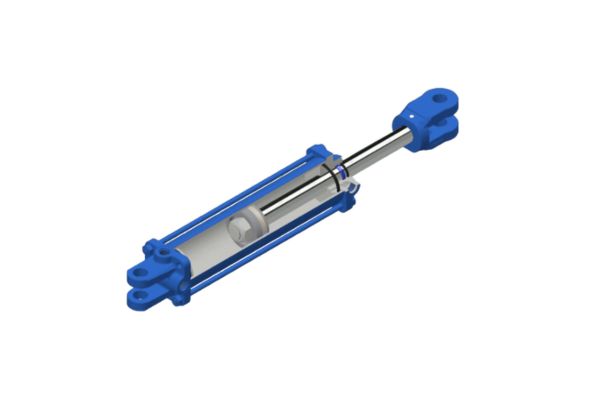
How hydraulic cylinder works: Pascal’s Law
What is Pascal’s Principle?
The entire operation of a hydraulic cylinder hinges on Pascal’s principle. This principle states that pressure applied to an enclosed, incompressible fluid is transmitted equally and undiminished to every portion of the fluid and the walls of the containing vessel. Now, you might be wondering: how does this apply to your machinery? It’s the foundational science that allows a system to lift tons with minimal initial effort.
- Pressure is constant in a closed system.
- Force is a function of pressure and area (F=P*A).
- It allows for significant force multiplication.
Force multiplication in action
By applying pressure from a fluid (like mineral oil) to a small piston, you generate a much larger force on a larger piston. Here’s the deal: this is how your hydraulic systems create the power to move earth, lift heavy loads, and press materials. It’s a simple concept with powerful, practical results for heavy-duty applications.
- A small input force is applied.
- Pressure is transmitted through the hydraulic fluid.
- A large output force is generated at a larger surface area.
Harnessing pressure for power
Understanding this principle allows you to appreciate how compact hydraulic cylinders can outperform much larger electromechanical systems. The bottom line is this: your equipment leverages fluid dynamics to achieve incredible power density. A small hydraulic cylinder can create a great amount of force, making hydraulics an efficient and powerful choice for heavy-duty work.
| Concept | Description | Implication for You |
| Pascal’s Law | Pressure (P) in a confined fluid is constant. | The same pressure acts on all internal surfaces. |
| Force Formula | Force (F) = Pressure (P) x Area (A). | You can increase force by increasing the piston’s area. |
| Force Multiplication | A small force on a small area creates a large force on a large area. | Your equipment can generate immense power efficiently. |
How hydraulic cylinder works: Key Components
The barrel, piston, and piston rod
A hydraulic cylinder is attached to its application with a cylinder bottom and a rod eye, and the movement is created between these two points. The cylinder barrel is the main body that contains the pressure, while the piston divides the barrel into two chambers (Chamber A and Chamber B). The piston rod connects to the piston and extends out of the cylinder to perform work. But wait, there’s more: these three parts form the fundamental structure for converting pressure into linear motion.
Why are seals so important?
Seals are critical for keeping the pressurized fluid where it needs to be. Think about it: without effective seals, the pressure needed for force generation would be lost, and the cylinder would fail. The piston seal keeps fluid from leaking between Chambers A and B, while rod seals prevent external leakage. They are the unsung heroes of hydraulic power.
Ports and mounting components
Hydraulic fluid enters and exits the cylinder through ports, directing the piston’s movement. The cylinder is attached to machinery using mounting components like a cylinder bottom (base) and a rod eye or clevis. These features determine how the cylinder integrates with your equipment and receives the fluid power from the hydraulic system.
| Component | Function | Your Benefit |
| Cylinder Barrel | Contains pressure and guides the piston. | Provides the structural foundation for force generation. |
| Piston & Rod | Separates chambers and transfers force. | Delivers the linear push/pull motion to do work. |
| Seals | Prevents internal and external fluid leakage. | Maintains system pressure, efficiency, and safety. |
| Ports & Mounts | Allow fluid flow and connect to machinery. | Enables integration into the broader equipment design. |
How hydraulic cylinder works: Push & Pull
The extension stroke (push)
To extend the cylinder, pressurized fluid is pumped into “Chamber A” at the cylinder bottom. Here’s how it works: this pressure pushes against the piston, forcing the piston rod to extend outwards and create a “push” force. This is the primary power stroke in most applications, used for lifting, pushing, and pressing.
The retraction stroke (pull)
To retract the cylinder, fluid is directed into “Chamber B” on the rod side of the piston. The real story is this: this action pushes the piston back towards the cylinder bottom, pulling the piston rod inward. This “pull” force is often used to reset a machine for its next cycle or to pull a load.
Controlling speed and force
You can control the cylinder’s speed by regulating the fluid flow rate (gallons or liters per minute), while the force is managed by adjusting the system’s pressure (PSI or Bar). This is where it gets interesting: this dual control gives you incredible precision over your machinery’s powerful movements. Slower flow equals slower movement; higher pressure equals greater force.
| Action | Fluid Input | Piston Movement | Resulting Force |
| Extension | Chamber A (Base) | Moves Away from Base | Push |
| Retraction | Chamber B (Rod Side) | Moves Toward Base | Pull |
| Hold | No Flow (Valves Closed) | Stationary | Static Load Holding |
How hydraulic cylinder works: Single-Acting
The mechanics of one-way power
A single-acting cylinder has one port for hydraulic fluid to enter and push the piston in one direction (usually extension). But here’s the kicker: the return stroke isn’t powered by fluid. It relies on an external force, such as the weight of the load or an internal spring, to push the rod back to its starting position.
Where are they typically used?
You’ll find these cylinders in applications where force is only needed in a single direction. For instance: they are common in hydraulic jacks, dump truck lifts, and some types of industrial presses. Their simplicity makes them ideal for straightforward lifting and pushing tasks where a powered return is not necessary.
Pros and cons of this design
The main advantage is a simpler, more cost-effective design with fewer components and a single hydraulic line. However, the trade-off is this: you have no hydraulic control over the retraction stroke, which can be slower and less precise. This makes them unsuitable for applications requiring powered, controlled movement in both directions.
| Feature | Single-Acting Cylinder | Implication for You |
| Powered Direction | One (usually extend) | Suitable only for push or pull tasks, not both. |
| Return Mechanism | Gravity, spring, or external load | Return speed and force are not controllable by the system. |
| Construction | One fluid port, simpler design | Lower initial cost and simpler maintenance. |
How hydraulic cylinder works: Double-Acting
What’s different from single-acting?
A double-acting cylinder has two ports, allowing pressurized fluid to act on both sides of the piston. This means you have powered control over both the push (extension) and pull (retraction) movements. It provides active, controllable force for both extending and retracting the rod.
The power of bidirectional force
With hydraulic power in both directions, you can perform more complex tasks with greater precision and speed. Here’s the deal: this design is essential for applications that require positioning, steering, or any task where both push and pull forces are needed to do work. It provides complete control over the entire work cycle, enabling faster cycle times since retraction is not dependent on gravity.
Common double-acting applications
You will find double-acting cylinders in the majority of modern heavy equipment. Think about it: excavators, bulldozers, forklifts, and industrial robots all rely on them for their primary movements. Their versatility and superior control make them the standard for most mobile and industrial hydraulic systems.
| Feature | Double-Acting Cylinder | Your Advantage |
| Powered Direction | Both (extend and retract) | You have full control over the entire work cycle. |
| Return Mechanism | Hydraulic pressure | Enables fast, powerful, and precise retraction. |
| Construction | Two fluid ports, more complex | Offers superior performance, speed, and versatility. |
How hydraulic cylinder works with fluid
Choosing the right hydraulic fluid
The fluid you use is the lifeblood of your hydraulic system; it must be the correct type and viscosity for your operating temperatures and pressures. You might be wondering: does it really matter? Yes. Using the wrong fluid, typically a mineral oil, can cause premature wear, seal failure, and a loss of performance.
How does fluid transfer pressure?
Hydraulic fluid is an incompressible medium, meaning it doesn’t compress under pressure. The bottom line is this: when a pump applies force at one end, the fluid instantly transmits that pressure throughout the system to move the piston. This near-instantaneous transfer of energy is what makes hydraulic systems so responsive and powerful.
Fluid maintenance and longevity
Keeping the fluid clean and free of contaminants is the single most important maintenance task for ensuring the longevity of your hydraulic system. But wait, there’s more: regular filtration and fluid analysis can prevent catastrophic failures by detecting contamination or degradation early. Clean fluid is the key to a healthy, reliable system.
| Fluid Function | Description | Benefit to Your Operation |
| Power Transmission | Incompressible medium transfers pressure instantly. | Provides responsive and powerful actuation. |
| Lubrication | Reduces friction between moving parts like the piston and barrel. | Minimizes wear and extends component life. |
| Heat Dissipation | Carries heat away from components to a cooler or reservoir. | Prevents overheating and system damage. |
| Contamination Control | Carries contaminants to filters for removal. | Protects sensitive components from abrasive wear. |
How hydraulic cylinder works in applications
Cylinders in construction machinery
In an excavator, multiple double-acting cylinders work together to control the boom, arm, and bucket with precision and immense force. Here’s how it works: one cylinder raises the boom, another extends the arm, and a third curls the bucket. This coordinated action allows for complex digging and lifting tasks that would be impossible with other technologies.
Cylinders in manufacturing presses
In a hydraulic press, a large, often single-acting cylinder is used to generate massive compressive force. It allows you to shape, stamp, or forge metal parts with thousands of tons of controlled force. The cylinder’s power is concentrated to perform a single, powerful task repeatedly and reliably.
Cylinders working in tandem
In applications like vehicle steering or certain agricultural equipment, two cylinders are linked to work in unison or opposition. This is where it gets interesting: as one cylinder pushes, the fluid from its chamber can be routed to the other cylinder to make it pull. This creates synchronized, balanced movement, like in steering systems where one cylinder pushes one wheel while the other pulls the opposite one.
| Application | Key Cylinder Function | Your Business Outcome |
| Construction (Excavator) | Coordinated, multi-axis movement with high force. | High productivity in digging and material handling. |
| Manufacturing (Press) | High-force, single-axis compression. | Efficiently shapes and forms durable goods with precision. |
| Logistics (Forklift) | Controlled lifting and tilting of heavy loads. | Safe, fast, and effective material movement. |
Conclusion
You started with uncertainty about the force moving your machines. Now, you understand the principles of Pascal’s Law, the roles of key components, and the operational differences between cylinder types. This knowledge empowers you to better manage your equipment, reduce downtime, and improve operational efficiency.
Understanding is the first step, but having a reliable partner is the second. We design and manufacture high-quality hydraulic cylinders that deliver the performance and durability your operations demand. When you need power you can count on, we’re here to deliver.
FAQ
Can I use water instead of oil in my cylinder?
Answer: Absolutely not. Standard hydraulic systems are designed for oil, which provides critical lubrication and corrosion resistance that water lacks. Using water will cause rapid corrosion, seal degradation, and catastrophic failure of the cylinder and other system components.
What’s the best cylinder for continuous heavy lifting?
Answer: A double-acting cylinder is almost always the best choice. It provides powered control for both lifting and lowering, ensuring faster, safer, and more precise work cycles compared to a single-acting cylinder that relies on gravity for descent.
How often should I service my hydraulic cylinders?
Answer: This depends heavily on the application and operating environment, but a good rule is to follow the equipment manufacturer’s service schedule. Visually inspect cylinders daily for leaks or damage. A full preventative maintenance check, including fluid analysis, should be performed at least annually or every 2,000 operating hours.
Can I increase my cylinder’s force?
Answer: Yes, but only by increasing the system’s hydraulic pressure. Force equals pressure times area (F=P*A). However, you must never exceed the maximum rated pressure for the cylinder or any other component in the system, as doing so risks dangerous, explosive failure.
What are common signs of cylinder failure?
Answer: The most obvious signs are external fluid leaks, a drifting or sinking cylinder when under load, and slow or jerky movement. Any of these symptoms indicate an internal or external seal failure or other wear, requiring immediate inspection and service to prevent further damage and ensure safety.