
How to Repack Hydraulic Cylinder: Diagnose, Disassemble, Install Seals
You can learn how to repack hydraulic cylinder units by executing a systematic diagnostic review, carefully stripping down the external gland assemblies, and properly seating new elastic sealing elements without mechanical twisting.
Why Do Heavy Industrial Systems Experience Fluid Power Seal Failures?
Fluid power seal failures occur because degraded elastomer components or severe physical scoring allow pressurized fluid to migrate past critical boundary junctions. This structural breakdown causes sudden pressure losses that slow down machine cycle times and generate extreme thermal heat spikes inside your main reservoir tank.

Are Worn Internal Sealing Elements The Primary Cause Of Fluid Bypass?
Worn or chemically degraded internal sealing elements represent the absolute primary source of pressure loss in heavy industrial machinery. When these dynamic internal seals fail, high-pressure fluid slips across the piston head into the low-pressure return line during travel.
- Contaminated hydraulic oil scratches internal barrel surfaces and cuts thin tracks into new sealing lips.
- Extreme operating temperatures bake the polyurethane compound until it loses structural flexibility and cracks.
- High-velocity system spikes stretch cylinder tubes momentarily, creating localized bypass clearances around the piston.
- Improper original installation practices can nick or twist the rubber sealing element during workshop assembly.
Can Severe Side Loading Forces Accelerate External Fluid Leakage?
Mechanical misalignment creates severe side loading forces that push the steel piston rod unevenly against the front head gland. This uneven physical force crushes internal wear bands and deforms your dynamic rod seals rapidly.
- Improper machinery alignment forces the rod to travel along a crooked path during extension.
- Heavy eccentric loads pull the rod structure downward, deforming the internal rod wiper element.
- Loose anchor bolts allow the cylinder base mounting frame to shift under heavy pressure.
| Sizing Choice | Primary Operational Consequence | Financial Impact On Plant |
| Undersized Cylinder Tube | Chronic Stalling and Burnt Seals | High Downtime and Frequent Rebuild Costs |
| Oversized Cylinder Tube | Sluggish Cycle Times and Massive Footprint | Inflated Initial Capital Equipment Outlays |
| Precisely Calculated Bore | Smooth, High-Speed Linear Movements | Optimized Component Lifespan and Energy Use |
When Should You Select Hydraulic Components Over Pneumatic Circuits?
You should select hydraulic components over pneumatic circuits when your industrial machinery must manipulate massive physical workloads with rigid, absolute velocity control under continuous high operating pressures. Understanding these core fluid capabilities helps you specify the correct actuator technology for your factory automation infrastructure.
When Are High Pressure Hydraulic Cylinders Absolutely Mandatory For Plants?
High pressure hydraulic cylinders are absolutely required when your production machinery must press or lift heavy loads smoothly without any positional drifting. This rigid mechanical performance makes them perfect for demanding applications like heavy metal stamping, plastic injection molding, and large material handling systems.
- Incompressible liquid oil enables rock-solid intermediate positioning under highly variable workloads.
- High pressure capabilities up to 5,000 PSI allow for exceptionally compact cylinder body designs.
- Liquid oil automatically lubricates all internal moving surfaces to reduce structural wear.
- Heavy manufacturing operations rely on this intense power density to manipulate raw steel plates.
Where Do Clean Pneumatic Actuators Excel Within Modern Facilities?
Low pressure pneumatic actuators excel in high-speed, lightweight factory automation applications where clean operation and rapid cycle rates are far more important than raw force generation. If your facility runs lightweight packaging machinery or sorting lines, you can use a compact pneumatic configuration to achieve fast travel speeds.
- Plant air supply lines provide simple power hookups without any risk of messy oil leaks.
- Highly compressible air cushions rapid mechanical impacts during high-velocity automation cycles.
- Lightweight aluminum constructions reduce the total deadweight of mobile machine assemblies.
| Performance Attribute | Hydraulic Cylinders (Liquid Oil) | Pneumatic Cylinders (Compressed Air) |
| Maximum Pressure Limit | Extremely High (Up to 5,000+ PSI Max) | Low to Medium (Typically 100-150 PSI Max) |
| Position Control Accuracy | Rigid, Precise, and Highly Predictable | Springy and Highly Prone to Load Drifting |
How Do You Safely Isolate A Pressurized Hydraulic System?
You safely isolate a pressurized hydraulic system by completely dissipating all stored fluid and electrical energy before your technical crew handles any line fittings. Failing to execute a rigorous safety isolation protocol can cause accidental machinery movement, severe high-pressure fluid injection injuries, or sudden structural collapse.
Why Must Technicians Alter Piston Rod Positions Before Disassembly?
You must fully extend or completely retract the piston rod to eliminate trapped fluid volumes inside the hydraulic cylinder chambers before cracking open any hydraulic ports. This physical positioning ensures no structural energy remains stored inside the component.
- Gravity can cause unsupported heavy machine tool components to drop suddenly when lines loosen.
- Trapped thermal expansion pressure can spray hot oil outward if a fitting is opened prematurely.
- Dual-acting circuits can hold dangerous residual pressure on both sides of the internal piston head.
What Technical Steps Safely Bleed Residual Fluid Energy Back to Tanks?
Simply turning off the main electrical power switch to the hydraulic pump motor does not completely remove dangerous residual pressure stored inside accumulators or long piping runs. Technicians must manually actuate the main control valve levers multiple times to bleed all remaining pressure back to the oil reservoir safely.
- Lock out the main electrical disconnect switch using a dedicated padlock and tag.
- Cycle all manual directional valve control levers through their full range of motion.
- Verify that the system pressure gauges read exactly zero PSI across all circuits.
| Isolation Step | Required Tooling | Expected Safety Outcome |
| Electrical Lockout | Padlock and Safety Tag | Prevents Accidental Pump Motor Activation |
| Valve Cycling | Manual Control Levers | Bleeds Trapped Pressure to the Oil Reservoir |
| Gauge Verification | Calibrated Fluid Pressure Gauge | Confirms Zero Energy State Before Disassembly |
What External Leakage Junctions Require Immediate Technical Attention?
External leakage junctions require immediate technical attention because they ruin workplace floor safety by creating slick surfaces and inflating your total operational oil procurement expenses. Pinpointing the precise location of an external leak helps you identify exactly which static or dynamic sealing element has failed.
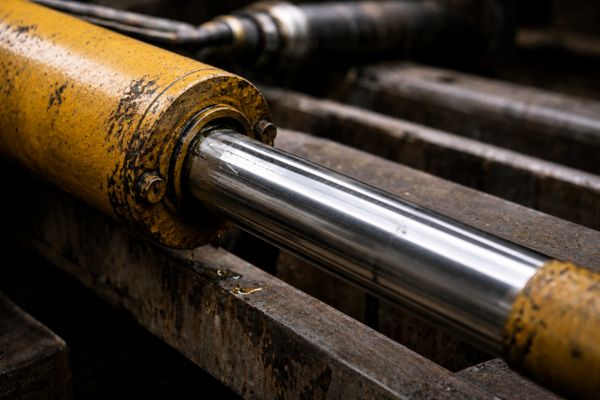
Is The Front Rod Seal The Main Culprit For Oil Puddles?
The front rod seal is the most vulnerable external sealing component because it is constantly exposed to ambient environmental contaminants and continuous physical friction. A torn rod seal allows fluid to weep out of the cylinder head gland cap during every forward extension stroke.
- Microscopic ambient dust particles adhere to wet rods and tear the sealing lip during retraction.
- High operating pressure pushes the elastomer material into clearance gaps, causing extrusion failure.
- Corrosive chemical vapors attack raw polyurethane compounds, causing the sealing lips to crack.
How Do Overheated Gland O-Rings Cause Steady Fluid Seepage?
The static O-ring located between the cylinder head gland and the main steel barrel sleeve can fail due to localized overheating or excessive machinery vibration. This structural degradation results in a steady drip of oil running down the outside body of the cylinder shell.
- Constant high-frequency system vibrations back off threaded gland cap rings over time.
- Extreme thermal cycling hardens static nitrile rubber components, causing them to lose elasticity.
- Over-tightening the gland during previous rebuilds pinches and cuts the static rubber compound.
| External Leak Location | Most Common Root Cause | Best Preventive Action |
| Front Rod Gland Cap | Torn Polyurethane Rod Seal | Install Heavy Duty Excluder Wiper Seal |
| Barrel Thread Junction | Pinched Static Gland O-Ring | Replace O-Ring and Torque Gland to Specification |
| Hydraulic Port Fitting | Cracked Flange Weld or Stripped Thread | Re-weld Port or Replace Fitting with O-Ring Boss |
How Do You Inspect Piston Rods For Critical Structural Defects?
You inspect piston rods for critical structural defects by utilizing precision dial indicators to check straightness tolerances and using profilometers to measure surface finish quality. Any surface imperfection or structural bending along the steel rod will quickly destroy new replacement seals and cause sudden component locking.
Can Minor Rod Bending Micro-Defects Destroy New Seals Quickly?
Operating a bent piston rod creates severe, uneven physical clearance gaps inside the hydraulic cylinder head gland assembly during daily machine cycles. This structural distortion places intense localized pressure on one side of the rod seal, causing it to fail within a few operational hours.
- Overloading the machinery beyond its rated mechanical capacity bends the steel rod structure.
- Accidental physical impacts from heavy factory equipment dent exposed chrome rod surfaces.
- Long-stroke cylinders operating horizontally sag under their own deadweight without external support tracks.
Why Are Surface Chrome Pitting And Deep Longitudinal Scratches Dangerous?
Tiny pits or deep longitudinal scratches in the hard chrome plating act like miniature saw blades that shred delicate rubber sealing lips every time the rod retracts. Inspecting the surface finish quality with precision tools helps stop seal degradation before it starts.
- Flying welding slag or abrasive grinding sparks melt small holes into the chrome layer.
- Corrosive ambient moisture or saltwater spray pits the underlying steel through chrome pores.
- Hard particulate contamination trapped in the wiper seal scores deep tracks along the rod.
| Rod Inspection Parameter | Measurement Target | Recommended Correction Tool |
| Straightness Tolerance | Less than 0.002 Inches Per Foot | Precision Dial Indicator and V-Blocks |
| Surface Finish Quality | 10 to 20 Micro-Inches Ra Max | Visual Inspection and Surface Profilometer |
| Chrome Layer Integrity | Zero Visible Pits or Flaking | Microscopic Inspection or Replating Service |
What Orderly Disassembly Steps Open A Stubborn Head Gland?
Opening a stubborn head gland requires a disciplined, step-by-step technical approach to prevent damaging the delicate internal threads or scoring the finished rod surface. Utilizing the correct industrial tools ensures you can access the internal components without deforming the main steel barrel sleeve.
How Do You Remove Threaded Gland Caps Safely Without Galling?
You remove threaded head glands by utilizing a heavy-duty, adjustable pin spanner wrench that fits perfectly into the machined face holes of the component. Applying smooth, continuous leverage prevents the tool from slipping and damaging the metal boundaries.
- Clean all external dirt and scale from the gland thread junction using a wire brush first.
- Apply a high-quality penetrating oil to the threads to loosen bonded rust or old locking compounds.
- Tap the gland face gently with a brass drift to break the internal thread bind safely.
What Method Extracts The Internal Rod Assembly Without Scoring Bore Walls?
Once the head gland is fully unscrewed, you extract the entire piston and rod assembly by pulling the rod straight out of the barrel along its exact horizontal centerline. Technicians must support the heavy steel assembly continuously to prevent the sharp metal edges of the piston from dragging along the finished internal bore walls.
- Slide the rod out slowly while holding a protective support cradle beneath the chrome body.
- Inspect the internal barrel bore immediately for any signs of deep scratching or physical scoring.
- Place the extracted assembly onto clean wood V-blocks to protect the finished surfaces from damage.
| Calculation Step | Required Action Taken | Critical Engineering Outcome |
| Step 1: Identify Total Load | Sum All Weights and Process Resistance | Establishes the True Minimum Target Push Force |
| Step 2: Calculate Piston Area | Apply Circle Formula to Internal Bore | Discovers Total Square Inches Available for Oil |
How Do You Properly Extract And Clean Machined Seal Grooves?
Properly extracting old seals and cleaning machined grooves requires specialized non-marring tools to ensure the sharp seating edges of the metal gland remain completely undamaged. Any minor scratch inside a seal groove will create a permanent leak path that bypasses new components easily.

Why Must You Avoid Using Sharp Steel Screwdrivers to Pick Seals?
You must avoid using sharp steel screwdrivers or metal picks because these tools easily scratch the soft aluminum or steel walls of the internal seal grooves. Technicians should utilize specialized brass or plastic hook sets that cannot gouge the underlying metal surfaces during removal.
- Metal scratches create microscopic leak channels that allow fluid to bypass new seals.
- Sharp tools can burr groove edges, which nicks new elastomer elements during installation.
- Plastic hooks provide sufficient leverage to remove hardened rubber elements safely.
What Cleaning Protocols Remove Varnish and Particulate Contaminants?
You must clean the disassembled gland and piston grooves thoroughly using a zero-residue solvent cleaner to remove old hydraulic varnish and metallic wear particulates. Any tiny piece of debris left behind in the groove will prevent new seals from seating completely flat against the metal walls.
- Wipe all grooves clean with a lint-free industrial microfiber cloth to prevent fabric contamination.
- Use a soft nylon brush to scrub away stubborn oxidized fluid deposits from internal corners.
- Spray the components with clean compressed air to verify every recess is perfectly dry.
| Oil Contamination Sign | Identified System Threat | Impact On Hydraulic Pressure |
| Cloudy or Milky Appearance | Free and Emulsified Water Ingress | Destroys Film Strength and Cuts Piston Seals |
| Dark Brown with Acrid Odor | Severe Fluid Oxidation and Varnish | Hardens Seals, Causing Low Operating Pressure |
What Technical Methods Ensure Proper Installation Of Elastic Seals?
Proper installation of elastic seals relies on strategic lubrication, controlled component flexing, and the use of specialized sizing sleeves to prevent stretching the elastomer beyond its elastic memory limits.
How Do You Safely Soften Stiff Teflon Seals For Elastic Installation?
You can safely soften stiff Teflon backup rings and heavy-duty U-cup seals by warming them slightly in clean, heated hydraulic fluid before installation. Warming the material increases its physical elasticity, allowing technicians to flex the seal into place without creating permanent kink marks.
- Submerge the new sealing elements in a clean container of system oil heated to 60°C.
- Avoid using open flames or heat guns, which can melt or warp the polymer structure.
- Flex the softened seal into a smooth kidney shape to pop it into internal gland recesses easily.
Why Is Matching Seal Direction To Circuit Pressure Crucial For Success?
Dynamic U-cup seals and asymmetrical lip elements are directional, meaning they must be installed with their open sealing lips facing toward the high-pressure fluid side of the circuit. If installed backward, system pressure will bypass the seal lip completely rather than flaring it outward to form a tight seal.
- Identify the main pressure source direction relative to the piston head or gland cap.
- Double-check that the seal lip cavity opens directly toward the incoming fluid stream.
- Use specialized seal installation cones to protect delicate lips from sharp thread edges.
| Diagnostic Test Method | Primary System Target | Expected Safety Outcome |
| Pre-Disassembly Gauge Check | Stored Line Accumulator Pressure | Confirms Zero Energy Before Technicians Break Fittings |
| End-of-Stroke Port Bypass | Internal Piston Seal Integrity | Safely Identifies Blown Seals Without Teardown |
What Proper Torque Specifications Lock Glands Securely Under Pressure?
Proper torque specifications lock head glands securely by utilizing a calibrated industrial torque wrench to achieve the exact clamping preload required by the system manufacturer. Neglecting proper torque values can cause the gland to back off during high-pressure cycles or distort internal guide rings.
Why Does Inadequate Torque Cause External Gland Joint Leakage?
Inadequate tightening torque allows the head gland assembly to shift or stretch slightly when exposed to heavy high-velocity fluid surges. This minor structural movement compresses the static end seals unevenly, allowing fluid to blow out past the threads.
- Loose glands allow high-pressure fluid spikes to deform internal static O-rings.
- Machine vibrations can slowly back off under-torqued threaded caps during operation.
- Uneven stress concentrations cause localized fatigue cracks along the main barrel threads.
What Step-By-Step Procedure Tightens Structural Gland Fasteners Evenly?
Technicians must utilize a calibrated torque wrench and tighten all head bolts or locking rings in an alternating star pattern across multiple incremental stages. This disciplined method ensures that the clamping pressure is distributed perfectly evenly across the entire face of the cylinder seal boundary.
- Clean and lubricate all fastener threads with light machine oil to ensure accurate torque readings.
- Tighten all retaining bolts finger-tight to ensure proper initial thread engagement.
- Torque the fasteners in a star sequence to 30%, then 60%, and finally 100% of the engineering specification.
| Calibration Stage | Adjusting Screw Action | Desired Circuit Pressure Goal |
| Stage 1: Safe Baseline | Back Out Screw Counter-Clockwise | Sets Minimum System Pressure for Safe Initial Start |
| Stage 2: Target Lock | Turn Inward Clockwise to Sized Limit | Achieves Full Calculated Pressure Plus Safety Margin |
Conclusion
By mastering effective internal bypass diagnostics, executing zero-energy safety isolation, and implementing precision maintenance procedures like star-pattern torque specifications, you can systematically eliminate unexpected machine downtime and protect your high-pressure assets from catastrophic structural failure. This comprehensive engineering manual solves the complex challenges of hidden fluid migration, destructive external rod gland leaks, and accelerated seal wear caused by circuit particulate contamination. If your facility maintenance crew encounters complex seal wear patterns or requires heavy-duty custom manufacturing components to upgrade system reliability, please contact us today.
FAQ
Can I use standard automotive grease to lubricate hydraulic cylinder seals during reassembly?
No. Standard automotive grease contains chemical thickening agents and base oils that will soften, swell, or dissolve industrial polyurethane seals over time. You must always use the specific hydraulic oil found in your main system reservoir to lubricate all sealing elements safely during reassembly.
What’s the best way to clean a scored internal cylinder barrel wall in the shop?
Light horizontal honing with a flexible deglazing tool is the best method to remove minor varnish deposits or superficial micro-scratches. However, if an internal scratch is deep enough to catch your fingernail, the barrel must be sent to a professional machine shop for re-boring or complete replacement.
How do I know if a rod seal leak is caused by excessive operating pressure?
Examine the failed seal under a magnifying glass to check for distinct extrusion wings or a ragged, sheared edge on the low-pressure side of the seal body. If the material looks pushed out of its machining groove, your system is experiencing extreme pressure spikes that exceed the seal material’s structural rating.
Can I replace a single blown tie rod on an industrial cylinder assembly?
No. You must always replace the entire set of tie rods simultaneously if one rod stretches or breaks under mechanical load. Replacing only a single rod creates uneven tensile loading across the cylinder head, which warps the head assembly and causes immediate fluid leakage.
How do I know if my cylinder requires external mechanical rod tracks?
Look for shiny, highly polished wear marks on only the top or bottom side of the chrome rod plating. If these uneven marks are present, your cylinder is suffering from severe mechanical side loading, meaning long-stroke applications will require external guide tracks to eliminate the destructive forces.