
How to Prevent Hydraulic Cylinder Problems with Proactive Maintenance
You can prevent hydraulic cylinder problems by implementing a comprehensive, step-by-step diagnostic protocol and establishing a regular scheduling routine for fluid analysis and hardware monitoring. You pull into your industrial production facility on a Monday morning only to find a pool of high-pressure fluid spreading across the concrete floor beneath your primary production machinery. A critical component has lost pressure overnight, causing a costly assembly line stoppage, missed delivery deadlines, and climbing shop labor costs. You need a fast diagnostic method to fix this issue and prevent it from happening again. Utilizing a structured technical framework allows plant maintenance teams to identify internal or external fluid bypass areas systematically before a catastrophic component failure halts your entire business operation.
Why Do Heavy Industrial Systems Experience Internal Bypass Failure?
Internal bypass failure occurs because degraded internal sealing elements or structural scoring allow high-pressure oil to slip past the piston head into the low-pressure return side of your system. This hidden migration drastically reduces the total linear mechanical force your equipment can generate, which slows down cycle times and creates immense thermal heat build-up within the system reservoir.
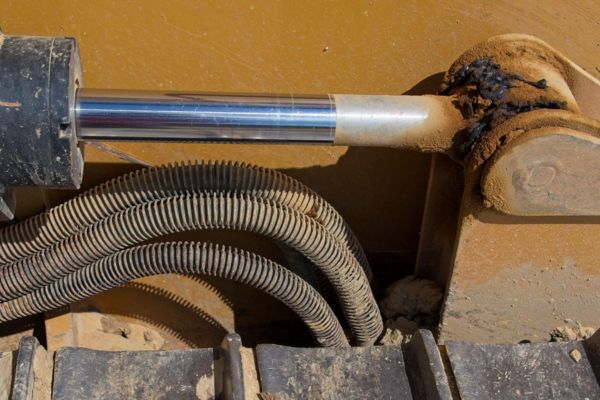
Are Worn Piston Seals The Primary Cause Of Pressure Losses?
Worn or degraded piston seals represent the absolute primary source of internal pressure loss in industrial heavy machinery. When these internal elastomer components break down, the oil bypasses the piston head completely during the stroke cycle.
- Contaminated hydraulic oil scratches the internal barrel surface and cuts thin grooves into the piston seal material.
- Severe chemical degradation from high operating temperatures hardens the rubber compound and destroys flexibility.
- Extreme pressure spikes stretch the cylinder body slightly, allowing oil to escape through the resulting gap.
- Incorrect installation practices can nick or twist the sealing lip during assembly, causing an immediate drop in operating pressure.
Can Severe Mechanical Side Loading Accelerate Fluid Bypass?
Mechanical misalignment creates severe side loading forces that push the piston assembly unevenly against one side of the internal steel barrel wall. This uneven physical force deforms the guide rings rapidly and allows the piston seal to ovalize.
- Improper machine leveling forces the rod to travel along an unaligned path during operation.
- Heavy eccentric loads pull the rod downward, crushing the internal wear bands over time.
- Loose mounting bolts allow the cylinder base to shift under high pressure cycles.
| Mechanical Symptom | Primary Internal Root Cause | Corrective Maintenance Action |
|---|---|---|
| Drastic Loss of Push Force | Destroyed Piston Seals | Replace Seals and Flush Hydraulic Fluid |
| Rapid Localized Heat Generation | High Velocity Oil Bypass | Reseal Piston and Inspect Internal Barrel |
| Uneven Rod Wear Patterns | Severe Structural Side Loading | Realign Machine Mounts and Replace Guide Rings |
How Do You Safely Isolate A Pressurized Fluid System?
You safely isolate a pressurized system by completely dissipating all stored electrical and fluid energy before your technicians begin handling the component fittings. Failing to execute proper safety isolation can cause accidental system movement, severe fluid injection injuries, or sudden mechanical collapse.
Why Must You Fully Extend The Rod Before Depressurization?
You must fully extend or completely retract the piston rod to eliminate trapped fluid volumes inside the cylinder chambers before opening any hydraulic connections. This physical positioning ensures no mechanical energy remains stored within the system.
- Gravity can cause un-supported heavy machine components to drop suddenly when lines are loosened.
- Trapped thermal expansion pressure can spray hot oil outward if a fitting is cracked open prematurely.
- Dual-acting circuits can hold dangerous pressure on both sides of the piston simultaneously.
- Internal pilot-operated check valves can trap high pressure even when the main control valve is open.
What Technical Steps Safely Release Residual System Energy?
Simply turning off the main electrical power switch to the hydraulic pump motor does not completely remove the dangerous residual fluid pressure stored inside your system accumulators or lines. Technicians must manually actuate the control valves multiple times to bleed all remaining pressure back to the reservoir tank safely.
- Shut down the electric motor and lock out the main electrical disconnect switch properly.
- Cycle all manual directional control valve levers through their full range of motion.
- Check the system pressure gauges to verify that the pressure reading reads exactly zero PSI.
| Isolation Step | Required Tooling | Expected Safety Outcome |
|---|---|---|
| Electrical Lockout | Padlock and Safety Tag | Prevents Accidental Pump Motor Activation |
| Valve Cycling | Manual Control Levers | Bleeds Trapped Pressure to the Oil Reservoir |
| Gauge Verification | Calibrated Fluid Pressure Gauge | Confirms Zero Energy State Before Disassembly |
What External Leakage Points Require Immediate Attention?
External fluid leaks require immediate technical attention because they ruin workplace safety by creating slick floors and increasing your total operational oil consumption expenses. Identifying the precise location of an external leak helps pinpoint exactly which external sealing component has failed. Implementing a comprehensive inspection protocol helps prevent hydraulic cylinder problems across your plant.
Is The Rod Seal The Main Culprit For External Fluid Puddles?
The rod seal is the most vulnerable external sealing component because it is constantly exposed to external environmental contaminants and continuous physical friction. A damaged rod seal allows fluid to weep out of the cylinder head gland during every single extension stroke.
- Microscopic ambient dust particles adhere to the wet rod and tear the seal lip during retraction.
- High operating pressure pushes the seal material into the gland clearance gap, causing extrusion failure.
- Corrosive chemical airborne vapors attack the polyurethane seal material, causing it to crack.
- Excessively dry operating conditions increase friction forces, scorching the seal lip material.
How Do Scorched Gland O-Rings Cause Steady Fluid Seepage?
The static O-ring located between the cylinder head gland and the main steel barrel sleeve can fail due to localized overheating or excessive physical vibration. This failure results in a steady drip of oil running down the outside body of the cylinder.
- Constant high-frequency system vibrations back off the threaded gland cap over time.
- Extreme thermal cycling hardens the static nitrile rubber O-ring, causing it to lose elasticity.
- Over-tightening the gland during rebuilds pinches and cuts the static rubber seal compound.
| External Leak Location | Most Common Root Cause | Best Preventive Action |
|---|---|---|
| Front Rod Gland Cap | Torn Polyurethane Rod Seal | Install Heavy Duty Excluder Wiper Seal |
| Barrel Thread Junction | Pinched Static Gland O-Ring | Replace O-Ring and Torque Gland to Specification |
| Hydraulic Port Fitting | Cracked Flange Weld or Stripped Thread | Re-weld Port or Replace Fitting with O-Ring Boss |
How Do You Inspect Piston Rods For Structural Defects?
You inspect piston rods for structural defects by utilizing precision dial indicators to check straightness tolerances and using profilometers to measure surface finish quality. Any surface imperfection or structural bending along the rod will quickly destroy new seals and cause sudden component locking.
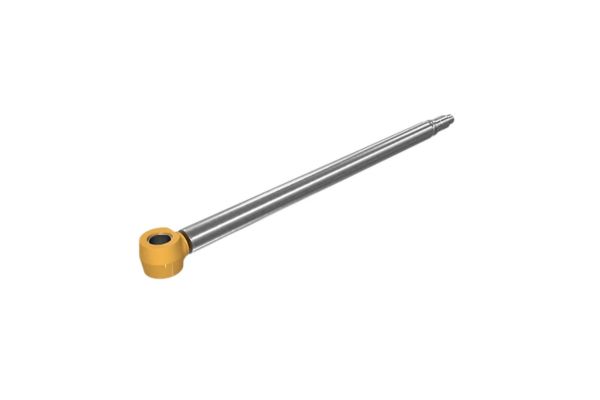
Can Bending Micro-Defects Destroy New Replacement Seals?
Operating a bent piston rod creates severe, uneven physical clearance gaps inside the cylinder head gland assembly. This structural distortion places intense localized pressure on one side of the rod seal, causing it to fail within a few operating hours.
- Overloading the machine beyond its rated mechanical capacity bends the steel rod structure.
- Accidental physical impacts from heavy external factory equipment dent the exposed rod surface.
- Long-stroke cylinders operating horizontally sag under their own physical weight without support.
Why Are Surface Chrome Pitting And Deep Scratches Dangerous?
Tiny pits or deep longitudinal scratches in the hard chrome plating act like miniature saw blades that shred the delicate rubber sealing lips every time the rod retracts into the cylinder. Inspecting the surface finish helps stop seal degradation before it starts.
- Flying welding slag or abrasive shop sparks melt small holes into the chrome plating.
- Corrosive ambient moisture or saltwater spray pits the underlying steel through chrome pores.
- Hard particulate contamination trapped in the wiper seal scores deep tracks along the rod.
| Rod Inspection Parameter | Measurement Target | Recommended Correction Tool |
|---|---|---|
| Straightness Tolerance | Less than 0.002 Inches Per Foot | Precision Dial Indicator and V-Blocks |
| Surface Finish Quality | 10 to 20 Micro-Inches Ra Max | Visual Inspection and Surface Profilometer |
| Chrome Layer Integrity | Zero Visible Pits or Flaking | Microscopic Inspection or Replating Service |
Why Choose Hydraulic Over Pneumatic Cylinders For Heavy Loads?
You choose hydraulic cylinders over pneumatic cylinders for heavy loads because hydraulics utilize incompressible liquid oil that can safely handle operating pressures up to 5,000 PSI while providing exceptionally precise speed control. Understanding the physical differences between oil and air helps you make the correct design choice for your facility infrastructure.
When Are High-Pressure Hydraulic Systems Absolutely Required?
High-pressure hydraulic systems are absolutely required when your industrial machinery must manipulate massive loads smoothly without positional drifting. This makes them perfect for heavy manufacturing applications like stamping presses, plastic injection molding, and heavy material handling.
- High operating pressures allow for incredibly compact, space-saving cylinder designs.
- Incompressible hydraulic oil enables precise intermediate positioning under variable mechanical loads.
- Internal hydraulic fluid automatically lubricates all internal moving parts to reduce component wear.
Where Do Pneumatic Systems Fall Short In Industrial Applications?
Pneumatic systems fall short because they utilize highly compressible compressed air, which makes it nearly impossible to maintain rock-solid positional control when the machine’s workload changes suddenly.
- Low plant air pressures require massive cylinder bores to generate heavy forces.
- Compressible air causes jerky, erratic movements when a machine encounters variable physical resistance.
- Compressed air lines require constant external oil lubrication misters to prevent internal seal scoring.
| Performance Attribute | Hydraulic Cylinders (Oil) | Pneumatic Cylinders (Air) |
|---|---|---|
| Maximum Force Capability | Extremely High (Up to 5,000+ PSI) | Low to Medium (Typically 100-150 PSI Max) |
| Position Control Precision | Rigid and Highly Predictable | Springy and Prone to Load Drifting |
| Total System Footprint | Compact Cylinders but Large Power Unit | Large Cylinders but Simple Air Line Hookup |
What Fluid Contamination Signs Indicate Imminent Failure?
Fluid contamination signs that indicate imminent failure include a cloudy or milky appearance in the oil, a dark brown color accompanied by an acrid burnt odor, or visible metallic particulates suspended in the fluid sample. Monitoring the condition of your oil allows you to detect internal component wear before a complete mechanical breakdown occurs.
Does Milky Hydraulic Fluid Mean Severe Water Contamination?
Milky or cloudy looking hydraulic fluid is a clear sign of severe water contamination, which destroys oil film strength and causes rapid rust formation inside the steel cylinder barrel. Water contamination also breaks down the chemical additives in the oil, leading to fast seal degradation. To keep your system clean, you must use a rigid protocol to prevent hydraulic cylinder problems before moisture enters the loop.
- Damaged or worn rod wiper seals pull ambient moisture and washdown water into the cylinder gland.
- High thermal cycling causes airborne moisture condensation inside the main oil reservoir tank.
- Failed internal fluid heat exchangers leak liquid cooling water directly into the oil stream.
Why Are Dark Oil And Acrid Odors Critical Warning Signs?
Dark, varnish-laden hydraulic oil that smells strongly of burnt chemicals indicates that your system is running too hot, causing the fluid to oxidize rapidly. This degraded oil leaves sticky varnish deposits on valve spools and hardens internal rubber seals.
- Operating the system past its maximum thermal limit cooks the oil molecules.
- High-velocity oil bypass through worn seals creates intense local hot spots.
- Extended fluid drain intervals allow chemical breakdown byproducts to accumulate in the system.
| Oil Condition Sample | Identified System Threat | Required Maintenance Response |
|---|---|---|
| Cloudy or Milky Appearance | Free and Emulsified Water | Install Water Absorbent Filters and Fix Seals |
| Dark Brown with Varnish Odor | Severe Fluid Oxidation | Flush Complete System and Replace Hydraulic Oil |
| Shiny Metallic Particulates | Component Wear Debris | Track Down Failing Pumps or Valves and Flush System |
How Do You Test For Internal Piston Seal Bypass Safely?
You test for internal piston seal bypass safely by executing an end-of-stroke or a mechanically blocked mid-stroke pressure test to see if fluid migrates past the piston head into an unpressurized open port. Detecting an internal leak through standard visual inspection is impossible because the fluid bypass occurs completely inside the heavy steel cylinder barrel.
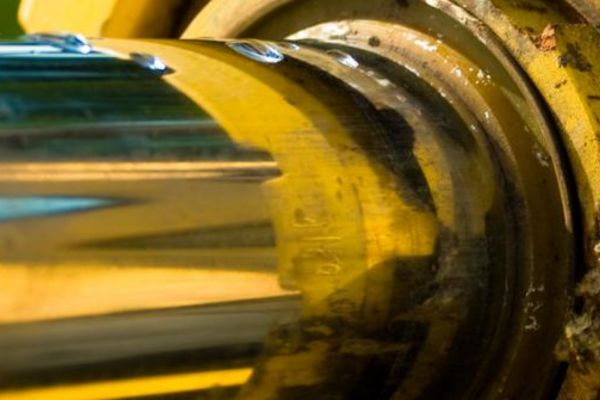
How Does The Standard End-Of-Stroke Bypass Test Work?
The end-of-stroke bypass test isolates the piston head at one end of the cylinder barrel to see if pressurized fluid can leak past the internal seals into the opposite open port. This test provides a definitive answer regarding the sealing integrity of your internal components.
- Safely extend the piston rod completely to the forward end of the cylinder stroke.
- Disconnect the hydraulic line from the retract port and place a collection container underneath.
- Apply full operating pressure to the extend port and watch the open retract port closely.
- Any steady stream of oil leaking out of the open port confirms the piston seals are blown.
Why Use Mid-Stroke Testing For Localized Cylinder Barrel Wear?
Piston rods often operate within a very narrow, specific range of their full stroke, causing localized wear holes or scratches to form right in the center of the steel barrel wall. Testing at mid-stroke helps locate these hidden internal barrel defects.
- Mechanically block the piston rod securely at the exact midpoint of its working travel.
- Disconnect the return line and apply full operational pressure to the opposite port.
- Check for fluid bypass leaking out of the open port at this specific mid-stroke position.
| Test Methodology | Primary Target Area | Diagnostic Benefit |
|---|---|---|
| End-of-Stroke Bypass Test | General Piston Seal Failure | Confirms Overall Seal Lip Degradation Safely |
| Mechanically Blocked Mid-Stroke | Localized Internal Barrel Wear | Finds Specific High-Wear Zones Inside Tube |
What Is The Correct Torque Procedure For Cylinder Tie Rods?
The correct torque procedure for cylinder tie rods requires applying torque in an alternating star pattern across multiple incremental stages using a calibrated torque wrench. Tie rod cylinders rely entirely on the uniform clamping force generated by their high-tensile steel rods to hold the head, barrel, and cap assemblies together securely under high operating pressures.
Why Does Uneven Tie Rod Torque Cause Gland Leaks?
Applying uneven torque to the different tie rods twists the cylinder head gland assembly out of square relative to the main steel barrel sleeve. This minor structural twisting creates a crooked path for the piston rod, pinching the rod seal and causing external leaks.
- Over-tightening one side twists the static head O-ring out of its machined groove.
- Loose tie rods stretch unevenly when pressurized, allowing fluid to blow past the end seals.
- Uneven stress creates high localized friction points that can score the chrome rod plating.
What Specific Pattern Ensures Perfect Structural Alignment During Assembly?
Technicians must always use an alternating star pattern in multiple incremental steps to tighten tie rod nuts, ensuring the clamping force is distributed perfectly evenly across the entire face of the cylinder end cap. This method prevents structural binding.
- Clean and lubricate all tie rod threads thoroughly with light machine oil first.
- Tighten all nuts finger-tight to ensure proper thread engagement across the board.
- Use a calibrated torque wrench to tighten the nuts in a star pattern to 30% of final torque.
- Repeat the exact same star pattern sequence to achieve 60% and then 100% specification.
| Torque Stage | Target Specification Percentage | Desired Structural Goal |
|---|---|---|
| Stage 1: Hand Tight | Alignment Only | Secures Components in Square Alignment |
| Stage 2: First Pass | 30% of Final Torque Value | Begins Even Clamping Pressure Across Head |
| Stage 3: Final Pass | 100% of Final Torque Value | Achieves Full Rated Structural Preload Safely |
How Do Cushion Valve Adjustments Prevent Impact Damage?
Cushion valve adjustments prevent impact damage by restricting fluid flow at the very end of the hydraulic cylinder stroke, which creates a protective hydraulic braking effect that slows the piston rod down smoothly. End-of-stroke cushion valves are critical safety devices designed to protect the solid steel end caps from severe mechanical shock loads.
Do Improperly Set Cushion Valves Cause Structural Frame Cracks?
When cushion valves are backed out too far, the heavy piston slams into the steel end cap at full operating velocity, sending massive shock waves through the machine frame. Over time, this repetitive metal-on-metal impact cracks welds and breaks mounting bolts.
- High-velocity metal impacts mushroom the internal steel piston head over time.
- Severe mechanical shock waves travel down hydraulic lines, loosening critical tube fittings.
- Excessive physical impact stresses fatigue the front cylinder mounting flanges.
How Do You Safely Adjust Internal Cushion Needle Valves?
Adjusting the cushion needle valve requires a precise touch to balance fast machine cycle times with smooth, shock-free deceleration at the ends of the stroke. Technicians must perform this tuning under low initial pressure settings.
- Loosen the cushion needle locknut carefully while the machine is completely shut down.
- Turn the needle valve inward clockwise until it seats lightly to maximize cushioning.
- Back the needle out counter-clockwise one full turn to establish a safe baseline setting.
- Start the machine and turn the needle slightly until the rod decelerates smoothly without bouncing.
| Cushion Needle Adjustment | Resulting Mechanical Effect | Impact On Cylinder Lifespan |
|---|---|---|
| Turned Too Far Inward (Closed) | Rod Bounces and Stalls Prematurely | Creates High Fluid Pressure Spikes |
| Turned Too Far Outward (Open) | Piston Slams Into End Caps Violently | Causes Fast Structural Metal Fatigue |
| Correctly Calibrated Setting | Smooth, Quiet Deceleration at End | Maximizes Machine Component Operating Life |
How Do You Safely Recommission A Rebuilt Cylinder?
You safely recommission a rebuilt cylinder by manually bleeding all trapped air from the highest points of the circuit and cycling the component multiple times at very low pressure without any mechanical load attached. Returning a newly rebuilt or repaired cylinder back into active production requires a careful, controlled startup procedure to prevent dry-firing or immediate seal damage.

Why Must You Manually Bleed Trapped Air From The System?
Trapped air inside a hydraulic cylinder compresses under pressure, causing jerky machine movements and a destructive phenomenon known as dieseling. This occurs when compressed air bubbles explode thermally, scorching and destroying your new rubber seals.
- Trapped air pockets cause erratic, unpredictable machine movements during initial startup.
- Rapid air compression generates intense localized heat that melts polyurethane seals.
- Aerated hydraulic fluid reduces system stiffness and ruins precise positioning control.
What Low-Pressure Cycling Procedure Protects New Seals?
You should never operate a newly installed cylinder at full speed or maximum operational pressure right out of the gate. Technicians must cycle the cylinder multiple times at very low pressure to fill the chambers with oil and lubricate the seals safely.
- Back the main system pressure relief valve out completely to achieve minimum operating pressure.
- Jog the directional control valve slowly to move the piston rod back and forth gently.
- Cycle the rod through its full stroke ten times without any mechanical load attached.
- Slowly increase the system pressure back to its standard operating setting while checking for leaks.
| Recommissioning Step | Action Taken | Operational Benefit |
|---|---|---|
| Bleed Air Ports | Open Bleed Screws at High Points | Eliminates Trapped Air Bubbles and Prevents Dieseling |
| Low-Pressure Cycling | Run Cylinder at 200 PSI for 10 Cycles | Lubricates New Seal Elements and Stabilizes Motion |
| Final Torque Check | Re-verify All Mounting Fasteners | Ensures Machine Integrity Before Full Production |
Conclusion
By mastering internal bypass diagnostics, executing zero-energy safety isolation, and implementing precision maintenance procedures like star-pattern tie-rod torquing, you can systematically eliminate unexpected machine downtime and protect your fluid power assets from catastrophic failure. This engineering manual solves the complex challenges of hidden internal fluid migration, destructive external rod leaks, and accelerated seal wear caused by circuit contamination.If your facility maintenance crew encounters complex seal wear patterns or requires heavy-duty custom manufacturing components to upgrade system reliability, please contact us today.
FAQ
Can I use standard automotive grease to lubricate hydraulic cylinder rod wiper seals?
No. Standard automotive grease contains chemical thickening agents and base oils that will soften, swell, or dissolve industrial polyurethane seals over time. You must always use the specific hydraulic oil found in your main system reservoir to lubricate all sealing elements safely during reassembly.
What’s the best way to clean a scored internal cylinder barrel wall in the shop?
Light horizontal honing with a flexible deglazing tool is the best method to remove minor varnish deposits or superficial micro-scratches. However, if an internal scratch is deep enough to catch your fingernail, the barrel must be sent to a professional machine shop for re-boring or complete replacement.
How do I know if a rod seal leak is caused by high operating pressure?
Examine the failed seal under a magnifying glass to check for distinct extrusion wings or a ragged, sheared edge on the low-pressure side of the seal body. If the material looks pushed out of its machining groove, your system is experiencing extreme pressure spikes that exceed the seal material’s structural rating.
Can I replace a single blown tie rod on an industrial cylinder?
No. You must always replace the entire set of tie rods simultaneously if one rod stretches or breaks under mechanical load. Replacing only a single rod creates uneven tensile loading across the cylinder head, which warps the head assembly and causes immediate fluid leakage.
How do I know if my cylinder requires external mechanical rod supports?
Look for shiny, highly polished wear marks on only the top or bottom side of the chrome rod plating. If these uneven marks are present, your cylinder is suffering from severe mechanical side loading, meaning long-stroke applications will require external guide tracks to eliminate the destructive forces.