
How to Perform Hydraulic Cylinder Sizing for Accurate Replacements
Your equipment is offline, and the replacement hydraulic cylinder you ordered doesn’t fit, all because of a simple measurement mistake. This error not only costs you critical time and money but also leads to extended downtime and mounting frustration. The reality is, accurate hydraulic cylinder sizing is the only way to avoid these setbacks. This guide gives you a clear, step-by-step process to size your cylinder correctly, ensuring that every replacement matches perfectly the first time and keeps your machinery working without disruption.
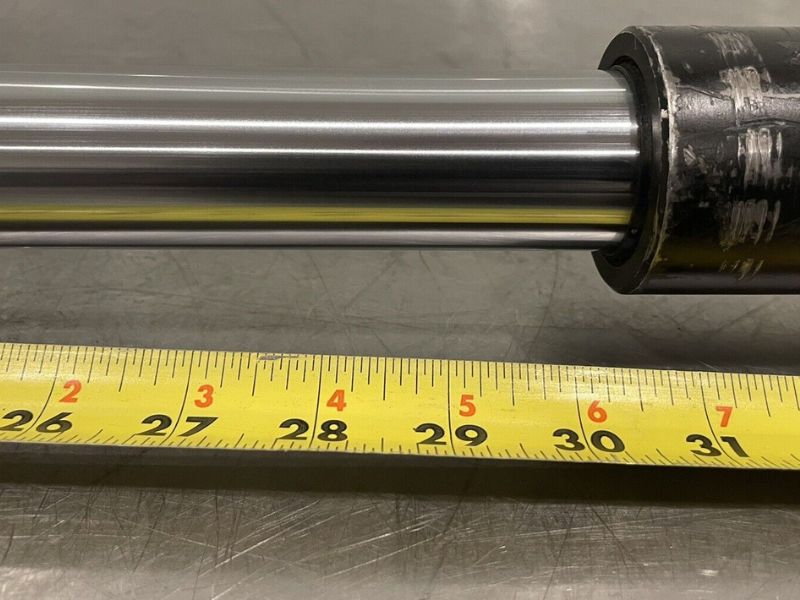
What’s the First Step in Hydraulic Cylinder Sizing?
What are the main types of cylinders?
First, you need to identify your cylinder type to ensure you order a compatible replacement. The most common industrial cylinders are piston-rod styles.
- Tie Rod Cylinders
- Welded Body Cylinders
- Mill Duty Cylinders
How do I tell if my cylinder is single or double-acting?
Look at the number of hydraulic ports to determine if your cylinder is single or double-acting. This distinction is crucial for operational compatibility.
- Single-acting: One port for hydraulic fluid to enter.
- Double-acting: Two ports, one to extend and one to retract.
Why is identifying the type important for replacement?
Identifying the cylinder type correctly is the most important first step for sourcing a functional replacement. An incorrect type will not work with your hydraulic system.
- Ensures correct force application.
- Guarantees system compatibility.
Correctly identifying the cylinder’s construction and action type is the foundation for an accurate replacement.
| Measurement | Description | Why It Matters |
| Cylinder Type | Tie-rod, Welded, or Mill Duty. | Determines the cylinder’s basic construction and application suitability. |
| Action Type | Single-acting (1 port) or Double-acting (2 ports). | Ensures the replacement cylinder functions correctly within your system. |
What Info is Key for Hydraulic Cylinder Sizing?
Where can I find a part or serial number?
The easiest way to identify your cylinder is by finding its nameplate, which is typically fixed to the body. This plate contains the most direct information for ordering a replacement.
- Look for a metal plate or stamp.
- Check the cylinder barrel or end caps.
What information is on a cylinder nameplate?
A nameplate provides the exact specifications needed for a direct replacement from the manufacturer. You can often avoid manual measurements entirely.
- Manufacturer’s Name
- Part Number
- Serial Number
What if the nameplate is missing or unreadable?
If you can’t find or read the nameplate, you must proceed with manual measurements. This guide will walk you through every step to gather the necessary data.
- Proceed to the next section for bore measurement.
- Prepare your measurement tools.
A legible nameplate is the fastest path to a replacement, but manual measurements are a reliable backup.
| Information Source | Details Provided | Action if Unavailable |
| Nameplate | Manufacturer, Part Number, Serial Number. | Proceed to manual measurement of all critical dimensions. |
| Part Number | A direct reference for ordering an exact replacement. | Use the serial number or begin manual measurements. |
Is Bore Vital for Hydraulic Cylinder Sizing?
How is the piston or bore diameter measured?
The bore is the inside diameter of the cylinder barrel, which is the cylinder’s primary dimension. If the cylinder is disassembled, you can measure it directly with calipers.
- Measure the inside of the cylinder tube.
- Alternatively, measure the piston’s diameter.
Can I calculate bore size from the outside diameter?
Yes, if the cylinder is assembled, you can estimate the bore by measuring the barrel’s outside diameter (OD). Subtract the wall thickness twice from the OD.
- Measure the cylinder barrel’s OD.
- Reference a standard tubing size chart.
Why is the bore measurement so critical?
The bore diameter is essential because it directly determines the force the cylinder can generate. An incorrect bore size will lead to underperformance or system failure.
- Defines the cylinder’s power.
- It’s a foundational spec for any replacement.
The bore is the most critical dimension as it defines the cylinder’s force output.
| Measurement | Method | Importance |
| Bore (Piston) Diameter | Direct measurement of the inner barrel or piston, or calculated from the outer diameter. | Determines the cylinder’s force capabilities. |
How Does Rod Affect Hydraulic Cylinder Sizing?
What is the correct way to measure the rod diameter?
Use calipers or a micrometer to get a precise measurement of the piston rod’s thickness. This dimension is vital for calculating the cylinder’s retracting force.
- Measure across the chrome-plated rod.
- Ensure the tool is held straight.
What tools are needed for an accurate rod measurement?
For the highest accuracy, you should use professional-grade measuring tools. Precision here prevents costly fitment and performance issues later.
- Digital or dial calipers
- Micrometer
Why does rod diameter prevent future cylinder failure?
A correctly sized rod is crucial for transferring force and withstanding operational stress. An undersized rod can bend or break under load.
- Ensures structural integrity.
- Prevents bending and catastrophic failure.
An accurate rod diameter measurement is crucial for durability and calculating retract force.
| Measurement | Method | Importance |
| Rod Diameter | Use calipers or a micrometer for a precise reading of the rod’s thickness. | Prevents rod bending and is needed for retract force calculation. |
How is Stroke Vital for Hydraulic Cylinder Sizing?
What is the method for measuring retracted length?
Measure the distance from a fixed point on the cylinder mount to a mark on the rod when it is fully retracted. This is the first of two measurements needed to find the stroke.
- Fully retract the cylinder rod.
- Measure from the mounting pin center to the rod pin center.
What is the method for measuring extended length?
Next, measure the distance between the same two points when the rod is fully extended. This provides the second value needed for the stroke calculation.
- Fully extend the cylinder rod.
- Measure between the same pin centers.
How do you calculate the final stroke length?
The stroke is the total distance the cylinder travels, calculated by subtracting the retracted length from the extended length. This measurement must be exact.
- Stroke = Extended Length – Retracted Length
- An inaccurate stroke can damage your equipment.
The stroke is the difference between the extended and retracted lengths and must be precise.
| Measurement | Formula | Importance |
| Stroke | Extended Length – Retracted Length | Defines the cylinder’s range of motion. |
What About Rod End Hydraulic Cylinder Sizing?
What are the standard NFPA rod end styles?
Most industrial cylinders use rod end styles standardized by the National Fluid Power Association (NFPA). Identifying the style is key for proper connection.
- Standard Male Threads
- Standard Female Threads
- Intermediate Male Threads (“Special”)
How do I measure rod end threads and dimensions?
Use a thread gauge and calipers to determine the thread pitch and size of the rod end. You must also measure other features like the rod shoulder length.
- Use a thread gauge for thread pitch.
- Use calipers for diameter and length.
Why does the rod end style need to be exact?
The rod end connects the cylinder to your machinery, so it must be an exact match. An incorrect style or size will make installation impossible.
- Ensures proper alignment.
- Guarantees a secure connection to the load.
The rod end style and thread dimensions must be an identical match for a successful replacement.
| Measurement | Tools | Importance |
| Rod End Style | Visual identification, thread gauge, calipers. | Ensures the cylinder can attach correctly to your machinery. |
Does Mount Style Impact Hydraulic Cylinder Sizing?
What are the most common mounting styles?
Cylinders use various mounting styles depending on the application and equipment manufacturer. Common types include flange, clevis, trunnion, and lug mounts.
- Flange Mounts: For fixed, high-force applications.
- Pivot Mounts: Includes clevis and trunnion styles for pivoting movement.
- Side Lug Mounts: For side-mounted stability.
How can I identify my cylinder’s mount type?
You can identify your mount by visually comparing it to an NFPA standard mounting chart. This helps ensure the new cylinder will bolt into place.
- Compare your cylinder to a visual guide.
- Note the style code (e.g., MS2 for side lug).
How do I ensure the new mount will fit my equipment?
After identifying the style, you must measure the mount’s critical dimensions, like bolt hole patterns. You must confirm it fits within your machine’s frame.
- Measure pin-hole diameters.
- Check bolt hole spacing and flange dimensions.
The mounting style and its dimensions must match exactly to ensure the replacement cylinder fits your machine.
| Measurement | Method | Importance |
| Mounting Style | Visual comparison with NFPA charts and physical measurement of dimensions. | Guarantees the new cylinder can be installed in the existing framework. |
Are Ports Part of Hydraulic Cylinder Sizing?
How do I identify port thread type and size?
Use a thread gauge and calipers to determine the size and thread type of the hydraulic ports. Common thread types are SAE, NPT, and JIC.
- Use a thread gauge for pitch.
- Use calipers for size.
- Alternatively, use a known fitting to test.
Does the location of the ports matter for fitment?
Yes, the location of the ports is crucial for connecting your hydraulic hoses without obstruction. Ports can be on the end caps, top, or sides.
- Note the position and orientation of each port.
- Ensure the new cylinder’s ports are accessible.
What tools are needed to measure hydraulic ports?
Accurate port measurement requires the same precision tools used for other dimensions. Having the right tools prevents leaks and connection failures.
- Thread Pitch Gauge
- Calipers
- A set of known fittings for verification.
Port size, type, and location must be correctly identified to ensure leak-free hose connections.
| Measurement | Tools | Importance |
| Port Size & Type | Thread gauge and calipers. | Ensures hydraulic hoses can connect properly and without leaks. |
| Port Location | Visual inspection and notation. | Guarantees hose connections are physically possible without interference. |
What Factors Affect Hydraulic Cylinder Sizing?
How does working pressure influence my choice?
The system’s operating pressure determines the cylinder’s required duty rating. Mismatching the pressure rating can lead to catastrophic failure.
- Medium Duty: Up to 1500 PSI.
- Heavy Duty: Up to 3000 PSI or more.
What environmental conditions should I consider?
Note any extreme conditions the cylinder will be exposed to during operation. The environment dictates the materials needed for longevity.
- High or low temperatures.
- Presence of dust, debris, or corrosive chemicals.
How do temperature and dust affect seal selection?
Extreme temperatures and contaminants require specialized seals and wipers to prevent leaks and internal damage. Standard seals will fail quickly in harsh conditions.
- High temperatures require Viton seals.
- Dusty environments need rod wipers or boots.
Consider the operating pressure and environment to select the correct duty rating and seal materials.
| Factor | Consideration | Importance |
| Working Pressure | Match the cylinder’s duty rating (e.g., 3000 PSI) to your system’s pressure. | Prevents seal failure and structural damage. |
| Environment | Note temperature, dust, and corrosive elements. | Dictates the selection of appropriate seals, wipers, and materials. |
How to Verify Hydraulic Cylinder Sizing Specs?
Why must I compare my data to a drawing?
Comparing your measurements to a manufacturer’s drawing is the final verification step. This is your last chance to catch any errors before you place an order.
- It provides a visual confirmation of all dimensions.
- It eliminates guesswork and ensures accuracy.
How do I get a manufacturer’s drawing to verify?
Many manufacturers provide online configuration tools that generate a detailed drawing based on your inputs. You can get a 2D or 3D drawing to approve.
- Use online configurators.
- Ask your supplier to generate one for you.
What is the final step before ordering?
The final step is to sign off on the verified drawing, confirming all dimensions are correct. This creates a record and ensures accountability for the order.
- Review every dimension on the drawing.
- Provide a signature of approval.
Always verify your measurements against a manufacturer’s drawing and sign off before ordering.
| Final Step | Action | Purpose |
| Drawing Verification | Compare your measurements to a configured manufacturer drawing. | Catches any errors and visually confirms all specifications. |
| Final Approval | Sign the verified drawing. | Confirms your order’s accuracy and provides a record for future use. |
Conclusion
You now have a clear roadmap to accurately measure any hydraulic cylinder, eliminating the common errors that lead to downtime. If you need assistance verifying your dimensions or sourcing the right replacement, our team of fluid power specialists is here to help. Contact us today to turn your measurements into a perfect-fit solution and keep your machinery running flawlessly.
Frequently Asked Questions
Q1: Can I replace my existing cylinder with one from a different brand?
A1: Yes, as long as the critical dimensions—bore, stroke, rod diameter, retracted/extended length, and mounting style—are identical, an equivalent cylinder from another manufacturer is a viable option.
Q2: What’s the best tool to measure the hydraulic cylinder bore?
A2: An inside micrometer or calipers are best if the cylinder is disassembled. If assembled, use an outside caliper on the barrel and a standard tubing chart to find the corresponding inner diameter.
Q3: What happens if my stroke measurement is off by a small amount?
A3: An incorrect stroke can cause the cylinder to bottom out or fail to fully extend. This can damage the cylinder, the linkage, or the machine itself over time.
Q4: How do I know if I need a heavy-duty or medium-duty cylinder?
A4: Your system’s maximum operating pressure determines this. Systems operating up to 1500 PSI typically use medium-duty cylinders, while those up to 3000 PSI or more require heavy-duty models.
Q5: Can I use an adapter if my hose fittings don’t match the new cylinder’s ports?
A5: Yes, adapters are a common solution for connecting different thread types. However, you must use high-quality adapters rated for your system’s pressure to prevent dangerous leaks.