
How to Identify Different Types of Hydraulic Cylinder for Your Machinery?
You are standing in front of a stalled machine during the peak of your operational season, watching hydraulic fluid drip onto the gravel. A non-functional piece of equipment quickly translates into mounting downtime costs and missed delivery deadlines. The root cause is a failed fluid power component, but ordering a replacement is a minefield of potential errors. If you cannot accurately determine the exact construction, mounting style, and duty rating required, the new part will either fail to fit or buckle under operational stress. Recognizing the specific design differences is the only way to restore system efficiency and guarantee workplace safety.
What Is a Hydraulic Cylinder and Why Does Type Identification Matter?
A hydraulic cylinder is a linear actuator that converts fluid pressure into a controlled, straight-line mechanical force. Sourcing a replacement based solely on “close enough” dimensions is a major risk factor for premature seal degradation and structural component cracking.
Are you risking your machinery’s structural integrity by using mismatched components? When fluid power parameters do not align with original equipment specifications, your equipment experiences severe stroke interference or immediate mounting joint binding. Ensuring exact alignment requires a comprehensive understanding of standard industrial designs to prevent recurring failures.
Tie-Rod Cylinders vs Welded Body Configurations
Industrial and agricultural machinery relies heavily on two primary body construction styles: tie-rod and welded body configurations. Tie-rod cylinders utilize high-strength external steel rods to secure the end caps to the barrel housing. This open design makes them highly service-oriented and common in factory automation and mid-duty agricultural tools. In contrast, welded cylinders feature heavy-duty end caps welded directly to the steel barrel, eliminating the need for bulky rods. This compact profile allows them to operate reliably in high-pressure mobile construction equipment where spatial constraints are tight and structural loads are intense.
- Tie-Rod Construction: Features external threaded rods, lower manufacturing costs, and simple on-site seal kit replacements.
- Welded Construction: Offers an optimized structural envelope, superior resistance to pressure spikes, and structural integrity under severe bending forces.

Single-Acting vs. Double-Acting Fluid Work Dynamics
The method used to actuate the piston determines whether a single-acting or double-acting configuration is required for the application circuit. Single-acting designs apply pressurized hydraulic oil to only one side of the internal piston, using an external load force or a heavy-duty mechanical return spring to retract the rod. Double-acting models feature fluid ports on both ends of the barrel, utilizing pressurized oil to actively drive the rod through both extension and retraction strokes.
- Single-Acting Power: Delivers unidirectional force, relies on gravity or springs for return cycles, and uses simplified control valve plumbing.
- Double-Acting Power: Provides precise bidirectional stroke control, uniform movement speeds, and is essential for complex multi-axis implement operations.
How Can You Differentiate Tie-Rod Cylinders From Welded Body Designs?
Distinguishing between these two dominant structural styles involves a quick visual check of the barrel exterior and looking closely at how the end caps are joined to the main housing. Tie-rod configurations are instantly recognizable by their long steel bolts running parallel to the barrel tube, whereas welded designs display smooth, continuous circular weld beads joining the end plates to the heavy-wall steel cylinder tube.
Directly checking the maximum pressure rating stamped on the manufacturer’s identification tag will immediately reveal the cylinder’s structural category. Tie-rod designs generally operate within a standard envelope of 2,000 to 3,000 PSI, making them ideal for stationary plant machinery and light implements. Welded configurations regularly manage pressures from 3,500 up to 5,000 PSI, positioning them as the standard choice for heavy construction machinery like excavators, crawler dozers, and demanding mining equipment.
Structural Comparison of Industrial Cylinder Designs
| Design Metric | Tie-Rod Cylinder Configurations | Welded Body Cylinder Designs |
| Max Pressure Rating | Standard 2,000 to 3,000 PSI limits | High-pressure 3,500 to 5,000+ PSI |
| Repair Methodology | Simple hand tools, on-site service | Demands specialized fixtures or welding |
| Space Requirements | Bulky footprint due to external rods | Compact outer diameter for tight spaces |
| Primary Applications | Plant automation, agricultural tools | Excavators, heavy cranes, mining rigs |
Why Do Tie-Rod Cylinders Dominate Agricultural and Industrial Plants?
Tie-rod cylinders are favored in standard agricultural machinery and industrial assembly lines because they provide long-term serviceability at an optimized initial purchase cost. The external rod design allows a technician to quickly disassemble the actuator using standard box wrenches, making seal changes simple right on the shop floor.
Could simple field repairs be the key to minimizing your operational asset downtime? When a rod seal begins to weep fluid on a processing line, a tie-rod design allows for a rapid rebuild without requiring specialized welding fixtures. This simple repair path keeps your production schedules on track.
The Mechanics of Threaded External Tension Rods
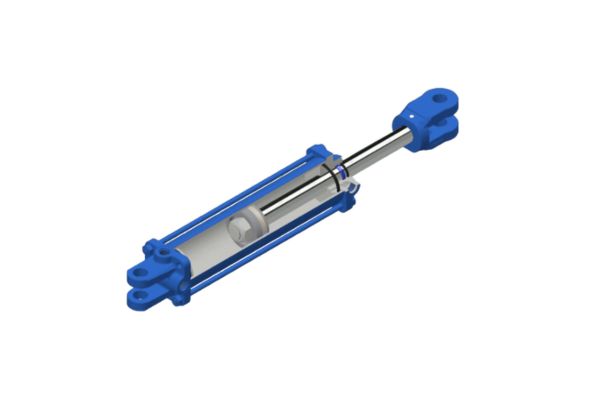
The defining characteristic of a tie-rod actuator is the array of high-tensile steel rods that hold the end caps securely against the cylinder barrel. These rods are pre-torqued to exact engineering specifications to maintain a reliable seal under high internal fluid pressures. This distributed bolt structure spreads stress evenly across the cast iron end components, preventing local material distortion during intense work cycles.
- High-Tensile Steel Rods: Four or more exterior bolts running parallel to the barrel tube to clamp components together.
- Cast Iron End Plates: Heavy-duty end pieces that handle high compression loads from pre-torqued assembly bolts.
- Replaceable Internal Barrel: A smooth-bore steel center tube held firmly in place by external clamping forces.
What Makes Welded Body Cylinders Superior for Heavy Construction Equipment?
Welded body cylinders are engineered to withstand the extreme environmental conditions and high structural loads common in heavy construction work. By welding the end caps directly to the seamless steel barrel, manufacturers eliminate the bulky rod structure, significantly increasing structural rigidity and reducing the cylinder’s overall footprint.
Does your heavy machinery require structural components that resist high bending forces? When an excavator bucket digs into fractured rock, the boom components encounter massive lateral loads and extreme pressure spikes. A welded body prevents barrel deflection under these severe forces, protecting internal components from premature failure.
Compact Spatial Footprint and Multi-Stage Telescopic Extensions
The absence of external tension bolts allows welded actuators to fit into tight structural spaces on heavy mobile machinery. This compact profile also enables the manufacturing of multi-stage telescopic cylinders, which provide long extension strokes from a very short retracted length.
- Reduced Outer Diameter: Smooth exterior walls allow for close mounting clearances near heavy structural steel booms and linkages.
- Telescopic Barrel Sections: Multiple nesting steel sleeves that extend sequentially to provide long reach for dump truck hoists.
- Direct Integrated Ports: Hydraulic line ports are welded directly onto the barrel wall, reducing line interference risks.
Structural Integrity Against High Bending Forces and Pressure Spikes
Welded joint construction forms a unified steel structure that manages high internal pressure spikes far better than bolt-clamped assemblies. This design prevents high-pressure oil from stretching structural components and causing sudden fluid blowouts.
- Seamless Steel Tubing: High-yield heavy-wall steel barrels designed to resist ballooning under extreme hydraulic spikes.
- Forged Steel Mounting Ends: End rings and clevis mounts are welded continuously to provide exceptional resistance to fatigue cracking.
- Heavy-Duty Internal Guide Rings: Wide wear bands that distribute lateral offset loads evenly across the internal piston surface.
How Do You Determine If Your Machine Needs a Single-Acting or Double-Acting Model?
Selecting the correct operational dynamic depends on whether your machine’s hydraulic circuit requires fluid power to drive the actuator in one direction or requires active, controlled force for both extension and retraction strokes.
Directly checking the number of hydraulic hoses connected to the cylinder body will instantly clarify its internal design. A single-acting model features only one hydraulic line port to supply oil for the extension stroke, relying on gravity or an internal spring for retraction. A double-acting unit will always feature two distinct port connections, allowing the operator to steer, lift, and pull with consistent hydraulic force.
Circuit Differences Between One-Way and Two-Way Power
| Design Parameter | Single-Acting Hydraulic Designs | Double-Acting Hydraulic Systems |
| Hydraulic Port Count | Single fluid port configuration | Dual opposing fluid ports |
| Return Mechanism | External gravity loads or internal spring | Active pressurized fluid reversal |
| Directional Control | Force generation in one direction | Balanced push and pull capabilities |
| Valve Complexity | Uses basic 3-way hydraulic circuits | Requires advanced 4-way valve spools |
Which Type of Cylinder Best Fits High-Stress Agricultural Equipment?
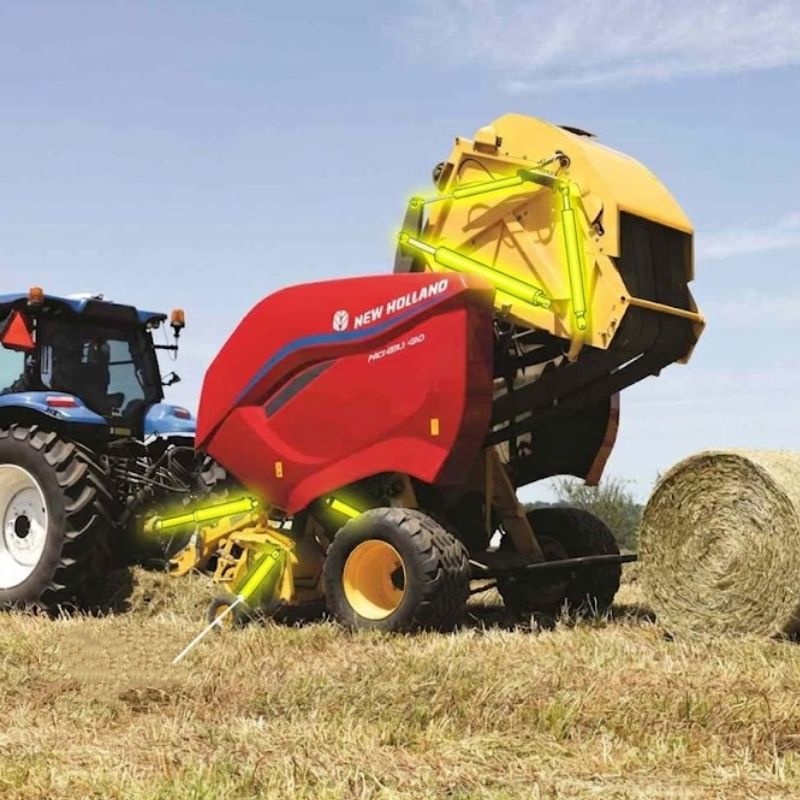
Agricultural implements operate in harsh outdoor environments, facing abrasive crop dust, chemically aggressive fertilizers, and heavy structural shock loads. Choosing the correct actuator type is essential to prevent unexpected failures during time-sensitive planting and harvesting windows.
Examining the specific implement configuration will quickly determine the optimal cylinder type for your tractor or attachment. Front-end loaders and multi-stage tillage tools require rugged welded double-acting cylinders to handle continuous multi-axis loads. Conversely, three-point hitch systems often use single-acting lift cylinders where gravity provides reliable downward return force.
Handling Continuous Dust and Corrosion in Tillage Implements
The long-term reliability of farm equipment depends heavily on the surface treatments applied to the exposed cylinder rods. Premium agricultural components feature advanced plating to prevent environmental corrosion from damaging internal seals.
- Induction-Hardened Chrome Rods: Piston rods engineered to resist rock chipping and prevent abrasive soil particles from scratching the shaft.
- Double-Lip Wiper Seals: High-performance exclusion seals designed to scrape off dried mud and crop residue during every retraction stroke.
- Corrosion-Resistant Coatings: Specialized specialized paint formulas that shield the steel barrel exterior from corrosive agricultural chemicals.
Choosing Specialized Mounts for Articulated Steering Systems
Articulated steering systems on high-horsepower tractors require cylinders that can adapt to changing angles without binding. Using specialized mounting ends ensures smooth steering performance without twisting the cylinder shaft.
- Spherical Bearing Ends: Pivot mounts that allow for minor multi-axis angular misalignment during tight field turns.
- Heavy-Duty Cross-Tube Hubs: Welded steel end sleeves designed to handle high lateral loads during heavy field work.
- Hardened Steel Pin Bushings: Replaceable wear liners that prevent direct metal-on-metal friction from damaging structural mounting points.
How Do You Safely Measure a Hydraulic Cylinder for an Exact Replacement Match?
Accurately measuring a hydraulic cylinder requires step-by-step precision to ensure the new component fits perfectly into your machine’s existing mounting slots and operates safely within the system’s space constraints.
Always depressurize the machine’s hydraulic lines completely before taking any physical measurements to prevent accidental movement or fluid injection hazards. Use high-precision vernier calipers to record critical component tolerances rather than relying on a standard tape measure. This level of accuracy prevents installation issues later.
Measuring Core Internal and Shaft Dimensions
Finding the exact cylinder size involves identifying three fundamental dimensions: internal bore diameter, piston rod thickness, and total stroke travel.
- Internal Tube Bore: Measure the inside diameter of the barrel tube—not the outer casing—to determine the cylinder’s force capability.
- Piston Rod Diameter: Use digital calipers to measure the thickest section of the chrome shaft to ensure adequate structural strength.
- Total Stroke Travel: Subtract the fully retracted length from the fully extended length to find the exact piston travel distance.
Verifying Mounting Geometry and Port Alignment
The replacement cylinder must align precisely with the machine’s existing structural attachment pins and hydraulic line connections to function correctly.
- Pin-to-Pin Retracted Length: Measure the exact distance between the centers of the mounting pin holes when the cylinder is fully retracted.
- Mounting Clevis Width: Record the internal clearance distance of the end forks to ensure a secure fit without lateral play.
- Hydraulic Port Orientation: Verify the placement angle and thread standard of the fluid ports (such as SAE, NPT, or BSPP) to ensure straightforward hose routing.
How to Establish a Reliable Preventative Maintenance Routine?
Implementing a structured preventative maintenance schedule is essential to extend the working life of your fluid power components and minimize unexpected equipment downtime.
Catching minor seal weeping early during daily walk-around checks prevents minor issues from developing into costly field failures. Keeping detailed maintenance logs allows fleet managers to accurately predict when components will need service before the busy work season begins.
Executing Daily Visual Inspections and Greasing Schedules
Routine daily upkeep should focus on inspecting key pivot points and checking the cleanliness of the exposed cylinder rod surface.
- Daily Pin Lubrication: Pump high-pressure grease into all mounting joints to displace water and prevent abrasive metal wear.
- Rod Surface Inspection: Check the extended piston shaft daily for visible pitting, score marks, or signs of chrome flaking.
- Gland Leak Assessment: Inspect the cylinder head area for excessive oil weeping, which indicates a failing primary rod seal.
Managing Seasonal Fluid Changes and System Flushes
Long-term reliability requires monitoring the quality of the hydraulic oil and replacing system filters at regular intervals to eliminate built-in contaminants.
- Scheduled Filter Replaced: Swap out system hydraulic filters according to the equipment manufacturer’s recommended operating hour intervals.
- Annual Oil Analysis: Send fluid samples to a specialized laboratory to check for moisture content and metallic wear particles.
- Storage Rod Protection: Coat all exposed steel shafts with a specialized protective grease before parking equipment outdoors for the winter.
Summarized Engineering Checklist for Sourcing Fluid Power Components
| Procurement Phase | Critical Inspection Metric | Action Item for Technical Verification |
| 1. Structural Style | Tie-rod vs. Welded barrel body | Check external rods or circular weld beads to determine construction type. |
| 2. System Pressure | Maximum operating PSI limit | Verify the machine’s pump output against the cylinder’s structural duty rating. |
| 3. Fluid Dynamics | Single-acting vs. Double-acting | Count the hydraulic line ports to match the system’s control valve plumbing. |
| 4. Core Sizing | Bore, rod diameter, and stroke travel | Use high-precision calipers to measure dimensions to the nearest millimeter. |
| 5. Mounting Fit | Clevis style, pin size, and port threads | Confirm the mounting pin clearances and hydraulic thread standard before ordering. |
Conclusion
Accurately identifying and measuring different types of hydraulic cylinder configurations is a critical engineering skill required to keep industrial and agricultural machinery running efficiently. Misjudging basic parameters like internal bore size, mounting alignment, or pressure duty ratings can quickly lead to unexpected equipment failures and expensive operational downtime.
Our engineering team specializes in reverse-engineering old components and matching complex agricultural setups with precise transition fittings and high-durability cylinders. Rather than dealing with generic parts sourcing errors, contact us today to secure a reliable global supply of precision-engineered components designed to handle your toughest operational challenges.
Frequently Asked Questions
Can I replace a tie-rod cylinder with a welded body model on my machine?
Yes, you can substitute a welded model if the core dimensions match perfectly. You must ensure that the pin-to-pin retracted length, total stroke travel, and mounting pin hole diameters align precisely with your machine’s original configuration. Welded bodies have a smaller outer diameter, so they will easily fit into the spatial envelope, but you must double-check that the hydraulic hose port angles do not cause hose interference with surrounding structural steel components during operation.
What is the best method to determine my cylinder’s internal bore size if it is still assembled?
The most reliable method is to check the manufacturer’s specification stamp on the identification tag or reference the part number in the equipment service manual. If the tag is missing or illegible, you can use calipers to measure the outside diameter of the steel barrel, then subtract the estimated wall thickness of the tube (typically 1/4 inch to 3/8 inch for standard industrial applications) from each side to approximate the internal bore dimension.
How do I know if my cylinder drift is caused by internal leakage or a bad control valve?
You can isolate the issue by running a manual bypass test on the hydraulic circuit. Extend the cylinder completely, turn off the machine engine, and safely disconnect the return-side hydraulic hose at the cylinder port, placing the open end into a clean bucket. Re-apply hydraulic pressure to the extend circuit; if fluid flows continuously out of the open port, the internal piston seals are worn and allowing oil to bypass. If no oil leaks from the port, the drift is caused by an internal leak in the machine’s control valve spool.
Can a bent piston rod be safely straightened and reused in heavy equipment?
No, a bent hydraulic piston rod should always be replaced rather than straightened for heavy industrial operations. The structural bending action introduces micro-cracks into the high-tensile steel matrix and damages the hard chrome plating layer. Even if the rod looks straight after press work, the material’s structural integrity is compromised, making it highly prone to sudden snapping or jamming under full system pressures.
How often should I grease the cylinder mounting pins during the work season?
Mounting pins should be greased every 8 to 10 operating hours during intense field work or daily during high-cycle construction shifts. Regular lubrication forms a protective barrier that pushes out water, abrasive soil dust, and crop debris, preventing metal-on-metal friction from carving deep grooves into the mounting pins and enlarging the structural attachment bores.