
How To Diagnose A Hydraulic Pressure Cylinder Failure Fast
You notice your heavy machinery slowing down, its mechanical limbs dropping under load, or a visible trail of fluid pooling on the shop floor. In the high-stakes world of fluid power operations, unexpected machinery downtime eats your margins and stalls critical project timelines. This industrial guide provides an engineering-backed field diagnostic playbook to identify, isolate, and address a hydraulic pressure cylinder failure before a micro-leak escalates into a catastrophic structural blowout.
How Do I Identify Internal Leakage In A Hydraulic Cylinder?
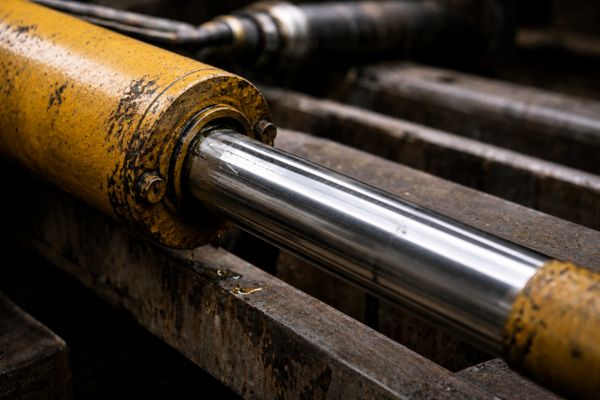
Internal leakage occurs when piston seals fail, allowing high-pressure fluid to bypass the piston head into the low-pressure return side. This failure model completely compromises the system’s volumetric efficiency.
Why Does Piston Seal Bypass Hurt System Performance?
When a piston seal degrades, fluid slips between chambers, causing operational drift. You will notice the cylinder failing to hold a static position under load, leading to uncommanded mechanical drift or sagging limbs.
- An internal bypass directly drops holding pressure, meaning a front-end loader or heavy press arm will steadily sink.
- Because the fluid recirculates across the piston head rather than executing linear work, the continuous friction rapidly elevates the temperature of your entire hydraulic system.
How Do I Isolate Internal Bypass Without Complex Shop Bench Tools?
To verify an internal fluid bypass in the field, you must physically isolate the oil path using a simple cylinder bypass test. Follow this systematic engineering checklist:
- Fully extend the piston rod to its maximum structural mechanical stroke limit.
- Safely shut off the primary hydraulic pump power source and relieve all residual pressure.
- Disconnect the hydraulic hose line attached specifically to the rod-end cylinder port.
- Temporarily place a clean, graduated container beneath the open rod-end cylinder port.
- Reapply hydraulic pressure to the blind-end port, forcing the cylinder to hold extension.
Diagnostic Evaluation: If oil flows continuously from the open rod-end port into your container, your piston seals are torn or completely extruded. A healthy cylinder should show no more than a few drops of residual bypass seep.
| Internal Failure Mode | Key Symptom | Primary Component At Fault |
| Piston Seal Extrusion | Rapid drift under load, overheating fluid | Nitrile or polyurethane piston seals |
| Barrel Scoring | Chronic internal bypass, metal-to-metal friction | Damaged cylinder barrel walls |
| Spool Valve Contamination | Erratic cylinder tracking, system pressure drops | Main control valve spool lands |
What Causes A Cylinder Rod To Bend Under Heavy Pressure?
A bent rod represents a severe mechanical structural failure that instantly locks up your linear motion system. It typically stems from excessive side loading, incorrect mounting torque, or structural impacts.
How Does Side Loading Destabilize A Cylinder?
Side loading occurs when lateral force is applied perpendicular to the rod’s linear axis. This uneven force distribution forces the rod out of alignment, creating immense friction against the internal gland bearings and piston guide rings.
- Worn pivot pins or elongated eye-bracket holes shift the cylinder’s alignment, inducing heavy side load stress during maximum extension.
- Heavy attachments like bucket implements can twist under load, pushing the rod sideways rather than keeping the force vector purely linear.
Can Excessive System Operating Pressure Bend Chromed Rods?
Yes, running your hydraulic system past its engineered relief valve threshold can buckle a fully extended rod. High pressure spikes create extreme column loading that exceeds the material yield strength of your steel.
- When a cylinder hits a hard mechanical stop under high flow rates, the sudden kinetic kinetic deceleration can induce a rod bend.
- Poor front-end alignment concentrates the raw pushing force onto one side of the rod wall, accelerating material deformation.
How Bad Is Cylinder Rod Pitting For Seal Longevity?
Rod pitting is a form of deep surface corrosion that creates micro-craters on the polished chrome layer. These microscopic pits act like sandpaper, tearing new rod seals to shreds within a few operating cycles.
Why Do Rusted Rod Surfaces Cause Recurrent Fluid Leaks?
As the pitted rod retracts into the hydraulic cylinder, its rough surface grinds against the soft elastomer lips of the wiper and rod seals. This abrasive friction creates micro-tears that allow hydraulic fluid to seep out along the rod shaft.
- Once the chrome plating breaks down from salt or fertilizer exposure, base metal rust expands underneath, flaking off the surrounding chrome layers.
- Deep pits also trap dirt and external grit, pulling abrasive environmental contaminants directly past the scraper seal into the high-pressure oil chamber.
What Structural Thresholds Determine If A Pitted Rod Is Repairable?
You must gauge pit depth before attempting a field repair or ordering an expensive replacement part. Use this visual severity scale to guide your maintenance path:
- Minor Surface Rust: Light discoloration with zero tactile depth. Can be polished off with a very fine emery cloth and fresh hydraulic oil.
- Moderate Roughness: Shallow pitting felt with a gloved finger. Requires deep wet sanding, micro-filling, and seal kit replacement.
- Severe Cratered Pitting: Deep grooves and chrome flaking that catch a fingernail. Polishing is completely futile; the rod must be re-chromed or entirely replaced.
What Is Cylinder Chrome Failure And How Do I Spot It?
Chrome failure occurs when the electroplated hard chrome layer separates from the underlying carbon steel rod substrate. This destroys the smooth surface finish needed to maintain a leak-free seal.
Why Does Hard Chrome Flake Off An Industrial Rod?
Chrome flaking is typically caused by poor surface preparation during manufacturing or intense mechanical stress during high-load cycles. If the plating shop leaves micro-contamination on the raw metal, the chrome layer will fail to bond correctly.
- Micro-cracking within the chrome allows corrosive chemical agents to seep through, rusting the steel base and pushing the chrome off in sheets.
- Structural impacts from gravel or heavy tools dent the rod, creating a localized stress concentration that blisters the surrounding plating.
How Do I Conduct A Quick Field Triage Test For Chrome Adhesion Loss?
You do not need an advanced metallurgical lab to verify early-stage chrome adhesion failure on your industrial equipment. Try this simple 3-minute check:
- Extend the cylinder fully to expose the maximum length of the chrome rod.
- Use a clean lint-free cloth to thoroughly remove all grease and dust.
- Run an oiled plastic scraper along the rod surface while watching for catching.
- Look closely for milky, dull patches or tiny blisters indicating pocket separation.
| Chrome Plating Defect | Primary Root Cause | Operational Impact On Cylinder |
| Hydrogen Embrittlement | Poor post-plating baking cycles | Sudden brittle rod fractures under high load |
| Porous Deposits | Low current density during plating | Accelerated sub-layer rod rust and pitting |
| Blistering / Lifting | Metal substrate contamination | Destruction of rod seals, massive fluid leaks |
How Do Worn Mounts Bushings and Pins Cause Cylinder Failure?
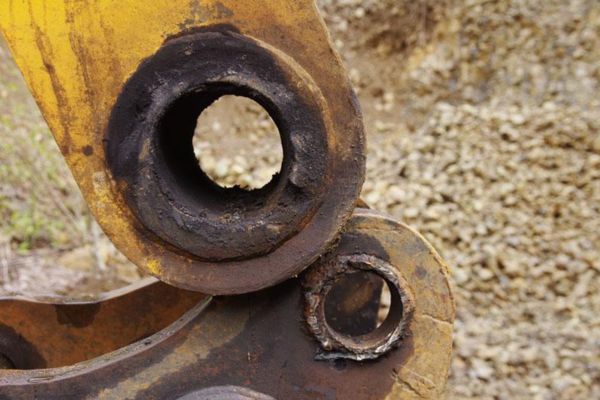
Cylinder mounts, pivot pins, and spherical bearings form the mechanical mechanical joint that transfers linear fluid force into machinery movement. When these mounting components wear out, the entire cylinder structural alignment shifts out of axis.
Why Does Joint Slop Induce Premature Cylinder Seal Wear?
As bushings wear down and pin holes elongate, a loose mechanical connection develops. This extra play allows the cylinder body to twist or rock side-to-side during high-pressure extension cycles.
- This rotational twisting shifts the internal rod centerline, concentrating heavy pressure against one edge of the gland bush.
- This localized loading distorts the rod seal profile, opening up a microscopic gap on the opposite side that spits high-pressure fluid.
How Can I Measure Pin and Bushing Wear Tolerances Safely?
To accurately check for hidden play in your cylinder mounting points, use this practical mechanic’s diagnostic check sequence:
- Mount a magnetic base dial indicator onto the fixed structural bracket of your heavy equipment.
- Place the indicator stylus tip directly onto the outer surface of the cylinder mounting eye ring.
- Slowly actuate the hydraulic system under minimal load to shift the cylinder joint back and forth.
Why Is Hydraulic Fluid Contamination The Number One Cylinder Killer?
Hydraulic oil is not just a medium for force transmission; it is the vital lubricating film that protects your internal moving components. Microscopic grit suspended in contaminated fluid destroys precision tolerances through continuous abrasion.
How Do Microscopic Silt Particles Destroy Precision Internals?
When hard particulate matter enters your hydraulic system, it gets trapped between the high-speed sliding surfaces of the cylinder barrel wall and the piston guide rings. This induces chronic abrasive scoring along the internal metal bores.
- Silt particles cut micro-grooves into the polished barrel finish, creating permanent low-pressure paths for internal bypass leaks.
- Contaminated oil chemical breakdown breaks down the elastomeric structure of your seals, causing them to harden, crack, or dissolve prematurely.
How Do I Read Fluid Clarity Symptoms Without An Oil Lab Kit?
You can identify severe oil contamination early by executing a basic visual patch appraisal during routine filter changes. Look for these clear warning signs:
- Draw a small fluid sample from the middle of the main system reservoir tank.
- Pour the oil onto a clean, white lint-free cloth or filter paper sheet.
- Check the color against clean fluid; a dark brown or black shade signals heavy oxidation.
- Look for a milky white appearance, which confirms catastrophic water emulsion.
What Are The Signs Of Hydraulic Cylinder Barrel Scoring?
Internal barrel scoring occurs when deep axial scratches rip down the interior polished walls of the cylinder tube. This internal damage creates a permanent path for high-pressure fluid to bypass the piston seals.
What Physically Induces Scratches Inside A Cylinder Tube?
Barrel scoring is typically caused by loose internal debris, a broken piston ring, or a severely bent rod forcing metal-to-metal contact. When particles grind against the bore, they gouge out deep tracks.
- A loose piston retaining nut can back off its threads, scraping metal directly against the precision honed interior walls.
- Severe structural side loading can completely crush the piston wear bands, forcing raw steel onto steel contact inside the barrel.
How Can I Diagnose A Scored Barrel Wall In the Field?
You can verify internal tube scoring by tracking cylinder movement stability and reviewing oil filter particles. Check for these indicators:
- The cylinder will drop or stutter unevenly as the piston passes over the scored section of the tube.
- You will find bright, shiny metallic flakes or fine steel slivers trapped in the main return oil filter element.
- The cylinder barrel housing will feel intensely hot near the scored zone due to the high friction of continuous internal fluid bypass.
| Visual Bore Condition | Primary Root Cause | Required Corrective Action |
| Light Cross-Hatch Fade | Normal operational lifecycle wear | Simple barrel honing and fresh seal kit |
| Deep Axial Gouging | Loose metal fragments, broken ring | Boring to oversize or full barrel replacement |
| Internal Tube Rippling | High pressure spikes, barrel swelling | Immediate structural scrapping of the tube |
How Do I Safely Depressurize A Cylinder Before Maintenance?
Trapped hydraulic fluid under high pressure is an invisible hazard that can cause severe injury or component damage. You must completely neutralize all potential energy before loosening any hydraulic fitting.
Why Is System Depressurization Critical For Shop Safety?
A pressurized hydraulic cylinder stores massive mechanical energy. If you unbolt a fluid line or crack a gland nut while pressure remains trapped inside, high-velocity oil can blast out, causing severe skin injection injuries.
- Actuating control levers with the engine shut off may not relieve pressure if the system incorporates load-holding check valves.
- Thermal expansion from hot weather can spike pressure inside a blocked fluid line even when the machine is completely turned off.
What Structural Step Sequence Guarantees A Neutralized Fluid Circuit?
To safely eliminate all fluid pressure from a cylinder circuit, follow this strict field maintenance protocol:
- Lower all implements and mechanical arms completely flat until they rest on solid ground.
- Shut down the primary diesel or electric engine and engage the safety lockout tags.
- Slowly cycle all hydraulic control valve levers through their full directional strokes multiple times to bleed accumulator charge.
When Is Rebuilding A Damaged Cylinder Better Than Buying New?
When a cylinder fails, you face a critical commercial decision: order an expensive new replacement component or invest in a shop rebuild kit. The choice hinges on core component salvage integrity.
What Component Damage Flags A Cylinder As Non-Repairable?
You cannot economically salvage a cylinder if its primary structural elements are deformed. If the main tube wall is bulged, cracked, or deeply scored beyond standard oversize machining limits, the housing is scrap metal.
- A piston rod that exhibits deep structural cracks near the eye-weld zone cannot be safely straightened or reused.
- Corroded port threads that are stripped out or cracked down the root require full component replacement to ensure safe high-pressure operation.
How Should You Evaluate Rebuild ROI for Machinery Operations?
To choose the most profitable maintenance path for your machinery fleet, calculate total repair costs against your strict operational uptime requirements:
- Rebuild Advantage: If the rod and barrel are smooth, installing a premium seal kit costs less than 20% of a new cylinder, offering excellent ROI for vintage or non-standard equipment.
- Replacement Advantage: For standard machinery lines where every hour of downtime stalls critical delivery schedules, swapping in a pre-tested aftermarket cylinder minimizes your total losses.
What Steps Optimize A Cylinder Reassembly After Seal Replacement?
Reassembling a cylinder requires clinical cleanliness and precise mechanical alignment. Introducing even a single grain of dust during seal installation can doom your newly rebuilt assembly to premature failure.
How Do I Prevent Seal Damage During Internal Component Reinsertion?
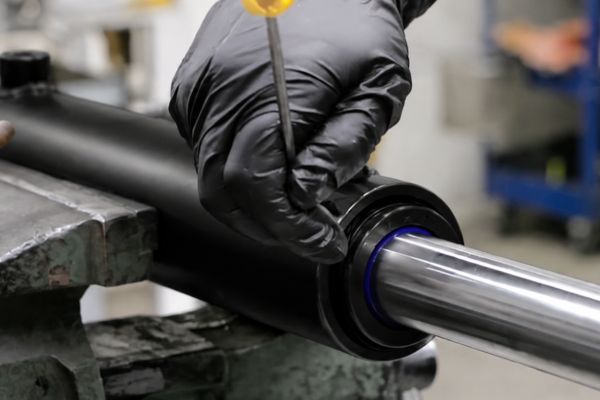
The sharp threads and machined edges on a piston rod can easily slice through soft new polyurethane seals during assembly. You must use protective tools and deep lubrication to guarantee a smooth layout.
- Wrap tough plastic assembly tape or a specialized sleeve over the rod mounting threads to shield the seal lips as they slide into place.
- Always coat all internal seals, wear bands, and barrel bores with clean, high-grade hydraulic oil to prevent dry friction tearing during the initial stroke.
What High-Pressure Fastener Checks Secure The Reassembled Unit?
To prevent a major internal component blowout under maximum system working load, follow this mechanical fastening sequence:
- Clean all internal thread surfaces thoroughly with a high-strength degreasing solvent to eliminate residual oil.
- Apply a medium or high-strength anaerobic thread-locking compound to the primary piston-retaining nut.
Torque Spec Calibration: Tighten the piston retaining nut to the exact manufacturer specification using a calibrated click-type torque wrench. Never rely on an un-calibrated pneumatic impact gun for this critical structural connection.
| Fastener Location | Common Spec Range | Critical Verification Step |
| Piston Retaining Nut | 250 – 600 ft-lbs | Calibrated torque wrench check, thread-lock fluid |
| Cylinder Gland Cap | 150 – 350 ft-lbs | Spanner wrench torque check, clean face seal |
| Mounting Bracket Bolts | 80 – 200 ft-lbs | Grade 8 fastener inspection, lock washer check |
Conclusion
We understand that a hydraulic pressure cylinder failure stalls your equipment and cuts into your operational productivity. By mastering field port isolation tests, measuring joint play tolerances, and matching your cylinder specs to your real workload, you can cut troubleshooting hours and stop chronic fluid leaks. If your inspection reveals deep structural barrel scoring or a heavily buckled steel rod, field repairs are no longer economical. When your system demands a complete component upgrade, sourcing precision-engineered fluid power assemblies secures long-term structural reliability. For durable heavy-duty solutions built to withstand extreme operational pressures, contact us today to explore our comprehensive industrial inventory and secure your machinery’s efficiency.
Frequently Asked Questions
Can I run a cylinder with minor surface scratches on the rod?
Yes, you can operate a cylinder with tiny surface marks, but you must monitor it closely. Light blemishes can be carefully polished smooth using a very fine abrasive cloth to prevent immediate seal abrasion, though deep grooves require a full rod replacement.
What is the best way to determine if my cylinder leak is internal?
The most accurate method is to extend the rod fully, safely disconnect the rod-end return hose line, and reapply pressure to the opposite side. Continuous oil pouring out of the open port confirms your internal piston seals are completely blown.
How do I know if a bent cylinder rod can be straightened safely?
You should replace a bent rod rather than trying to straighten it for heavy-duty industrial operations. Pressing a buckled rod back into alignment introduces internal micro-cracks that compromise material structural integrity, leading to sudden failures under maximum system load.
How often should I replace cylinder rod wiper seals?
You should replace your wiper seals during every routine cylinder rebuild or whenever you notice external fluid weeping past the gland cap. Searing new wipers onto your machine blocks environmental grit from entering your high-pressure chambers.
Can uneven tire pressure cause steering cylinder drift?
Yes, unequal tire inflation changes the rolling radius of your front wheels, inducing an artificial steering pull that resembles an internal cylinder leak. Always check your tire pressures and axle alignment before unbolting any hydraulic line.