
How to Work Hydraulic Cylinder Safely in Heavy-Duty Applications
You need to generate immense, controlled force for demanding jobs, but manual effort is unrealistic and alternative systems are either too bulky or lack precision. Without the right solution, inefficiency, project delays, and safety risks quickly pile up, making heavy lifting feel impossible. The answer lies in understanding how to work hydraulic cylinder—a compact, powerful, and precise system that transforms pressurized fluid into incredible mechanical force, turning the toughest tasks into effortless operations.
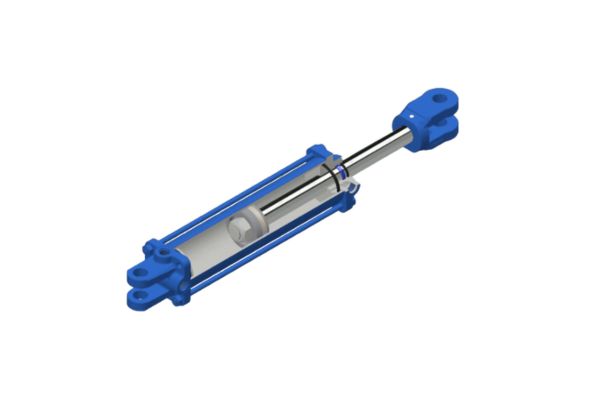
How to work hydraulic cylinder: The basics
Understanding a hydraulic cylinder starts with one core concept: Pascal’s Law. This principle states that pressure applied to an enclosed, incompressible fluid is transmitted equally in all directions. It’s the scientific foundation that allows a small input force to be multiplied into a massive output force.
What is Pascal’s Law?
Here’s the deal: think of squeezing a sealed water balloon. The pressure you apply with your fingers is felt equally across the entire inner surface of the balloon. Hydraulic systems use this exact principle, but instead of a balloon, you have a robust cylinder, and instead of water, you have specialized hydraulic oil.
How does fluid transmit pressure?
The fluid inside is key because it cannot be easily compressed. When you push on the fluid at one end, that force travels through the fluid to push on something at the other end. This process involves several key elements working in concert:
- Incompressible Fluid: The medium (usually oil) that transfers the energy.
- Sealed Container: The cylinder barrel that contains the fluid under pressure.
- Force Input: The pump that creates the initial pressure.
The magic of hydraulics lies in using an incompressible fluid within a sealed system to transmit and multiply force from one point to another.
| Component | Role in the System | Principle at Play |
| Incompressible Fluid | Transmits force without losing volume. | Pascal’s Law |
| Sealed Cylinder | Contains the pressure. | Force Containment |
| Pump | Generates initial fluid pressure. | Energy Input |
How to work hydraulic cylinder: Step 1 Fluid
The entire process begins with the hydraulic fluid, the lifeblood of the system. This specially formulated oil is designed to not only transfer power but also to lubricate components and resist heat. The right fluid is crucial for optimal performance and longevity.
What fluid powers the cylinder?
You’ll find several types of hydraulic fluid, each suited for different environments and tasks. The most common options you can choose from include:
- Mineral-based Oils: The go-to for general industrial and mobile machinery due to their affordability and good lubrication.
- Synthetic Oils: Used in extreme temperature or high-pressure applications for their superior chemical resistance.
- Water-based Fluids: Chosen for high-fire-risk areas like mining due to their lower flammability.
How is the fluid introduced?
The bottom line is that fluid is stored in a reservoir and drawn into the system by a pump. From there, it is directed into the cylinder through hoses and valves. This controlled introduction of fluid is what initiates the entire force-generation cycle.
Selecting the correct hydraulic fluid and ensuring its clean delivery into the cylinder is the essential first step for the system to function.
| Hydraulic Fluid Type | Key Characteristics | Ideal Applications |
| Mineral-based Oils | Affordable, versatile, good lubrication. | General industrial and mobile machinery. |
| Synthetic Oils | High temp & chemical resistance. | Extreme condition, precision equipment. |
| Water-based Solutions | Lower flammability, safer. | Mining, steel production, fire-risk areas. |
How to work hydraulic cylinder: Step 2 Pressure
Once the fluid is in the system, the hydraulic pump takes over to create pressure. Think of the pump as the heart of the system, circulating the fluid and giving it the energy needed to do work. Without pressure, the fluid is just passive liquid.
What is the pump’s role?
The pump’s job is to push the hydraulic fluid into the cylinder, creating flow and pressure. Different pumps are used depending on the system’s requirements for pressure and flow rate:
- Gear Pumps: Simple and durable, great for general applications.
- Piston Pumps: The powerhouse for high-pressure, high-efficiency needs in heavy machinery.
- Vane Pumps: Quieter and ideal for indoor or noise-sensitive environments.
How does pressure create force?
But what does that mean for you? According to Pascal’s Law, the pressure created by the pump acts uniformly on the entire surface of the piston head inside the cylinder. This is where force multiplication happens: even a modest pressure, when applied over a large piston area, generates a massive output force.
The hydraulic pump converts mechanical energy into hydraulic energy by pressurizing the fluid, which then acts on the piston to create force.
| Pump Type | Function | Suitable Applications |
| Gear Pump | High flow rates, durable, simple. | General industrial, automotive hydraulics. |
| Piston Pump | High pressure, high efficiency. | Heavy machinery, precision systems. |
| Vane Pump | Quieter operation, moderate pressure. | Indoor or noise-sensitive environments. |
How to work hydraulic cylinder: Step 3 Motion
With pressurized fluid filling one side of the cylinder, the real action begins. This is the moment where hydraulic energy is converted into the linear mechanical motion that does the heavy lifting. You control the fluid, and you control the force.
How does the piston move?
Here’s the deal: the pressurized fluid pushes against the face of the piston, forcing it to move down the cylinder barrel. This movement extends the piston rod out of the cylinder, creating the linear force you need. The speed of this motion is determined by the fluid’s flow rate, while the force is determined by the pressure.
How is energy converted?
The conversion from hydraulic to mechanical energy is a direct result of the force acting on the piston. The key factors in this conversion include:
- Pressure (PSI): The amount of force exerted by the fluid.
- Piston Area: The surface size the fluid pushes against.
- Resulting Force: The mechanical output used to lift, push, or pull a load.
The movement of the piston, driven by pressurized fluid, is the step where potential hydraulic energy becomes useful mechanical work.
| Input | Conversion Mechanism | Output |
| Hydraulic Pressure | Acts on the piston’s surface area. | Mechanical Force |
| Fluid Flow Rate | Dictates piston travel speed. | Linear Motion |
How to work hydraulic cylinder: Step 4 Reset
After the hydraulic cylinder extends and completes its task, it needs to retract to prepare for the next cycle. This “reset” phase is just as controlled as the extension, relying on redirecting the hydraulic fluid. The method of retraction depends on the type of cylinder you are using.
How does the piston retract?
The bottom line is that the control valve redirects the hydraulic fluid. For a double-acting cylinder, pressurized fluid is sent to the rod side of the piston, pushing it back. For a single-acting cylinder, the pressure is simply released, and an external force like a spring or gravity pushes the piston back into place.
What controls the reset?
The reset is managed by a network of components working together to reverse the piston’s direction. These include:
- Directional Control Valve: The brain that switches the fluid’s path.
- Return Line: The hose that carries fluid from the cylinder back to the reservoir.
- Release Mechanism: In single-acting cylinders, this could be a spring or the weight of the load itself.
Retraction is an active, controlled process managed by valves that redirect fluid flow, allowing the cylinder to complete its work cycle.
| Action | Control Component | Result |
| Redirect Fluid | Directional Control Valve | Reverses pressure application. |
| Return Fluid | Return Line/Hose | Empties one side of the cylinder. |
| Apply Return Force | Hydraulic Pressure or External Force | Piston retracts to the starting position. |
How to work hydraulic cylinder: Core Parts
To truly understand how a hydraulic cylinder works, you need to know its core anatomy. These components are precision-engineered to contain immense pressure and deliver smooth, reliable motion. Each part has a specific and critical job to do.
What is the cylinder barrel?
The bottom line is the cylinder barrel is the strong, seamless tube that forms the cylinder’s body. It’s designed to withstand high pressure and provides a smooth surface for the piston to travel along. Its integrity is paramount for safety and performance.
What do the piston and rod do?
The piston is a disc inside the barrel that separates the two pressure chambers. The piston rod is attached to it and extends outside the cylinder to transfer the force to the load. They are the components that perform the actual mechanical work.
Why are seals so important?
Seals are the unsung heroes of the hydraulic cylinder, preventing fluid from leaking internally or externally. Here’s what makes them crucial:
- Piston Seals: Prevent fluid from bypassing the piston, ensuring pressure builds on one side.
- Rod Seals: Prevent fluid from leaking out of the cylinder around the rod.
- Wiper Seals: Clean the rod as it retracts, preventing contaminants from entering the cylinder.
The barrel, piston, rod, and seals are the fundamental building blocks that must work in perfect harmony to contain pressure and produce force.
| Component | Primary Function | Importance |
| Cylinder Barrel | Contains the pressure and guides the piston. | Structural integrity of the system. |
| Piston & Rod | Convert hydraulic pressure into mechanical work. | The “moving parts” that deliver force. |
| Seals | Prevent internal and external fluid leakage. | Critical for maintaining pressure and efficiency. |
How to work hydraulic cylinder: Acting Types
Not all hydraulic cylinders are the same; they are primarily categorized as single-acting or double-acting. The difference lies in how they use hydraulic fluid to move the piston. Your choice between them depends entirely on your application’s specific needs for extension and retraction.
What is a single-acting type?
A single-acting cylinder uses hydraulic pressure to extend the piston in only one direction. The return stroke relies on an external force, such as a spring, an internal counterweight, or gravity. This simpler design is perfect for jobs like lifting or clamping.
What is a double-acting type?
Here’s the deal: a double-acting cylinder has ports on both ends, allowing hydraulic pressure to control both the extension and retraction strokes. This gives you powered control in two directions, making it ideal for applications requiring both pushing and pulling forces, like steering or excavator arms.
Which type should you choose?
Your decision should be based on the task’s requirements. Consider these factors:
- Force Direction: Do you need powered force in one or two directions?
- Control Precision: Do you need to control both the extend and retract speeds and forces?
- System Simplicity: Single-acting systems are simpler, while double-acting offer more versatility.
Choose a single-acting cylinder for simple, one-way force applications and a double-acting cylinder for complex tasks requiring powered control in both directions.
| Aspect | Single-Acting Cylinder | Double-Acting Cylinder |
| Operation | Pressure on one side of the piston. | Alternates pressure on both sides. |
| Design | Simpler, one fluid port. | More complex, two fluid ports. |
| Return Motion | Relies on external force (spring, gravity). | Self-reliant for both strokes. |
| Typical Uses | Lifts, jacks, clamping applications. | Industrial machinery, excavators. |
How to work hydraulic cylinder: Real-World Use
Hydraulic cylinders are the invisible workhorses behind countless machines you see and use every day. Their ability to deliver immense force in a compact package makes them indispensable across a vast range of industries. From construction sites to factory floors, their power is everywhere.
Where are they used in industry?
In industrial settings, hydraulic cylinders are essential for automation and material handling. You’ll find them in:
- Manufacturing: Operating presses, shears, and bending machines.
- Logistics: Powering forklifts, conveyor belt tensioners, and lifting platforms.
- Automotive: Used in car lifts and assembly line equipment.
How do mobile vehicles use them?
But what does that mean for vehicles? In mobile applications, hydraulics provide the muscle for heavy-duty equipment like excavators, bulldozers, and dump trucks. They power the boom arms, buckets, blades, and lifting beds that define these machines’ functions.
What are some other uses?
Beyond the obvious, hydraulic cylinders power everything from the elevators that lift you up skyscrapers to the complex motion of amusement park rides. They are even used in aerospace for landing gear and flight control surfaces. Their versatility is nearly limitless.
Hydraulic cylinders are a foundational technology used in nearly every sector that requires heavy lifting, pushing, or precise, powerful motion.
| Sector | Example Application | Function of Cylinder |
| Construction | Excavator Arm | Controls digging and lifting motion. |
| Manufacturing | Stamping Press | Generates immense force for shaping metal. |
| Aerospace | Aircraft Landing Gear | Extends and retracts heavy landing gear. |
How to work hydraulic cylinder: Pros & Cons
While hydraulic cylinders are incredibly powerful and versatile, it’s important to have a balanced view. Like any technology, they come with a distinct set of advantages and potential drawbacks. Understanding these will help you manage your hydraulic system effectively.
What are the main benefits?
The advantages of hydraulic cylinders are significant, which is why they are so widely used. The key benefits for you include:
- Power Density: They generate enormous force relative to their size.
- Precision Control: You can precisely control the speed and force of the motion.
- Durability: They are built to be robust and have a long service life in harsh environments.
What are the common drawbacks?
But here’s the kicker: hydraulic systems require careful maintenance to avoid certain issues. Potential drawbacks include the risk of hydraulic fluid leaks, which can be messy and environmentally hazardous, and a sensitivity to temperature changes that can affect fluid viscosity and performance.
Hydraulic cylinders offer unparalleled power and control, but this comes with the responsibility of regular maintenance to mitigate risks like leaks and fluid contamination.
| Category | Key Points | Implication for You |
| Advantages (Pros) | High power density, precise control, robust. | You get massive force from a compact, controllable unit. |
| Disadvantages (Cons) | Potential for leaks, requires maintenance. | You must be diligent with inspections and upkeep. |
How to work hydraulic cylinder: User Control
Ultimately, a hydraulic cylinder is a tool, and its performance depends on how you control it. Your understanding of the system’s inputs allows you to harness its full potential safely and efficiently. The power is literally in your hands.
How do you control the system?
The bottom line is you control the cylinder’s force and speed by managing the fluid. You use levers and buttons to operate the directional control valves, which dictate where the fluid goes. By adjusting the pump’s output or using flow control valves, you can fine-tune the piston’s speed for delicate operations.
How can you maximize performance?
To get the most out of your cylinder, you should focus on a few key practices. These include:
- Fluid Management: Regularly check fluid levels and change it according to manufacturer recommendations to prevent contamination.
- Pressure Settings: Operate within the recommended pressure limits to avoid over-stressing components.
- Observant Operation: Listen for unusual noises and watch for slow or jerky movements, as these are early signs of trouble.
Your active control and diligent maintenance are what transform a hydraulic cylinder from a simple component into a high-performance, reliable machine.
| Control Input | System Response | Your Goal |
| Valve Actuation | Piston extends or retracts. | Achieve the desired motion. |
| Pressure Adjustment | Output force increases or decreases. | Apply the correct amount of force. |
| Flow Rate Control | Piston speed changes. | Move the load at a safe and efficient speed. |
Conclusion
In short, a hydraulic cylinder works by using pressurized fluid to move a piston, a simple principle that generates immense, controllable force. This elegantly solves the fundamental challenge of creating massive power in a compact and precise form, turning impossible tasks into manageable ones. At Topa, our vision is to empower industries with reliable, high-performance hydraulic solutions. We don’t just sell parts; we provide the power and expertise to get the job done right.
FAQ
Can I use different types of hydraulic fluid in my cylinder?
No, you generally cannot mix different types. Mixing fluids like mineral-based and synthetic oils can cause seals to degrade, reduce lubrication, and lead to system failure. Always use the fluid type recommended by the manufacturer.
What’s the best way to maintain my cylinder for longevity?
Yes, simple maintenance goes a long way. The best practices are keeping the hydraulic fluid clean, regularly inspecting for leaks around seals, and protecting the piston rod from dirt and damage. Routine checks prevent most major failures.
How do I know if my cylinder is failing or needs repair?
Yes, there are clear warning signs. Look for external fluid leaks, a “spongy” or jerky motion, a loss of power, or strange noises during operation. These symptoms indicate it’s time for an inspection or repair.
What is the most common cause of a hydraulic leak?
Yes, there is one primary cause: seal failure. Seals are wear-and-tear items that degrade over time due to age, heat, pressure, and fluid contamination. Damaged piston rods can also tear seals, causing leaks.
Can I increase the force output of an existing cylinder?
Yes, but it’s complicated and potentially dangerous. The force output is a product of pressure and piston area. While you can increase the system pressure, components are only rated to a certain maximum. Exceeding this limit can cause catastrophic failure.