
How To Troubleshoot Using What Is Hydraulic Cylinder Principles
Ever wonder how massive machines lift tons with ease? Understanding what is hydraulic cylinder—the device that turns fluid pressure into linear force—reveals the secret. When a cylinder fails, operations stall, costs spike, and safety risks rise. This guide explains principles, parts, types, and upkeep so you can keep equipment performing at its peak.
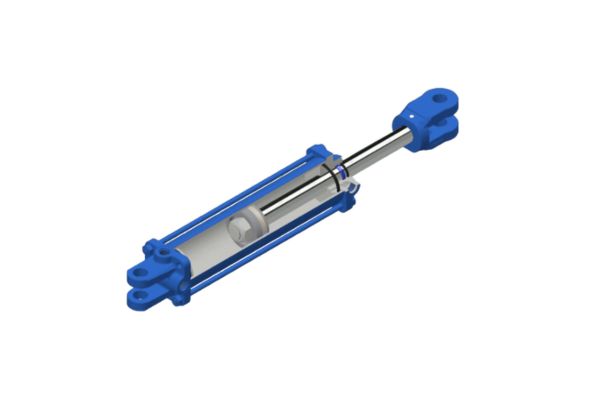
Defining what is a hydraulic cylinder
The fundamental principle
A hydraulic cylinder, or actuator, is a mechanical device that converts fluid pressure into powerful linear motion. Here’s the deal: its operation depends on a few key concepts. These include:
- Hydraulic Actuator
- Linear Motion
- Pressurized Fluid
Why is Pascal’s Law important?
This principle is the magic behind the machine, stating that pressure in a confined fluid is transmitted equally in all directions. You might be wondering how this helps. It allows a small force on a small area to create a much larger force, as seen here:
- Force = Pressure x Area
- 100 PSI on a 2-inch area = 200 lbs force
- 100 PSI on a 10-inch area = 1,000 lbs force
Core functions in machinery
Ultimately, you use hydraulic cylinders to perform work that requires significant force and control. Think about it: their primary roles are simple but powerful. They are designed for:
- Lifting heavy loads
- Pushing materials or components
- Pulling objects together or apart
| Concept | Description | Real-World Analogy | |
|---|---|---|---|
| Hydraulic Actuator | A device that uses pressurized fluid to create motion. | A water hose nozzle creating a powerful jet. | |
| Linear Motion | Movement in a straight line (extension/retraction). | Pushing or pulling a drawer. | |
| Pascal’s Law | Pressure in a confined fluid is transmitted equally. | Squeezing a water balloon. |
Anatomy of what is a hydraulic cylinder
The main cylinder housing
The cylinder’s housing is its backbone, containing the pressure and guiding the piston’s movement. Here’s what you need to know: the barrel, cap, and head form a sealed chamber. Barrels are often made from:
- Honed steel tubing
- Stainless steel
- Aluminum alloys
The piston and piston rod
Inside the barrel, the piston separates the pressure chambers, while the piston rod transfers the generated force to your machine. But wait, there’s more: the rod needs protection to ensure a long service life. Common coatings include:
- Hard chrome plating
- Nitride coating
- Laser cladding
What are the critical seals?
Seals are the unsung heroes that prevent leaks and maintain pressure, without which the cylinder would be useless. The bottom line is this: the seal gland houses multiple seals to contain the high-pressure fluid. Popular seal materials are:
- Polyurethane
- Nitrile (Buna-N)
- Viton
| Component | Primary Function | Common Material | |
|---|---|---|---|
| Cylinder Barrel | Contains pressure and guides the piston. | Honed Steel Tubing | |
| Piston Rod | Transfers force from the piston to the load. | Hard Chrome-Plated Steel | |
| Seals | Prevent internal and external fluid leakage. | Polyurethane, Nitrile |
How what is a hydraulic cylinder operates
The fluid flow process
The operational cycle is a straightforward sequence that creates motion. Here’s the breakdown: hydraulic fluid is pumped into one side of the piston, forcing it to move. The sequence is:
- Fluid enters the cap end port.
- Piston and rod extend.
- Fluid is displaced from the rod end port.
Role of pumps and fluid
The hydraulic pump is the heart of the system, generating the necessary fluid pressure, while the fluid itself does more than just transmit force. Believe it or not, the fluid also lubricates parts and dissipates heat. Key fluid properties include:
- Viscosity
- Thermal stability
- Anti-wear additives
Controlling cylinder movement
To achieve precision, you need to manage the fluid’s path and flow rate, which is the job of hydraulic valves. So, how does it work? These valves act like a traffic cop for the fluid, enabling fine control. Common types are:
- Directional control valves
- Pressure control valves
- Flow control valves
| Element | Role in Operation | Key Characteristic | |
|---|---|---|---|
| Hydraulic Pump | Pressurizes the fluid, creating potential energy. | Flow Rate (GPM) | |
| Hydraulic Fluid | Transmits energy, lubricates, and cools. | Viscosity | |
| Control Valves | Direct and regulate the fluid flow. | Directional, Pressure, Flow |
Types of what is a hydraulic cylinder
Single-acting vs. double-acting
Cylinders can be powered in one or both directions, which drastically changes their application. Here’s the difference: a single-acting cylinder pushes but retracts via gravity or a spring. Pros and cons include:
- Single-acting: Simpler design, ideal for lifting.
- Double-acting: Powered push and pull, more versatile.
Common structural designs
The two most prevalent designs you will encounter are tie-rod and welded body cylinders. What’s the real story? Their construction dictates their durability and serviceability.
- Tie-rod cylinders: Held together by external rods, common in industrial settings and easier to repair.
- Welded body cylinders: More compact and rigid, preferred for mobile and heavy-duty equipment.
What is a telescopic cylinder?
When you need a very long stroke from a compact package, a telescopic cylinder is the solution. This is where it gets interesting: it uses multiple nested stages that extend sequentially. You see them often in:
- Dump trucks
- Cranes
- Lift
| Cylinder Type | Actuation Method | Best For | |
|---|---|---|---|
| Single-Acting | Hydraulic pressure extends; gravity/spring retracts. | Lifting applications (e.g., jacks). | |
| Double-Acting | Hydraulic pressure extends and retracts. | Pushing and pulling (e.g., excavators). | |
| Telescopic | Multiple stages extend for a long stroke. | Long-reach applications (e.g., cranes). |
What is a hydraulic cylinder in industry?
Construction and heavy equipment
In construction, hydraulic cylinders are the muscles behind nearly every heavy machine. Think about it: they enable powerful and precise movements. Specific tasks performed include:
- Digging and trenching with excavators
- Pushing earth with bulldozers
- Lifting materials with cranes
Manufacturing and automation
On the factory floor, cylinders power everything from presses to robotic arms, ensuring repeatable accuracy. Here’s the kicker: they are vital for modern automation. They help with:
- Stamping and forming metal parts
- Assembling products on a line
- Clamping workpieces securely
Agriculture and material handling
From the field to the warehouse, hydraulic cylinders help feed and supply the world. What does this mean for you? They provide the strength needed for essential tasks. Agricultural functions include:
- Operating tractor loaders and implements
- Lifting crops with harvesters
- Raising loads with forklifts
| Industry | Primary Application | Example Machine | |
|---|---|---|---|
| Construction | Earthmoving and heavy lifting. | Excavator Arm | |
| Manufacturing | Stamping, pressing, and automated assembly. | Hydraulic Press | |
| Agriculture | Plowing, lifting, and harvesting. | Tractor Front-End Loader |
Advanced what is a hydraulic cylinder
Position-sensing “smart” cylinders
“Smart” cylinders integrate sensors to provide real-time feedback on the rod’s position for automated systems. The bottom line is this: this technology allows for unprecedented precision and control. Common sensor types are:
- Linear displacement transducers (LDTs)
- Magnetostrictive sensors
- Potentiometers
Specialized plunger cylinders
Also known as ram cylinders, these have a rod with the same diameter as the piston, making them simple and powerful. But wait, there’s more: they excel in high-force pushing applications. Their unique features include:
- No piston seal, reducing friction
- High structural stability
- Primarily used for vertical lifting
What are differential cylinders?
These cylinders are designed for speed by cleverly redirecting fluid during operation. So, how do they do it? They use a regenerative circuit to accelerate the extension stroke. Benefits include:
- Faster cycle times
- Increased efficiency
- Simple implementation with valving
| Advanced Type | Key Feature | Primary Advantage | |
|---|---|---|---|
| Smart Cylinder | Integrated electronic sensors. | Precision control and automation. | |
| Plunger Cylinder | Piston rod has the same diameter as the piston. | High push force and simplicity. | |
| Differential Cylinder | Regenerative circuit for speed. | Faster cycle times on the push stroke. |
Mounting what is a hydraulic cylinder
Why does mounting matter?
The way you mount a cylinder is critical for its lifespan and performance. You might be wondering why. Improper mounting is a leading cause of premature failure. Risks from bad mounting include:
- Rod bending or breaking
- Excessive seal and bearing wear
- Structural failure of the cylinder
Fixed vs. pivot mounts
Mounts can be either fixed to absorb force in a straight line or pivoting to allow for movement. Here’s the deal: choosing the right one prevents side loading.
- Fixed mounts: Flange and centerline lug mounts are rigid for straight-line tasks.
- Pivot mounts: Clevis and trunnion mounts allow the cylinder to move with the load’s arc.
Mitigating side loading
Side loading, or force applied perpendicular to the rod, is a cylinder killer that leads to leaks and component failure. The good news is, you can design to prevent it. Mitigation techniques include:
- Using internal stop tubes
- Employing external guides and supports
- Selecting the correct pivot mount
| Mount Type | Description | Ideal Use Case | |
|---|---|---|---|
| Flange Mount | Rigidly fixed at the cylinder end. | Straight-line force transfer, high strength. | |
| Clevis Mount | Pivots in one plane. | Applications where the load moves in an arc. | |
| Trunnion Mount | Pivots around the cylinder body. | Absorbs force on the centerline while pivoting. |
Issues with what is a hydraulic cylinder
Common failure modes
Even the toughest cylinders can fail, often due to a few common culprits that compromise performance. What’s the real story? Understanding these helps with quick diagnosis. The most frequent problems are:
- Fluid leakage from worn seals
- Piston rod damage or corrosion
- Internal bypassing (loss of pressure)
How is misalignment a problem?
When a cylinder is misaligned with its load, it creates uneven forces that can destroy it from the inside out. Believe it or not, even slight misalignment is a major issue. Symptoms include:
- Scored cylinder bore or rod
- Warped or distorted seals
- Broken rod bearings
Contamination and overheating
Dirt, debris, and excessive heat are silent killers for any hydraulic system. The bottom line is this: they degrade the fluid and damage sensitive components. Prevention tips include:
- Regular fluid and filter changes
- Ensuring adequate system cooling
- Using rod boots in dirty environments
| Problem | Common Cause | Consequence | |
|---|---|---|---|
| Fluid Leakage | Worn or damaged seals. | Loss of pressure and efficiency. | |
| Rod Corrosion | Environmental exposure, damaged plating. | Seal damage and eventual leaks. | |
| Overheating | Inadequate cooling, excessive cycling. | Fluid breakdown, component wear. |
Safety with what is a hydraulic cylinder
Dangers of high-pressure fluid
A pinhole leak in a high-pressure hydraulic line can inject fluid through skin, causing severe injury or death. This is no exaggeration: never use your hands to check for leaks. Always follow these precautions:
- Wear appropriate PPE (gloves, safety glasses).
- Use a piece of cardboard or wood to locate leaks.
- De-pressurize the system before inspection.
Preventing uncontrolled movement
A cylinder holds a massive amount of potential energy; if it fails, a heavy load can drop unexpectedly. Think about it: safety valves are non-negotiable. Essential safety components include:
- Pilot-operated check valves (load-holding)
- Pressure relief valves
- Properly bled hydraulic lines to remove air
Lockout/tagout procedures
Before any maintenance, you must de-energize and secure the system to prevent accidental movement. Here’s what you need to do: follow strict lockout/tagout (LOTO) procedures. The core steps are:
- Notify affected employees.
- Shut down the equipment.
- Isolate the energy source.
- Apply locks and tags.
| Safety Hazard | Prevention Method | Critical Action | |
|---|---|---|---|
| Fluid Injection | High-pressure fluid piercing the skin. | Never use hands to check for leaks. | |
| Drifting Load | A load falling due to pressure loss. | Use pilot-operated check valves. | |
| Unexpected Movement | Stored energy in the system. | Follow strict lockout/tagout (LOTO) procedures. |
Future of what is a hydraulic cylinder
Integration with IoT
Connecting cylinders to the Internet of Things (IoT) is revolutionizing maintenance and control. Here’s the kicker: smart cylinders can report their own health in real-time. Benefits of IoT include:
- Predictive maintenance alerts
- Remote performance monitoring
- Optimized operational efficiency
Innovations in materials
The push for lighter, stronger, and more durable cylinders is driving material science forward. But wait, there’s more: new materials promise longer life and better performance. Emerging materials include:
- Advanced composite barrels
- High-strength steel alloys
- Self-lubricating seal compounds
Electro-hydraulic systems
The future is a hybrid, combining the raw power of hydraulics with the precision of electronics. What does this mean for you? It means faster, smarter, and more efficient machinery. Advantages include:
- Unmatched control and responsiveness
- Simplified system design
- Improved energy efficiency
| Future Trend | Description | Impact on Industry | |
|---|---|---|---|
| IoT Integration | Cylinders with sensors that report data. | Predictive maintenance, optimized performance. | |
| Advanced Materials | Lighter, stronger, and more durable components. | Increased efficiency and lifespan. | |
| Electro-Hydraulics | Merging hydraulic force with electronic control. | Unprecedented precision and responsiveness. |
Conclusion
By understanding the principles, anatomy, and types of hydraulic cylinders, you are better equipped to avoid downtime, improve efficiency, and maintain a safe worksite. For any repair or consultation needs, contact a trusted expert to keep your operations running smoothly. Our vision is to provide the most reliable hydraulic solutions that power the industries that build our world.
FAQ
1. How do I know if my hydraulic cylinder needs repair?
Look for visible oil leaks, jerky or slow movement, or a drifting load. These signs indicate worn seals, internal bypassing, or other issues requiring professional attention.
2. Can I use a different type of hydraulic fluid in my cylinder?
It is not recommended. Using the wrong fluid can damage seals, cause overheating, and void warranties, so always stick to the manufacturer’s specification.
3. What is the most common reason a hydraulic cylinder fails?
Seal failure is the most common culprit. It is typically caused by contamination, fluid breakdown from heat, or simple wear and tear over time.
4. Can I increase the force output of my existing cylinder?
Only by increasing the system’s operating pressure. However, this is dangerous and can cause catastrophic failure if the cylinder isn’t rated for the higher pressure.
5. How often should I perform maintenance on my cylinders?
It depends on the application and operating environment. A good practice is to conduct daily visual inspections and follow a regular maintenance schedule for fluid and filter changes.