
How to Measure Hydraulic Cylinder Dimensions for Accurate Replacement
You need to replace a hydraulic cylinder, but figuring out the right specifications can feel like solving a complex puzzle. Choosing the wrong size causes costly downtime, poor equipment performance, and even safety risks. The solution is knowing exactly how to measure hydraulic cylinder dimensions correctly. This guide walks you step by step through the process, ensuring you capture every critical measurement and order the perfect fit the first time.
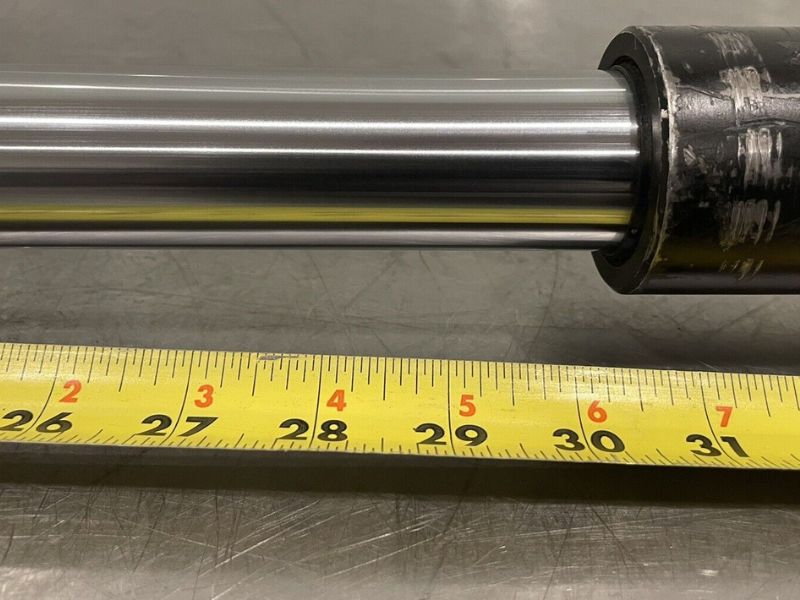
Key hydraulic cylinder dimensions?
Why start with the nameplate?
The easiest way to identify a replacement is to find the manufacturer’s nameplate or part number on the cylinder body. This information can often bypass the need for manual measurement entirely.
- Part Number
- Serial Number
- Manufacturer Name
What tools will I need for this?
Gathering the correct tools before you start ensures your measurements are both accurate and efficient. Precision is key, so avoid using worn or damaged measuring devices.
- Digital or dial calipers
- A reliable tape measure
- Thread pitch gauges
What are the primary measurements?
Before diving into details, focus on the three most fundamental dimensions that define a cylinder’s core function. These primary measurements are the absolute minimum you need to start identifying a replacement.
- Bore Diameter: The internal width of the cylinder barrel.
- Rod Diameter: The width of the piston rod that extends and retracts.
- Stroke Length: The total distance the rod travels.
| Primary Dimension | What It Determines | Importance |
|---|---|---|
| Bore | Cylinder’s push force | High |
| Rod | Cylinder’s pull force and stability | High |
| Stroke | Cylinder’s range of motion | High |
These three measurements form the foundation of any cylinder specification.
Bore hydraulic cylinder dimensions?
What is the cylinder bore?
Here’s the deal: the bore is the inside diameter of the cylinder’s barrel, which is the most critical factor in determining its power. A larger bore creates a larger surface area for hydraulic fluid to push against.
- It directly dictates the cylinder’s extension force.
- This is the “size” of the cylinder.
- It cannot be measured from the outside alone.
How is bore diameter measured?
The most accurate way to measure the bore is to disassemble the cylinder and use calipers on the inside of the barrel or on the piston seal. If disassembly isn’t an option, you can estimate it.
- Measure the outside diameter (OD) of the barrel.
- Subtract the wall thickness twice.
- Compare the result to standard tubing sizes.
Why does bore size matter most?
The cylinder’s bore size directly correlates to its maximum push force at a given pressure. A small error in this measurement can result in a replacement cylinder that is too weak for the job.
- More surface area equals more force.
- It is the primary factor in force calculation.
- It’s the most important dimension for power.
| Bore Size | Force Relationship | Implication |
|---|---|---|
| Larger | Higher Push Force | Can lift heavier loads |
| Smaller | Lower Push Force | May fail under required load |
Choosing the correct bore ensures your equipment operates with the required power.
Rod hydraulic cylinder dimensions?
What is the cylinder rod?
Think of it this way: the rod is the component that transfers the hydraulic power into mechanical movement. It is the polished steel bar that extends from the cylinder body to do the work.
- It is typically made of chrome-plated steel.
- It must resist bending and corrosion.
- It pushes and pulls the load.
How do you measure rod diameter?
Using a set of calipers, measure the diameter of the polished rod itself. Be sure to measure an area that is free from nicks, rust, or damage for an accurate reading.
- Use digital or dial calipers for precision.
- Measure in a couple of different spots to check for consistency.
- Record the measurement to at least two decimal places.
How does the rod affect force?
While the bore determines push force, the rod’s diameter is crucial for calculating pull (retraction) force and ensuring column strength. A thicker rod is stronger but reduces the cylinder’s retraction force.
- The rod subtracts from the piston area on the retract side.
- A larger diameter prevents bending under load (column strength).
- It is a balance between strength and retract speed/force.
| Rod Diameter | Effect on Retraction Force | Effect on Stability |
|---|---|---|
| Larger | Decreases Force | Increases (stronger column) |
| Smaller | Increases Force | Decreases (weaker column) |
The rod diameter is a critical trade-off between stability and retraction power.
Stroke hydraulic cylinder dimensions?
What does cylinder stroke mean?
In a nutshell, the stroke is the total distance the piston rod can travel from its fully retracted position to its fully extended position. This measurement defines the cylinder’s active range of motion.
- It is the difference between extended and retracted lengths.
- It dictates how far the cylinder can push or pull something.
- This is a critical measurement for the machine’s function.
How is stroke length calculated?
Measure the center-to-center distance between the mounting pins when the cylinder is fully retracted, then measure it again when fully extended. The stroke is the difference between these two numbers.
- Retracted Length (Pin-to-Pin)
- Extended Length (Pin-to-Pin)
- Stroke = Extended Length – Retracted Length
Why is stroke accuracy critical?
An incorrect stroke length will either prevent the machine from completing its full range of motion or cause it to over-travel, potentially causing catastrophic damage to the equipment.
- Too short: The task will not be completed.
- Too long: Can lead to mechanical collisions and frame damage.
- There is very little room for error.
| Stroke Error | Result if Too Short | Result if Too Long |
|---|---|---|
| Outcome | Incomplete mechanical movement | Collision and equipment damage |
Precise stroke measurement is non-negotiable for safe and effective operation.
Rod end hydraulic cylinder dimensions?
What are common rod end styles?
The rod end is how the cylinder’s rod attaches to the machinery it operates. Common styles include threaded ends, a plain machined end, or a welded-on clevis.
- Threaded Male/Female: The most common style.
- Plain End: Machined for a custom attachment.
- Clevis/Eye: A U-shaped bracket or loop for a pin connection.
How are rod end threads measured?
If your rod end is threaded, you must identify its diameter and thread pitch. Use calipers for the diameter and a thread gauge to determine the number of threads per inch.
- Use calipers to measure the outer diameter of the threads.
- Press a thread gauge against the threads to find a matching pitch.
- Note if it’s a male (external) or female (internal) thread.
Does rod end style affect fitment?
Absolutely, the rod end style and its dimensions must be an exact match to the existing machinery attachment point. Any deviation will make installation impossible or create a weak, unsafe connection.
- An incorrect thread type will not connect.
- A different style (e.g., clevis vs. thread) will not fit.
- It ensures the force is transferred correctly.
| Style | Description | Common Use |
|---|---|---|
| Threaded | Male or female threads | Versatile, for various attachments |
| Clevis | U-shaped mount for a pin | Pivoting applications |
| Spherical Eye | Ball joint for misalignment | Mobile equipment |
Matching the rod end is just as crucial as matching the core dimensions.
Mounting hydraulic cylinder dimensions?
What are the main mount types?
The mounting style dictates how the cylinder’s body is secured to the equipment’s frame. The most common types are clevis, trunnion, and flange mounts.
- Clevis Mount: A tang or bracket on the cylinder base for a pin.
- Trunnion Mount: Pivot pins located on the cylinder body itself.
- Flange Mount: A flat plate on the head or cap that bolts to a surface.
How do I identify my mount style?
Visually inspect the base (cap end) and head (rod end) of the cylinder to see how it is fastened to the machine. The physical hardware will reveal the type.
- Does it pivot on a pin at the base? It’s likely a clevis mount.
- Is it bolted flat against a frame? That’s a flange mount.
- Does it pivot on pins attached to the barrel? That’s a trunnion.
Why must the mount match exactly?
The mounting style and dimensions are non-negotiable and must be duplicated precisely on the replacement cylinder. An incorrect mount will either not fit at all or will introduce dangerous sideloading forces.
- It ensures the cylinder is aligned correctly.
- It allows the cylinder to absorb force as designed.
- Mismatched mounts can lead to premature seal or barrel failure.
| Mount Type | Motion Allowed | Typical Application |
|---|---|---|
| Clevis | Pivoting | Push/pull levers, mobile equipment |
| Trunnion | Pivoting | Long stroke stability, conveyors |
| Flange | Fixed/Linear | Presses, stationary linear force |
The mounting configuration is critical for the cylinder’s longevity and safety.
Port hydraulic cylinder dimensions?
What defines a cylinder port?
Simply put, ports are the threaded openings where hydraulic hoses connect to the hydraulic cylinder, allowing fluid to enter and exit. For a double-acting cylinder, there will be two ports.
- One port for extension (push).
- One port for retraction (pull).
- Port size influences the speed of the cylinder.
How are port size and threads ID’d?
You need to determine both the thread size and the thread type, such as SAE (O-Ring Boss) or NPT (National Pipe Thread). These types are not interchangeable.
- Use calipers to measure the port’s thread diameter.
- Use a thread gauge to identify the pitch.
- Visually inspect the port for an O-ring seat (SAE) or tapered threads (NPT).
Does port location matter?
Yes, the location and orientation of the ports are critical for ensuring that hydraulic hoses can be connected without interference or sharp bends. The replacement cylinder must have ports in the exact same positions.
- It determines hose routing and length.
- It must clear the machine’s frame and other components.
- Incorrect locations can make installation impossible.
| Port Type | Sealing Method | Common In |
|---|---|---|
| SAE / O-Ring Boss | O-Ring | Modern industrial and mobile equipment |
| NPT | Tapered Threads | Older equipment, industrial plumbing |
| JIC | 37-degree flared fitting | High-pressure systems |
Port details are often overlooked but are essential for a drop-in replacement.
Types & hydraulic cylinder dimensions?
What are welded vs. tie-rod types?
Cylinders are generally built in one of two ways: tie-rod or welded. A tie-rod cylinder is held together by threaded steel rods running its length, while a welded cylinder has its end caps welded directly to the barrel.
- Tie-Rod: Bolted together, generally easier to repair.
- Welded: More compact and often more robust for harsh applications.
- This construction type can affect overall external dimensions.
What is single vs. double-acting?
A single-acting cylinder uses hydraulic pressure to extend and an external force (like gravity or a spring) to retract. A double-acting cylinder uses hydraulic pressure for both extension and retraction.
- Single-acting cylinders have one port.
- Double-acting cylinders have two ports.
- This determines the plumbing required.
How does type influence dimensioning?
The cylinder’s construction style fundamentally influences its external dimensions and serviceability. A welded cylinder may have a smaller outer diameter for the same bore size compared to a tie-rod cylinder.
- Tie-rod dimensions include the space taken by the rods and nuts.
- Welded cylinders are often more compact for tight spaces.
- Knowing the type helps confirm your measurements.
| Cylinder Type | Key Feature | Advantage |
|---|---|---|
| Tie-Rod | External steel rods | Field-serviceable, rebuildable |
| Welded Body | End caps welded to barrel | Compact, durable, no tie-rods to stretch |
Identifying the type provides important context for your measurements.
Context for hydraulic cylinder dimensions?
How does pressure affect selection?
You must know your system’s operating pressure to select a cylinder with an appropriate duty rating. A cylinder rated for 1500 PSI will fail in a 3000 PSI system.
- Match the cylinder’s pressure rating to your system’s capabilities.
- Heavy-duty cylinders have thicker walls and stronger components.
- Mismatching pressure is a major safety hazard.
Does the work environment matter?
The operating environment plays a huge role in selecting the right seals and materials. Extreme heat, cold, or exposure to corrosive chemicals can quickly destroy a standard cylinder.
- High temperatures require special seals like Viton™.
- Corrosive environments may demand stainless steel components.
- Dusty or dirty conditions need high-quality rod wipers.
What factors influence material choice?
The operating pressure and environment are the primary drivers for material selection, from the internal seals to the rod plating. Choosing the wrong materials leads to premature failure and downtime.
- Seals: Buna-N is standard; Viton™ for heat.
- Rod: Standard chrome is common; nitriding or stainless for corrosion resistance.
- Body: Steel is standard; aluminum or stainless for specific applications.
| Environmental Factor | Recommended Component |
|---|---|
| High Temperature | Viton™ seals |
| Corrosive Chemicals | Stainless steel rod/body |
| Abrasive Dust | Heavy-duty rod wiper |
Contextual factors are just as important as the physical dimensions for longevity.
Verify hydraulic cylinder dimensions?
Why compare to a manufacturer drawing?
Comparing your collected measurements against an official manufacturer’s drawing is the best way to catch any errors before you place an order. It acts as a blueprint for a perfect match.
- It validates every critical dimension.
- It provides tolerances you can’t measure yourself.
- It is the ultimate confirmation of a correct replacement.
How do you get a drawing to check?
Provide your fluid power specialist with the part number if you have it, or with the detailed measurements you’ve just taken. They can use this information to generate a dimensional drawing for your approval.
- Use a part number for the fastest result.
- Provide your measurements to a technical expert.
- Many manufacturers have online configuration tools that produce drawings.
What is the final verification step?
The final, non-skippable step is to sign off on a dimensional drawing provided by the supplier before authorizing the purchase. This simple action transfers the responsibility of a perfect fit from you to the supplier and ensures you get exactly what you need.
- It is your guarantee of a correct part.
- It confirms all measurements, including ports and mounting holes.
- This step eliminates costly ordering mistakes.
| Verification Step | Purpose | Outcome |
|---|---|---|
| Provide Data | Give measurements or part # to supplier | Supplier finds or creates a drawing |
| Review Drawing | Compare your notes to the official print | Identify and correct any discrepancies |
| Sign Off | Formally approve the drawing | Order is placed with confidence |
This final approval process is your best insurance against incorrect orders.
Conclusion
Accurately measuring your cylinder’s bore, rod, stroke, mounts, and ports is essential for a successful replacement. While this guide provides the steps, the ultimate path to a guaranteed fit is verifying your measurements against a manufacturer’s drawing. This eliminates guesswork and prevents costly mistakes.
Feeling confident in your measurements? Browse our online catalog to find your replacement cylinder. If you still have questions or want an expert to verify your findings, contact our fluid power specialists today for personalized assistance and drawing confirmation.
FAQ
1. Can I replace a tie-rod cylinder with a welded one?
Yes, but with caution. As long as all key dimensions (retracted/extended lengths, bore, rod, mounting) are identical, it is possible. However, the outer envelope dimensions will differ, so you must confirm there is enough clearance in the machine.
2. Can I use a less accurate tool than calipers for bore?
No, this is not recommended. Bore diameter is the most critical dimension for force calculation. Using a tape measure can lead to inaccuracies that result in ordering an underpowered or oversized cylinder, leading to operational failure.
3. Can I ignore the duty rating (medium/heavy) if dimensions match?
Absolutely not. The duty rating corresponds to the maximum pressure the cylinder can safely handle. Installing a medium-duty cylinder in a heavy-duty application is a serious safety risk that can lead to catastrophic failure.
4. Can I use an adapter if my hose threads don’t match?
Yes, this is a common solution. Adapters are widely available to connect different thread types and sizes (e.g., NPT to SAE). However, ensure the adapter is rated for your system’s pressure and be mindful that it adds length to the connection, which could create clearance issues.
5. Can I estimate the stroke instead of fully extending it?
No, this is a major cause of ordering errors. Estimating the stroke is a gamble that almost never pays off. An incorrect stroke will either prevent your machine from working or cause it to crash, so taking the time to measure the full, actual travel is mandatory.