
How to Increase Hydraulic Cylinder Speed with Meter-in Control
Your hydraulic system may feel sluggish or even dangerously fast, creating unpredictable motion that damages equipment, wastes material, and raises safety risks. These inefficiencies hurt productivity and profitability. The good news is you can regain full control by learning how to increase hydraulic cylinder speed with the right methods. This guide introduces five proven approaches that deliver precision, stability, and efficiency, helping you optimize performance while keeping operations safe and cost-effective.
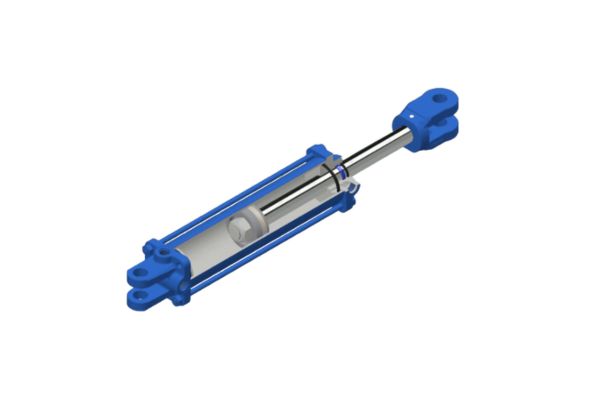
How to Increase Hydraulic Cylinder Speed: Meter-In
Meter-in control is the most common method, managing the flow rate entering the cylinder to dictate how quickly it moves. This approach is straightforward and provides smooth, stable control for loads that oppose the cylinder’s motion. It is an excellent way to ensure predictable performance in many standard applications.
What is a meter-in flow control valve?
Here’s the deal: this device regulates the volume of hydraulic fluid going into an actuator’s work port. You can identify it by its primary components. These typically include:
- An adjustable orifice (needle valve)
- A one-way check valve
- An inlet and an outlet port
How does meter-in control work for cylinders?
You might be wondering how this simple valve achieves control. By restricting flow into the cylinder, you directly limit the maximum speed at which the piston can travel. This ensures smooth and predictable movement against a load, giving you command over the cycle. The process involves:
- Adjusting the orifice to set the desired flow rate.
- Applying pressurized fluid to the inlet.
- Achieving a steady, controlled cylinder speed.
Meter-in control offers a simple and effective way to manage cylinder speed by limiting the input flow, making it ideal for applications requiring stable, controlled motion against a resisting load.
| Feature | Description |
| Control Point | Fluid entering the cylinder work port. |
| Mechanism | An adjustable orifice limits the flow rate (GPM). |
| Best For | Resistive loads and smooth extension/retraction. |
| Key Component | Flow control valve with a reverse-flow check. |
Best Use for Meter-In to Increase Hydraulic Speed
Meter-in control is best for applications where the load consistently resists the cylinder’s motion. This configuration prevents the load from “running away” and causing erratic speed changes. For example, it excels in lifting, pressing, or clamping operations where stability is paramount.
When should you choose meter-in control?
The bottom line is you should opt for meter-in when precision and stability are your top priorities. It’s the right choice for machines performing tasks that require steady force. Examples of these applications include:
- Lifting a heavy object vertically.
- Pressing a component into a fixture.
- Clamping a workpiece securely.
Why use a reverse-flow check valve here?
But wait, there’s more: the integrated check valve is non-negotiable for allowing fluid to exit the cylinder freely. Without it, the cylinder’s return stroke would be just as slow as its work stroke. This would cripple your machine’s cycle time and overall efficiency. Key benefits are:
- Enabling fast cylinder retraction.
- Preventing unnecessary flow restriction on the return line.
- Maximizing operational speed and productivity.
Always use meter-in control for resistive loads to ensure stability and predictability; the integrated check valve is mandatory for efficient operation, allowing unrestricted return flow.
| Scenario | Why Meter-In is Ideal |
| Lifting Operations | Prevents the load from falling or moving erratically. |
| Press-Fit Assembly | Provides fine control for precise force application. |
| Clamping Systems | Ensures a smooth application of clamping force. |
How to Increase Hydraulic Cylinder Speed: Meter-Out
Meter-out control regulates the speed of a hydraulic cylinder by restricting the fluid exiting the actuator. This method creates back pressure to hold the load steady, which is particularly useful for overrunning or runaway loads. By controlling the fluid’s escape path, you dictate the cylinder’s velocity.
What is a meter-out flow control?
Here’s the breakdown: a meter-out valve functions by creating a restriction on the outlet side of the hydraulic actuator. This setup is perfect for safely managing loads that might otherwise accelerate uncontrollably. It is ideal for:
- Controlling lowering speeds.
- Managing overrunning loads.
- Providing exceptional stability.
How does it differ from meter-in control?
While meter-in controls the “go” by pushing the actuator, meter-out controls the “whoa” by holding it back. It traps fluid on the exit side to counteract the load’s tendency to move faster than the pump’s flow rate can support. This fundamental difference is key to its application.
Meter-out is the go-to solution for controlling overrunning loads by regulating the fluid’s exit, thereby creating a stabilizing back pressure that meter-in control cannot provide.
| Aspect | Meter-In Control | Meter-Out Control |
| Fluid Path | Restricts flow into the cylinder. | Restricts flow out of the cylinder. |
| Primary Use | Resistive loads (lifting, pushing). | Overrunning loads (lowering, pulling). |
| Effect | Pushes the cylinder at a set speed. | Holds back the cylinder to a set speed. |
Cautions for Meter-Out Hydraulic Cylinder Speed
The primary risk of meter-out control is a dangerous phenomenon known as pressure intensification. This effect can cause pressure in the rod-side of the cylinder to spike to extreme levels. Failure to account for this can lead to seal failure or even catastrophic cylinder damage.
What is pressure intensification risk?
Now, for the critical part: this occurs because the piston’s rod-side area is smaller than its bore-side area. When you meter out on the rod side, the applied force acts on a smaller surface, multiplying the pressure far beyond the system’s relief setting. This can cause:
- Blown cylinder seals.
- Damaged hoses and fittings.
- Cracked cylinder barrels.
When should you avoid meter-out control?
Pay close attention to this: never use meter-out control on the rod side of a double-acting cylinder when it is responsible for holding the load. This is a classic recipe for disaster. The retraction pressure combines with the load-induced pressure, leading to the dangerous intensification described.
Avoid meter-out control on the rod side of a load-bearing cylinder to prevent catastrophic pressure intensification; always analyze your application’s force dynamics before implementation.
| Condition to Avoid | Reason | Potential Consequence |
| High Retraction Pressure | Combines with load-induced pressure. | Extreme pressure spike. |
| Large Piston-to-Rod Ratio | Magnifies the intensification effect. | Multiplied pressure on rod side. |
| Holding a Load on Rod Side | This is the classic failure scenario. | Catastrophic cylinder failure. |
How to Increase Hydraulic Cylinder Speed with Needles
A needle valve offers a simple, cost-effective way to control speed by restricting flow in both directions. Because it is a non-compensated flow control, it can be effective in the right circumstances. It remains a popular choice for basic hydraulic circuits.
How do needle valves restrict flow?
Here’s the inside scoop: a needle valve uses a fine-threaded stem with a tapered “needle” point that moves into an orifice. This provides a variable restriction that controls flow bi-directionally. This means it affects both:
- Cylinder extension.
- Cylinder retraction.
Are needle valves a good choice for speed control?
The answer might surprise you: yes, but only in specific situations where precision is not critical and loads are consistent. Because they lack pressure compensation, any change in system pressure or load will directly alter the cylinder’s speed. Therefore, you should only use them in stable systems.
Needle valves are a budget-friendly option for bi-directional flow control but lack the precision of compensated valves, making them suitable only for simple applications with stable loads.
| Feature | Needle Valve | Compensated Flow Control |
| Cost | Low | High |
| Complexity | Simple (adjustable orifice) | Complex (orifice + compensator) |
| Pressure Sensitivity | High (flow changes with pressure) | Low (flow remains constant) |
When Needle Valves Change Hydraulic Cylinder Speed
Needle valves are best suited for simple circuits where you need to set a speed once and leave it. A common application is controlling the gentle lowering of a gravity-assisted load. Their key feature is bi-directional restriction, which defines their use cases.
What applications suit simple needle valves?
This is where it gets practical: needle valves shine where you need to slow movement in both directions without perfect accuracy. Think about using them for non-critical, stable operations. Such applications include:
- Controlling drift on a low-speed gravity-down application.
- Setting the general speed of a non-critical actuator.
- Simple pilot line flow reduction.
Why are check valves often needed with them?
But what if you need one-way control? You can create a simple meter-in or meter-out circuit by plumbing a needle valve in parallel with a check valve. This is a common and cost-effective way to get uni-directional control. This setup avoids buying a dedicated flow control valve.
Use standalone needle valves for simple, bi-directional speed control in stable systems; combine them with an external check valve to create a custom, low-cost meter-in or meter-out circuit.
| Configuration | Function | Application Example |
| Needle Valve Only | Bi-directional flow restriction. | Setting a fixed, slow speed for a light door. |
| Needle Valve + Check Valve | Uni-directional flow restriction. | Controlling only the extension speed of a clamp. |
How to Increase Hydraulic Cylinder Speed via Priority
A priority-type 3-port flow control splits a single inlet flow into two separate outlet flows. These are a pressure-compensated “priority” flow (CF) and an “excess” flow (EF). The valve guarantees a set amount of flow for a critical function before routing the remainder elsewhere.
What is a priority flow control valve?
Let’s get specific: this is an advanced valve with one inlet and two outlets that manages flow distribution. It guarantees one circuit always receives its required flow before any leftover fluid is sent to a secondary circuit. Its key ports are:
- Inlet Port (IN)
- Priority Port (CF – Controlled Flow)
- Excess Flow Port (EF)
How does the priority (CF) port work?
This is the clever part: the priority (CF) port is pressure-compensated, delivering a constant flow rate regardless of load pressure changes. If total incoming flow drops below the CF setting, the excess flow (EF) port gets no flow at all. This design protects the priority function at all costs.
A priority flow control guarantees a constant, pressure-compensated flow to a primary function like steering, while directing any remaining flow to secondary functions.
| Port | Name | Function |
| IN | Inlet | Receives the full flow from the pump. |
| CF | Controlled Flow | Outputs a fixed, priority, pressure-compensated flow. |
| EF | Excess Flow | Outputs all flow not used by the CF port. |
Efficiency of Priority Flow Hydraulic Cylinder Speed
A major drawback of priority flow controls is that all incoming flow is subjected to the operating pressure of the priority circuit. This means any unused excess flow that is directed back to the tank represents wasted energy. This energy is converted directly into heat, reducing system efficiency.
What is a common use for this valve?
Think about this: the most classic application is in mobile equipment like forklifts or tractors. The priority flow is directed to the power steering circuit, while excess flow powers other functions like lifting. This ensures steering is always responsive, no matter what other hydraulics are doing.
- Steering (Priority)
- Lift/Tilt (Excess)
- Auxiliary Implements (Excess)
How does this method waste energy as heat?
Here’s the trade-off: if your steering needs 2 GPM at 1,500 psi but the pump supplies 10 GPM, the other 8 GPM is also raised to 1,500 psi. If that excess flow is unused, the pressure drop generates significant heat. This reduces overall system efficiency.
Priority flow controls are excellent for ensuring a primary function’s performance but can be inefficient, generating significant heat if there’s a large difference between priority flow and total pump output.
| Parameter | Impact on Efficiency |
| High Inlet Flow | Large volume of excess flow is generated. |
| High Priority Pressure | All flow is pressurized, increasing potential energy loss. |
| Unused Excess Flow | All pressure energy in this flow is converted to heat. |
How to Increase Hydraulic Cylinder Speed: Proportional
Proportional directional valves are the most sophisticated method for speed control, using a variable electrical signal (PWM) to precisely position the valve spool. This allows for dynamic, real-time control over both the speed and direction of the cylinder. It is the gold standard for modern hydraulic systems.
How does a proportional valve work?
Now for the high-tech solution: a controller sends a variable electrical current to a solenoid on the valve. The more power it receives, the farther the spool shifts, opening the flow path for precise, infinitely variable control. This system relies on:
- A PWM electronic controller.
- A proportional solenoid.
- A finely machined valve spool.
What are metering notches on the spool?
The secret is in the details: unlike a simple on/off valve, a proportional valve’s spool has carefully machined V-notches or U-notches. As the spool shifts, these notches gradually open. This ensures a smooth and linear relationship between the electrical signal and the hydraulic flow rate.
Proportional valves offer unparalleled precision by using an electrical signal to finely position a notched spool, allowing for dynamic and infinitely variable control of cylinder speed.
| Feature | Description | Benefit |
| PWM Control | A variable electrical signal positions the spool. | Infinitely adjustable speed and direction. |
| Metering Notches | V- or U-shaped grooves on the spool. | Smooth, progressive opening for fine control. |
| Solenoid | Converts electrical signal to mechanical force. | Enables remote and automated control. |
Advanced Proportional Valve Hydraulic Cylinder Speed
Proportional valves deliver superior performance and efficiency, especially when combined with advanced components. Pairing them with load-sensing pumps or sophisticated electronic controls can drastically reduce energy waste. This makes them the ultimate choice for high-performance, energy-efficient hydraulic systems.
How can energy loss be mitigated?
This is where you get smart with power: when paired with a load-sensing pump, a proportional valve signals the pump to produce only the flow and pressure required. This “on-demand” approach nearly eliminates the energy waste common in other control methods. You can optimize through:
- Load-sensing control circuits.
- Pressure compensation features.
- Closed-loop electronic feedback.
Why is this the superior method for control?
It all comes down to this: proportional valves provide the complete package of precision, flexibility, and efficiency. They allow for complex motion profiles—like smooth acceleration and deceleration—that are impossible with simpler valves. This makes them the gold standard for modern hydraulics.
The combination of proportional valves with load-sensing electronics represents the pinnacle of hydraulic control, offering unmatched precision and efficiency by matching energy output to real-time demand.
| Control Method | Precision | Efficiency | Cost |
| Needle Valve | Low | Low | Low |
| Meter-In/Out | Medium | Medium | Medium |
| Priority Flow | High (Priority) | Low | Medium |
| Proportional Valve | Very High | Very High | High |
You no longer have to tolerate unpredictable, inefficient, or unsafe hydraulic cylinder speeds. By applying the right flow control method—from simple needle valves to advanced proportional systems—you can master your machine’s motion and eliminate guesswork. Achieving this level of precision means greater productivity, enhanced safety, and longer component life, so contact our fluid power experts today to specify the perfect control solution for your application.
Frequently Asked Questions
Can I use a simple orifice to control hydraulic cylinder speed?
Yes, a fixed orifice is the simplest form of speed control, but it is not adjustable and its performance will vary with changes in load and pressure. It’s only suitable if you need a permanent, approximate speed reduction.
What’s the best way to increase hydraulic cylinder speed if it’s too slow?
To increase speed, you must increase the flow rate (GPM) to the cylinder. This can be achieved by using a larger pump, adjusting a flow control valve to be more open, or using a regenerative circuit that directs rod-side fluid to the bore side during extension.
Is it better to use meter-in or meter-out control?
It depends entirely on the load. Use meter-in for resistive loads (like lifting) to ensure stable motion. Use meter-out for overrunning loads (like lowering) to prevent the load from running away and causing cavitation.
How do I prevent pressure intensification in a meter-out circuit?
The best prevention is to avoid using meter-out control on the rod side of a cylinder that retracts against a heavy load. If you must, a pressure relief valve installed on the rod-side line is a critical safety measure to bleed off excess pressure.
Can I make my hydraulic cylinder faster by increasing the system pressure?
No, increasing system pressure will not increase cylinder speed. Speed is a function of flow rate (GPM), while pressure is a function of the force required to move the load. Increasing pressure only allows the cylinder to handle a heavier load; it does not make it move faster.