
How to Identify Part of Hydraulic Cylinder for Troubleshooting
When a machine is down, every minute of guesswork drains money. The real problem often hides in a specific part of hydraulic cylinder, and not knowing which one extends downtime and triggers wrong part orders. This guide breaks down each part of hydraulic cylinder, giving you clear functions, failure signs, and checks so you can pinpoint faults quickly, communicate confidently, and get your equipment back to work faster.
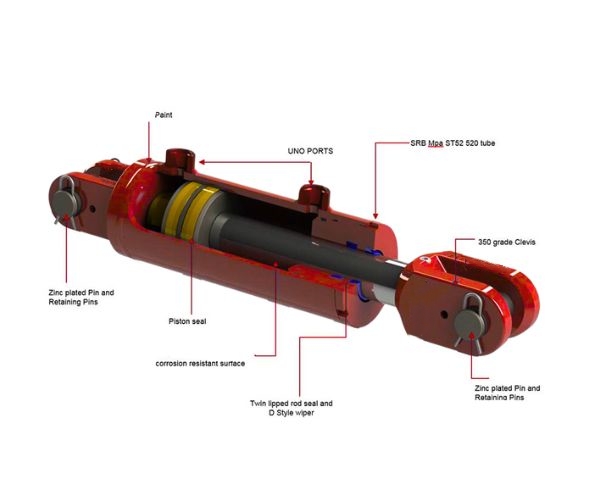
The Cylinder Barrel, a Core Part of Hydraulic Cylinder
The cylinder barrel is the strong main body that contains the pressure and houses the internal components. It serves as the chamber where the piston travels back and forth, guided by the smooth, honed inner walls. The barrel’s integrity is fundamental to the entire cylinder’s function.
What is the cylinder barrel’s primary function?
The barrel’s main job is to contain the immense pressure of the hydraulic fluid. It acts as the backbone of the cylinder assembly, providing the strength needed to manage forces. This containment ensures that:
- Pressure is directed onto the piston.
- The system operates without structural failure.
Why is the barrel’s inner surface so smooth?
You might be wondering why smoothness is so critical inside the barrel. A honed, polished surface is essential for extending the life of the piston seals as they slide. It ensures a tight seal, minimizes friction, and prevents premature wear.
- It allows for efficient piston movement.
- It protects seals from damage.
What happens if the cylinder barrel is damaged?
Any scoring or damage inside the barrel can cause rapid seal failure and internal fluid bypass, leading to a loss of power.
| Feature | Description |
|---|---|
| Material | Typically seamless honed steel tubing. |
| Function | Contains pressure and guides the piston. |
| Key Attribute | Polished internal surface for seal longevity. |
This internal surface is non-negotiable for maintaining pressure and efficiency.
The Piston, the Moving Part of Hydraulic Cylinder
The piston is a disc-shaped component inside the barrel that separates the two pressure chambers. As hydraulic fluid is pumped into one chamber, it pushes against the piston, creating movement. This simple action is what converts fluid pressure into linear force.
How does the piston create movement?
When high-pressure fluid enters the cylinder on one side of the piston, it creates a force imbalance. This pressure forces the piston to slide along the barrel. This movement is what drives the attached piston rod.
- Fluid pressure creates force.
- The piston translates this force into motion.
What are the signs of a worn-out piston?
A worn piston or its seals will cause “blow-by,” where fluid leaks past the piston, resulting in weak or jerky cylinder operation.
| Feature | Description |
|---|---|
| Function | Converts fluid pressure into linear force. |
| Failure Sign | Internal fluid bypass, causing power loss. |
| Component | Holds the piston seals. |
Monitoring for these signs can prevent a complete loss of function.
The Piston Rod, an Extending Part of Hydraulic Cylinder
The piston rod is a hardened steel shaft that attaches to the piston and extends outside the cylinder. It transfers the force generated by the piston to the machine’s linkage or tool. Its surface is chrome-plated to resist corrosion and wear.
Why does the piston rod need to be so strong?
The rod must withstand immense pushing and pulling forces without bending or breaking. Its strength is critical to the cylinder’s operational reliability. Its construction handles:
- Compressive loads during extension.
- Tensile loads during retraction.
What does damage to the piston rod look like?
The piston rod is the part that does the work, and protecting its surface is essential for maintaining a leak-free seal.
| Feature | Description |
|---|---|
| Function | Transfers force from the piston to the load. |
| Material | Hard chrome-plated, high-strength steel. |
| Vulnerability | Scratches, corrosion, and bending. |
Even minor rod damage can quickly destroy the rod seals, causing external leaks.
The Cylinder Head, a Sealing Part of Hydraulic Cylinder
The cylinder head, also known as the gland, seals the cylinder at the end where the piston rod exits. It contains integrated rod seals to prevent fluid from leaking out and wipers to keep contaminants from getting in. The head also serves to guide the piston rod.
What is the cylinder head’s most important job?
Its primary role is twofold: sealing pressure and protecting the system. It ensures hydraulic fluid stays in the cylinder while blocking dirt and moisture from entering. This dual function includes:
- Containing internal operating pressure.
- Guiding the rod to prevent side-loading.
How does the head guide the piston rod?
The cylinder head is a gatekeeper, keeping pressure in and contaminants out while ensuring the rod moves smoothly.
| Feature | Description |
|---|---|
| Primary Function | Sealing the rod end and guiding the rod. |
| Key Component | Houses rod seals and wiper seals. |
| Material | Typically steel, ductile iron, or aluminum. |
Proper head function is vital for the cylinder’s long-term health.
The Cap, the Base Part of Hydraulic Cylinder
The cylinder cap encloses the pressure chamber at the end opposite the rod, often called the base end. It contains the pressure on that side of the piston. The cap frequently includes a fluid port and serves as a mounting point.
What is the function of the cylinder cap?
The cap’s main job is to seal the base end of the cylinder barrel. It must withstand the full operating pressure of the system without leaking or failing. Its functions include:
- Containing pressure at the base end.
- Often providing a fluid inlet/outlet port.
Why is the port location on the cap important?
The cap provides a secure pressure seal and structural base for the non-rod end of the cylinder.
| Feature | Description |
|---|---|
| Location | Base end of the cylinder barrel. |
| Function | Encloses pressure; often includes a fluid port. |
| Attachment | Threaded, bolted, or held by tie rods. |
This part is fundamental to creating the enclosed chamber needed for operation.
Piston Seals, a Critical Part of Hydraulic Cylinder
Piston seals are housed on the piston and create a pressure barrier against the cylinder barrel’s inner wall. They are essential for preventing hydraulic fluid from leaking from one side of the piston to the other. This ensures that all fluid pressure is converted into force.
Why are piston seals so important for power?
You might be wondering how a small seal can be so vital. These seals prevent internal leakage, or “blow-by,” ensuring the pressure differential is maintained across the piston. Without a proper seal:
- The cylinder loses force and holding power.
- Efficiency drops dramatically.
What happens when piston seals fail?
Piston seals are the heart of the hydraulic cylinder’s efficiency; if they fail, the cylinder loses its ability to generate consistent force.
| Feature | Description |
|---|---|
| Function | Prevent internal fluid bypass at the piston. |
| Failure Result | Loss of power, erratic movement. |
| Location | In grooves on the piston’s outer diameter. |
Internal leakage from failed piston seals is a common cause of poor performance.
Rod Seals, a Protective Part of Hydraulic Cylinder
Rod seals are located in the cylinder head and form a tight seal against the moving piston rod. Their primary job is to prevent hydraulic fluid from leaking out of the cylinder. A secondary wiper seal is often used to scrape contaminants off the rod as it retracts.
How do rod seals stop fluid from leaking out?
They are designed with a flexible “lip” that presses against the rod surface. System pressure often helps energize the seal, creating an even tighter barrier as pressure increases. This design ensures:
- Pressurized fluid remains inside.
- The external environment stays oil-free.
Can I tell if my rod seals are failing?
Rod seals are your first line of defense against external fluid loss and contamination entering the system.
| Seal Type | Primary Function | Location |
|---|---|---|
| Rod Seal | Prevents external fluid leakage. | Cylinder Head |
| Wiper Seal | Scrapes dirt/debris from the rod. | Cylinder Head |
| Piston Seal | Prevents internal fluid bypass. | Piston |
A visible leak around the piston rod is a clear sign that your rod seals need replacement.
The Rod End, a Connecting Part of Hydraulic Cylinder
The rod end is the attachment point at the tip of the piston rod. It connects the cylinder’s force to the part of the machine it needs to move. Rod ends come in many forms, such as threaded ends, clevises, or spherical bearings.
What are common types of rod ends?
The type of rod end determines how the cylinder connects to its workload. Common configurations allow for different types of movement and alignment. These include:
- Clevis: A U-shaped bracket for pivoting on a pin.
- Threaded Male/Female: For direct, rigid attachment.
Why does the rod end style matter?
Choosing the correct rod end ensures that force is transferred properly and prevents damaging side-loads on the cylinder.
| Feature | Description |
|---|---|
| Function | Connects the piston rod to the machine’s load. |
| Common Types | Clevis, threaded end, spherical eye. |
| Importance | Prevents misalignment and side-loading. |
The right connection style is crucial for the longevity of the entire assembly.
The Base End, a Mounting Part of Hydraulic Cylinder
The base end is the mounting point at the cap end of the cylinder, used to anchor the entire assembly to the machine frame. Like the rod end, it comes in various styles to suit different applications. These mounts ensure the cylinder is held securely as it works.
How does the base end anchor the cylinder?
You might be wondering how it stays in place under so much force. The base mount is designed to absorb the reaction forces generated as the cylinder pushes or pulls. Common mounting styles include:
- Trunnion Mount: Allows the cylinder body to pivot.
- Flange Mount: A rigid mount for straight-line force transfer.
What are common base end mounting styles?
The base end provides the stable foundation the cylinder needs to safely exert force without shifting or causing damage.
| Feature | Description |
|---|---|
| Function | Secures the cylinder body to the machine. |
| Mounting Styles | Clevis, trunnion, flange, foot mount. |
| Benefit | Ensures proper force alignment and stability. |
A secure base mount is just as important as the rod end connection.
Tie Rods, a Structural Part of Hydraulic Cylinder
Tie rods are high-strength threaded steel bolts that run the length of the cylinder on the outside. They hold the cylinder barrel, head, and cap together under pressure. This construction method is common in industrial and agricultural applications.
What is the main purpose of using tie rods?
Tie rods are a simple and effective way to assemble a cylinder. They hold the end caps in compression against the barrel, resisting the forces of pressurization that try to push them apart. Their purpose is to:
- Hold the cylinder assembly together.
- Absorb axial loads from internal pressure.
Are tie-rod cylinders better than welded ones?
Tie rods are a serviceable design for holding a cylinder together, making repairs like seal replacement much easier than on welded-body cylinders.
| Feature | Tie-Rod Cylinder | Welded Cylinder |
|---|---|---|
| Construction | Head and cap held by external rods. | Head and cap welded to barrel. |
| Serviceability | Easier to disassemble and repair. | More difficult to service. |
| Application | Common in factory and industrial settings. | Favored for mobile and compact equipment. |
This design choice directly impacts how the cylinder is maintained over its life.
Conclusion
Now that you can identify key parts from the barrel to the seals, you’re no longer in the dark about hydraulic cylinder failures. You can diagnose problems more effectively and minimize costly downtime. When a repair is beyond your scope, you need experts you can trust; Topa offers fast, reliable hydraulic cylinder repair services to get your equipment operational again.
FAQ
How do I know if my cylinder seals are failing?
Yes, you can tell by looking for visible fluid leaks around the piston rod, noticing jerky or drifting cylinder movement, or experiencing a clear loss of power or holding ability.
Can I repair a scratched piston rod myself?
Generally, no. While you might polish out the tiniest scuffs, any scratch deep enough to catch a fingernail requires professional re-chroming to prevent it from immediately destroying new seals.
Is it better to repair or replace a hydraulic cylinder?
It depends on the damage. Repairing is often more cost-effective for common issues like worn seals or minor rod damage, whereas a cracked barrel or severely bent rod usually makes replacement the better option.
How can I prevent premature cylinder failure?
Absolutely; proactive maintenance is key. You can prevent failure by ensuring your hydraulic fluid is clean and filtered, regularly inspecting for leaks, and protecting the exposed piston rod from impacts and corrosion.
Can I use any type of hydraulic fluid in my cylinder?
No, using the wrong fluid is a major risk. You must use the fluid type specified by the equipment manufacturer to ensure it is compatible with the seal materials and has the correct viscosity for your system’s operating temperature.