
How to Calculate Hydraulic Cylinder Power for Your Load
Are your machines underpowered, creating inefficiency and costly delays? Every hour of downtime erodes margins, and operating with weak force invites safety risks. This guide breaks down the fundamentals of hydraulic cylinder power, so you can diagnose issues faster, tune flow and pressure for the task, and unlock the reliable force your equipment needs to perform—safely, efficiently, and on schedule.
Intro to Hydraulic Cylinder Power
Here’s the deal: understanding the basics is your first step toward mastering your equipment. Hydraulic systems are the muscles of modern machinery, providing immense power in a compact package. Let’s dig into how they turn fluid into force.
What is hydraulic power really?
Hydraulic power is the use of a confined, pressurized liquid to transmit energy and do work. The fluid, typically oil, is pushed through the system to move components with incredible strength. This method is exceptionally efficient for heavy-duty tasks.
- Core Concept: Energy transfer through fluid.
- Medium: Incompressible liquid (oil).
- Result: Generation of linear or rotary force.
How is force multiplied in systems?
But wait, there’s more. Force multiplication is achieved by applying pressure to a small piston, which transmits that same pressure to a larger piston, generating a much larger output force. This principle, governed by Pascal’s Law, is the secret behind hydraulic strength.
- A small input force is applied to a small area.
- This creates pressure throughout the confined fluid.
- The pressure acts on a larger area, creating a massive output force.
Hydraulic systems use pressurized, incompressible fluid to multiply a small input force into a massive output force.
| Concept | Description | Real-World Analogy |
|---|---|---|
| Hydraulic Power | Energy transmitted via pressurized, enclosed fluid. | Squeezing a water balloon to make it bulge elsewhere. |
| Force Multiplication | Using different piston sizes to turn a small input force into a large output force. | A small lever lifting a heavy rock. |
Pascal’s Law & Hydraulic Cylinder Power
So, what does this mean for you? Pascal’s Law is the foundational physics principle that makes all hydraulic cylinder power possible. It states that pressure exerted on a confined fluid is transmitted undiminished in all directions.
What is the essence of Pascal’s Law?
This law is the heart of every hydraulic jack, press, and excavator arm you see. Because the pressure is equal everywhere within the fluid, you can design systems that create immense mechanical advantage. It’s a simple rule with powerful implications for your machinery.
- Pressure is distributed equally.
- It acts perpendicular to the container walls.
- It enables force multiplication.
How does it enable massive force?
The bottom line is, by varying piston sizes, you turn this law into a tool for immense power. A 10-pound force on a 1-square-inch piston generates 10 PSI throughout the fluid. That 10 PSI then acts on a 100-square-inch piston to produce a 1,000-pound output force.
- Apply small force to a small piston.
- Pressure is transmitted throughout the fluid.
- That pressure creates a large force on a large piston.
Pascal’s Law allows a small force applied to a small area to generate a huge, predictable force on a larger area, enabling heavy lifting.
| Principle | Core Idea | Impact on Hydraulic Systems |
|---|---|---|
| Pascal’s Law | Pressure applied to a confined fluid is transmitted equally in all directions. | Allows a small force on a small area to generate a huge force on a large area. |
| Incompressibility | Hydraulic fluid resists being squeezed. | Ensures efficient and immediate power transfer without energy loss from compression. |
Core Parts of Hydraulic Cylinder Power
Let’s break it down. A hydraulic system is more than just a cylinder; it’s a team of components working together. Understanding each part’s role is crucial for troubleshooting and maintenance of your hydraulic cylinder power.
What are the main system components?
At its core, every system has parts that generate, control, and use hydraulic power. The pump creates flow, valves direct it, and actuators like cylinders and motors do the work. The reservoir holds and cools the fluid that makes it all happen.
- Pump: The heart that creates fluid flow.
- Cylinder/Motor: The muscle that does the work.
- Valves: The brain that directs the power.
- Reservoir: The lungs that hold and condition the fluid.
How do control valves direct power?
Here’s how it works. Control valves are the traffic cops of your hydraulic system, telling the fluid where to go, when to go, and how much pressure to exert. Without them, the immense power generated by the pump would be useless and chaotic.
- Directional Valves: Steer fluid to extend or retract a cylinder.
- Pressure Valves: Limit the maximum force to protect the system.
- Flow Valves: Control the speed of the cylinder or motor.
A hydraulic system relies on a pump to create flow, valves to direct it, and an actuator (cylinder/motor) to convert it into useful work.
| Component | Function |
|---|---|
| Hydraulic Pump | Creates fluid flow; the heart of the system. |
| Hydraulic Cylinder | Converts fluid pressure into linear force/motion. |
| Hydraulic Motor | Converts fluid pressure into rotary force/motion. |
| Control Valves | Direct, regulate, and control the fluid flow. |
| Reservoir | Stores, cools, and cleans the hydraulic fluid. |
Fluid in Hydraulic Cylinder Power
Think about it this way: hydraulic fluid is the lifeblood of your machinery. It’s not just “oil”; it’s a highly engineered medium responsible for transmitting power and protecting your entire system. The quality of your hydraulic cylinder power depends directly on the quality of your fluid.
Why is hydraulic fluid so important?
The primary job of hydraulic fluid is to transmit power from the pump to the actuator without being compressed. This property, known as incompressibility, ensures that energy is transferred instantly and efficiently. Without it, your system would feel spongy and weak.
- Transmits power.
- Resists compression.
- Enables instant response.
What are the fluid’s four key jobs?
What does this mean for you? The fluid does much more than just move energy; it performs four critical functions simultaneously. Neglecting fluid quality means you’re jeopardizing the health of your entire hydraulic system.
- Power Transmission: Moves energy through the system.
- Heat Transfer: Carries heat away from components to the reservoir.
- Sealing: Fills microscopic gaps to maintain pressure.
- Lubrication: Reduces friction between moving parts.
Hydraulic fluid is a multi-function component that transmits power, lubricates, seals, and cools the system, making its quality vital for performance.
| Function | Benefit | Consequence of Failure |
|---|---|---|
| Power Transmission | Efficiently moves energy through the system. | Loss of force and motion. |
| Heat Transfer | Prevents components from overheating. | Component damage, fluid degradation. |
| Sealing | Fills gaps to prevent internal leakage. | Reduced efficiency and pressure. |
| Lubrication | Reduces friction and component wear. | Premature system failure. |
Anatomy of Hydraulic Cylinder Power
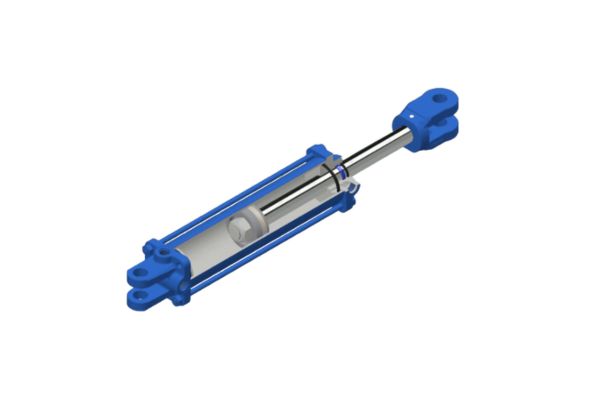
Here’s the deal: the hydraulic cylinder is where the magic of converting fluid pressure into raw, linear force happens. Understanding its simple but robust construction is key to appreciating how hydraulic cylinder power is generated. It’s the workhorse of your system.
What are the main parts of a cylinder?
A hydraulic cylinder is essentially a sealed tube with a movable piston inside. The barrel contains the pressure, the piston separates the pressure zones, and the attached rod transfers the force to your machine. Seals are the unsung heroes that prevent leaks and maintain efficiency.
- Cylinder Barrel: The main body containing the pressure.
- Piston: A disc that fluid pushes against.
- Piston Rod: The shaft that extends out to do the work.
- Seals: Critical components that prevent fluid leakage.
How do cylinders create linear force?
Now, for the magic. When pressurized fluid is pumped into one side of the piston, it creates a pressure differential that forces the piston and rod to move. This simple, powerful action is what lifts excavator buckets and operates massive industrial presses.
- Fluid enters the port at the cylinder’s base.
- Pressure builds against the face of the piston.
- The piston and rod extend, creating a pushing force.
A hydraulic cylinder uses fluid pressure acting on a piston inside a sealed barrel to generate powerful, controlled linear motion.
| Cylinder Part | Role |
|---|---|
| Cylinder Barrel | The main body that contains the pressure. |
| Piston | The disc inside the barrel that is moved by fluid. |
| Piston Rod | The shaft connected to the piston that transfers the force. |
| Seals | Prevent fluid from bypassing the piston, ensuring pressure is maintained. |
Types of Hydraulic Cylinder Power
Simply put, not all cylinders are created equal. The type of cylinder you use determines how force is applied and how the cylinder returns to its starting position. Choosing the right one is critical for the efficiency and functionality of your hydraulic cylinder power system.
What is a single-acting cylinder?
This is the simplest type, where hydraulic pressure pushes the piston in only one direction (extension). The return stroke relies on an external force, like gravity or a spring, to push it back. They are cost-effective and perfect for jobs like lifting.
- Action: Powered in one direction only.
- Return: Uses gravity or a spring.
- Common Uses: Hydraulic jacks, car lifts, lift gates.
What is a double-acting cylinder?
Now, let’s level up. A double-acting cylinder has ports on both ends, allowing hydraulic pressure to power both the extension and retraction strokes. This provides precise control and force in both directions, making them incredibly versatile.
- Action: Powered extension and retraction.
- Advantage: Offers force and control in two directions.
- Common Uses: Excavator arms, steering systems, industrial presses.
When are telescopic cylinders used?
But what if you need more reach? Telescopic cylinders are used when you need a very long stroke from a compact, retracted length. They consist of multiple nested stages that extend sequentially, like an old-fashioned telescope.
- Design: Multiple steel tubes (stages) nested inside one another.
- Function: Provides an exceptionally long stroke length.
- Common Uses: Dump trucks, cranes, lifts.
Cylinder choice depends on the application: single-acting for simple lifting, double-acting for powered control in both directions, and telescopic for long-reach needs.
| Cylinder Type | Motion | Return Method | Common Application |
|---|---|---|---|
| Single-Acting | Powered in one direction only. | Gravity or spring. | Car lifts, hydraulic jacks. |
| Double-Acting | Powered extension and retraction. | Hydraulic pressure. | Excavators, industrial presses. |
| Telescopic | Provides a long stroke from a compact size. | Gravity or hydraulic pressure. | Dump trucks, cranes. |
Pumps: The Heart of Hydraulic Cylinder Power
Here’s a common misconception: many believe pumps create pressure, but they actually create flow. Pressure is only generated when that flow meets resistance, such as the load on a cylinder. Understanding this distinction is fundamental to grasping hydraulic cylinder power.
What is the function of a hydraulic pump?
The hydraulic pump is the true heart of your system, responsible for taking mechanical energy (from an engine or motor) and converting it into fluid flow. It pushes the hydraulic fluid into the system, creating the potential for work to be done. Without flow, there is no power.
- Input: Mechanical rotation.
- Output: Fluid flow (Gallons Per Minute or GPM).
- Misconception: Pumps do not create pressure; they create flow.
What are the common types of pumps?
Let’s look at the options. While there are many designs, most hydraulic systems use one of three main pump types. Each offers a different balance of cost, efficiency, and pressure capability to suit various applications.
- Gear Pumps: Simple, durable, and economical for low-to-mid pressure needs.
- Vane Pumps: Quieter and highly efficient, ideal for mid-pressure industrial use.
- Piston Pumps: The most robust, offering the highest pressures and efficiency for heavy-duty systems.
Hydraulic pumps are the source of power, creating the fluid flow that the rest of the system uses to generate force.
| Pump Type | Primary Characteristic | Best For |
|---|---|---|
| Gear Pump | Simple, economical, and robust. | Low-to-mid pressure applications. |
| Vane Pump | Quiet operation and good efficiency. | Mid-pressure industrial applications. |
| Piston Pump | High efficiency and high-pressure capability. | Heavy-duty, high-performance systems. |
Motors: Using Hydraulic Cylinder Power
It’s the reverse of a pump. While a cylinder gives you linear (push/pull) force, a hydraulic motor gives you rotary (spinning) force. It harnesses the flow and pressure from the pump to turn a shaft, powering everything from wheels to conveyor belts.
How do hydraulic motors work?
A hydraulic motor uses the incoming pressurized fluid to push against internal gears, vanes, or pistons, forcing them to rotate. This rotation is transferred to an output shaft, which can then be used to drive mechanical components. They are essentially a hydraulic pump working in reverse.
- They convert hydraulic energy into mechanical energy.
- Fluid flow determines the motor’s speed (RPM).
- Pressure determines the motor’s torque (twisting force).
How do they differ from pumps?
Here’s the key difference: it’s all about the direction of energy conversion. A pump turns mechanical rotation into fluid flow, while a motor turns fluid flow into mechanical rotation. You can think of them as two sides of the same coin.
- Pump: Mechanical In -> Fluid Out.
- Motor: Fluid In -> Mechanical Out.
- Function: One creates power potential; the other uses it.
Hydraulic motors convert fluid flow and pressure into rotary motion and torque, performing the opposite function of a hydraulic pump.
| Component | Input | Output | Function |
|---|---|---|---|
| Hydraulic Pump | Mechanical Rotation | Fluid Flow | Creates the potential for power. |
| Hydraulic Motor | Fluid Flow | Mechanical Rotation | Uses the power to create rotary motion. |
Applying Hydraulic Cylinder Power
Look around any job site. The real-world applications of hydraulic cylinder power are everywhere, from construction and manufacturing to agriculture. This technology is the invisible force behind the world’s heaviest and most productive industries.
Where is this power used in construction?
In construction, hydraulic systems provide the massive, yet controllable, force needed to move earth and lift heavy materials. The precise movements of an excavator’s arm or the immense power of a bulldozer’s blade are all thanks to hydraulics. Without it, modern construction would be impossible.
- Excavator arms and buckets.
- Bulldozer blades and rippers.
- Cranes, loaders, and dump trucks.
What about in manufacturing?
Inside the factory, hydraulics provide the high-speed, repeatable force essential for mass production. They power everything from metal-stamping presses that shape car parts to the robotic arms that assemble them. This technology ensures consistency and power on the assembly line.
- Hydraulic presses for stamping and forming.
- Injection molding machines.
- Robotic arms and automated material handling.
How does agriculture use this power?
Out in the field, hydraulics provide the durable, high-power-to-weight ratio needed for modern farming equipment. They lift heavy implements on tractors, power the heads of harvesters, and operate steering systems. This robust power is essential for maximizing productivity during planting and harvest.
- Tractor three-point hitches for lifting implements.
- Combine harvester headers and unloading augers.
- Power steering systems.
Hydraulics are essential across major industries, providing the immense, controllable force needed for construction, manufacturing, and agriculture.
| Industry | Key Application | Benefit of Hydraulic Power |
|---|---|---|
| Construction | Moving excavator arms, bulldozer blades. | Massive force, precise control. |
| Manufacturing | Stamping presses, automated assembly lines. | Repeatable force, high-speed operation. |
| Agriculture | Lifting harvester heads, tractor implements. | Durability, high power-to-weight ratio. |
Optimizing Hydraulic Cylinder Power
Here’s the deal: getting the most out of your equipment means understanding the two key variables that define hydraulic cylinder power. Flow and pressure are the fundamental inputs that dictate your system’s performance. Master them, and you master your machine.
How do flow and pressure affect performance?
It’s a simple but critical relationship: flow controls speed, and pressure controls force. If you need your cylinder to move faster, you need to increase the fluid flow rate. If you need it to lift more weight, you need to increase the system pressure.
- Flow (GPM): Determines the speed of the actuator.
- Pressure (PSI): Determines the force output of the actuator.
- Relationship: They are independent; you can have high flow at low pressure, or vice-versa.
What role do seals play in efficiency?
Don’t overlook the small stuff. Seals are arguably the most critical component for maintaining efficiency. They work to contain high-pressure fluid, preventing leaks that rob your system of both speed and force.
- Internal Seals (Piston Seals): Prevent fluid from bypassing the piston, which causes drift and power loss.
- External Seals (Rod Seals): Prevent fluid from leaking out of the cylinder, which is both messy and inefficient.
- Function: Worn seals directly lead to lost performance.
Optimizing hydraulic performance comes down to managing the balance of flow (speed) and pressure (force), while ensuring seals are in perfect condition to maintain efficiency.
| Factor | Controls… | Impact on System |
|---|---|---|
| Flow (GPM) | Speed of the actuator (cylinder/motor). | Higher flow means faster movement. |
| Pressure (PSI) | Force output of the actuator. | Higher pressure means more lifting/pushing force. |
| Seals | Pressure containment and efficiency. | Worn seals lead to power loss and leaks. |
Conclusion
By understanding the fundamentals of hydraulic cylinder power and its core components, you are now equipped to move beyond frustrating guesswork. You can better diagnose performance issues, communicate effectively with technicians, and make informed decisions that reduce downtime and boost productivity. At Topa, our vision is to empower every operator with the reliable solutions and knowledge needed to keep the world’s most critical industries moving forward.
Frequently Asked Questions
How do I know if my hydraulic cylinder is failing?
Look for clear signs of performance degradation, which often point to internal or external seal failure. Key symptoms to watch for include:
- Cylinder “drifting” or failing to hold a position under load.
- A noticeable loss of lifting or pushing force.
- Visible fluid leaks around the rod or end caps.
- Jerky or erratic movement.
Can I use a different type of hydraulic fluid?
It is highly discouraged. Always use the fluid type recommended by the machinery manufacturer, as different fluids have different viscosities, additives, and temperature ratings. Using the wrong fluid can lead to poor performance, seal damage, and premature system failure.
How do I choose the right pump for my application?
To select the right pump, you must match it to your system’s requirements. The two most important factors to consider are the required pressure (PSI) for force and the required flow rate (GPM) for speed. Always consult your equipment’s specifications or an expert.
Can I increase the speed of my hydraulic cylinder?
Yes, the speed of a cylinder is directly proportional to the fluid flow rate it receives. To make a cylinder move faster, you must increase the flow rate (measured in GPM). This might involve installing a larger pump or adjusting a flow control valve.
What is the most common cause of hydraulic failure?
Fluid contamination is the number one cause of hydraulic system failure, accounting for over 75% of all issues. Other common causes include:
- Operating the system at excessively high temperatures.
- Using the incorrect type of hydraulic fluid.
- Worn or damaged seals leading to leaks.