
What Movements Make Hydraulic Cylinders Essential in Sprayers?
Agricultural sprayer movements such as boom folding, height adjustment, and precise leveling depend heavily on the linear force provided by the hydraulic cylinder. You face the constant pressure of maximizing field coverage while navigating tight gates and uneven terrain. Without reliable actuation, your sprayer becomes a liability, leading to uneven chemical application and costly downtime.
How Does Custom Design Improve Sprayer Efficiency?
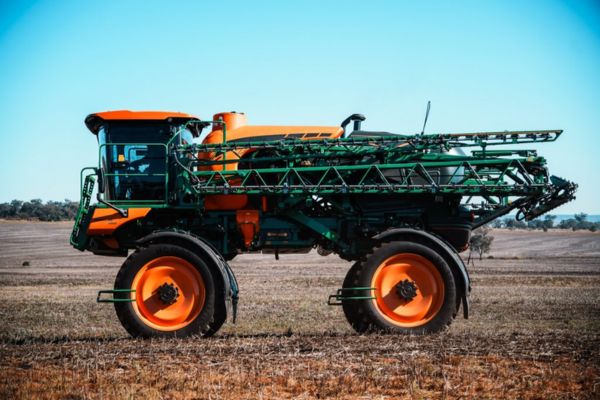
A custom-designed hydraulic cylinder ensures that the stroke and force match the specific geometry of your sprayer’s folding mechanism. Standard parts often force you to compromise on your machine’s design, potentially leading to mechanical interference. Customization allows you to optimize every millimeter of space within the chassis.
What are the benefits of tailored engineering?
Tailoring your components allows for better integration with existing hydraulic manifolds and control systems. You can specify exact port locations to simplify hose routing and reduce potential leak points.
- Reduced weight through optimized material selection.
- Precise stroke lengths that prevent mechanical overextension.
- Custom seal packages designed for specific agricultural chemicals.
Here is the deal: standard cylinders are built for everyone, but custom cylinders are built for your success.
| Feature | Off-the-Shelf | Custom Designed | |
|---|---|---|---|
| Fitment | Generic | Precision Match | |
| Durability | Average | Application-Specific | |
| Lead Time | Short | Moderate |
Integrated custom designs eliminate the need for field modifications and reduce the risk of structural failure under stress.
Focus on custom-engineered cylinders to ensure your sprayer operates within its optimal mechanical limits without unnecessary strain.
Should You Choose Single or Double-Acting Cylinders?
Choosing between a single or double-acting hydraulic cylinder depends on whether your sprayer needs power in one or both directions of travel. Most modern sprayers utilize the latter to ensure that heavy booms can be both raised and lowered with equal precision. This dual-direction control is vital for maintaining stability during high-speed field operations.
When is double-acting the right choice?
A double-acting hydraulic cylinder is essential for boom sections that must be held rigidly in place against wind or gravity. This design provides pressurized oil to both sides of the piston, allowing for active retraction.
- Improved control over heavy folding wings.
- Ability to apply “down pressure” if required by the implement.
- Faster cycle times compared to gravity-return systems.
Think about it. In a world of varying terrain, having power in both directions is not just a luxury; it is a necessity.
| Cylinder Type | Power Direction | Best Sprayer Application | |
|---|---|---|---|
| Single-Acting | One Way (Push) | Simple Lift Ladders | |
| Double-Acting | Both Ways (Push/Pull) | Main Boom Folding |
Double-acting cylinders offer the superior control and safety needed for complex, multi-section sprayer booms.
Prioritize double-acting cylinders for any movement that requires forced retraction or precise positioning against external loads.
How Does Working Load Impact Cylinder Selection?
Determining the total working load is the first step in selecting a hydraulic cylinder that won’t fail under the weight of heavy booms. You must account for not only the weight of the steel structure but also the fluid dynamics within the spray lines. Ignoring dynamic loads during transport can lead to catastrophic seal failure or rod bending.
Why calculate static and dynamic loads?
Static load is just the beginning; you must also consider the “shock” loads encountered when a sprayer hits a pothole at speed. These spikes in pressure can far exceed the nominal operating capacity of a standard unit.
- Prevents premature fatigue of the cylinder rod.
- Ensures the hydraulic system stays within safe pressure relief limits.
- Protects the sprayer frame from unexpected stress fractures.
Make no mistake: underestimating your load is the fastest way to a broken machine.
| Load Type | Description | Impact on Cylinder | |
|---|---|---|---|
| Static | Weight at rest | Determines minimum bore size | |
| Dynamic | Force during movement | Affects seal and rod durability |
Accurate load calculations prevent over-pressurization and extend the life of your entire hydraulic circuit.
Always calculate your cylinder requirements based on peak dynamic loads rather than simple static weight.
Why Is Correct Bore Size Critical for Force?
The bore size of a hydraulic cylinder directly dictates the amount of force the sprayer can apply to lift its heavy chemical tanks or booms. A bore that is too small will struggle to move the load, leading to sluggish performance and excessive heat generation. Conversely, an oversized bore might be too slow for responsive boom leveling.

How do you calculate required force?
Force is the product of the internal surface area of the piston and the system pressure. By choosing the right bore, you ensure that your pump doesn’t have to work at its maximum limit constantly.
- Directly affects the lifting capacity of the boom center frame.
- Influences the speed of the hydraulic folding sequence.
- Determines the size of the hydraulic hose needed for the circuit.
The bottom line is this: bore size is the engine room of your hydraulic force.
| Bore Diameter | Force at 3000 PSI | Common Use Case | |
|---|---|---|---|
| 2.0 Inches | ~9,400 lbs | Small Wing Fold | |
| 4.0 Inches | ~37,700 lbs | Main Lift Carriage |
Selecting the correct bore size balances the need for raw power with the requirement for operational speed.
Match your bore size to your system pressure to ensure smooth, efficient movement without straining your hydraulic pump.
Does Duty Cycle Affect Cylinder Longevity?
A high duty cycle requires a hydraulic cylinder built with superior seals and materials to withstand constant repetitive motion. In professional spraying operations, booms may adjust hundreds of times per hour to maintain level. This constant cycling generates heat, which can degrade standard hydraulic fluids and components.
How to manage heat and wear?
For high-cycle applications, choosing a welded hydraulic cylinder is often the best path forward. These are designed for more intensive use than tie-rod alternatives, offering greater structural integrity.
- High-grade seals prevent internal bypassing during long shifts.
- Hard-chrome plated rods resist pitting and corrosion from chemicals.
- Better heat dissipation through robust cylinder walls.
Here is the deal: a cheap cylinder will fail when you need it most during the peak season.
| Cycle Rate | Component Stress | Recommended Build | |
|---|---|---|---|
| Low | Minimal | Standard Tie-Rod | |
| High | Significant | Heavy-Duty Welded |
Understanding your duty cycle allows you to invest in components that survive the rigors of an entire spraying season.
Specify heavy-duty welded cylinders for any sprayer function that operates continuously, such as automatic boom leveling.
What Mounting Styles Work Best for Sprayers?
The mounting style of a hydraulic cylinder determines how force is transferred to the sprayer frame and how well it handles misalignment. On agricultural equipment, frames often flex as they move across uneven fields. If your mounting is too rigid, this flex will put side-loads on the cylinder rod, causing leaks.
Why use clevis or pin-eye mounts?
Clevis and pin-eye mounts allow for a degree of rotation, which accommodates the natural movement of the sprayer’s mechanical joints. These mounts are easy to maintain and replace in the field if necessary.
- Spherical bearings can handle three-dimensional misalignment.
- Clevis mounts offer high strength for heavy lifting tasks.
- Trunnion mounts provide a compact footprint for tight spaces.
It is a simple fact: the right mount protects your rod from bending.
| Mount Type | Flexibility | Recommended Application | |
|---|---|---|---|
| Clevis | Moderate | Boom Folding | |
| Spherical Eye | High | Boom Leveling / Steering |
Selecting the correct mounting style is the primary way to prevent side-loading and extend seal life.
Utilize spherical or clevis mounts to allow your cylinders to “breathe” with the machine’s natural frame flex.
Can Hydraulics Automate Boom Folding Sequences?
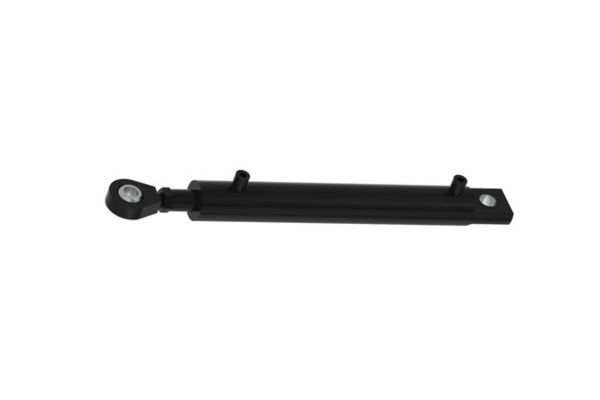
Using a specialized hydraulic cylinder allows for the safe and rapid folding of large sprayer booms for road transport. Modern sprayers often feature booms exceeding 120 feet, which require multi-stage folding. Hydraulics provide the sequence control necessary to fold these massive structures without hitting the operator’s cab.
Is multi-stage folding necessary?
Multi-stage folding uses several cylinders in tandem to tuck the boom wings tightly against the chassis. This reduces the transport width, making it easier for you to move between fields on narrow roads.
- Sequential valves ensure sections fold in the correct order.
- Integrated orificing provides “cushioning” at the end of the stroke.
- Locking valves prevent the boom from unfolding during transport.
Believe it or not, the efficiency of your fold determines your daily productivity.
| Folding Stage | Cylinder Role | Key Benefit | |
|---|---|---|---|
| Primary | Main Inner Wing | Initial Lift/Fold | |
| Secondary | Outer Tip Fold | Compact Transport |
Hydraulic folding systems turn a twenty-minute manual task into a thirty-second automated process.
Invest in cylinders with end-of-stroke cushioning to prevent structural damage during rapid boom folding sequences.
How Is Boom Leveling Maintained on Slopes?
Maintaining a consistent spray height on uneven ground requires a fast-acting hydraulic cylinder to adjust the boom angle in real-time. If one side of the boom dips too low, you risk hitting the crop or the ground. Precision hydraulics respond to sensor inputs to keep the spray tips at the perfect distance from the target.
What role do sensors play?
High-speed cylinders can be fitted with internal transducers that communicate directly with the sprayer’s computer. This allows for millisecond adjustments via high-quality hydraulic hose assemblies that handle the rapid pressure pulses.
- Automatic height control reduces operator fatigue significantly.
- Consistent boom height ensures uniform chemical coverage.
- Reduces the risk of boom strikes on terraced land.
Let’s face it: you can’t react as fast as an automated hydraulic system.
| Adjustment Type | Response Speed | Impact on Spraying | |
|---|---|---|---|
| Manual | Slow | Uneven Application | |
| Automated | Ultra-Fast | Perfect Uniformity |
Active hydraulic leveling is the cornerstone of precision application in hilly or undulating terrain.
Pair your leveling cylinders with high-response proportional valves for the most accurate boom height control.
Why Adjust Sprayer Height with Hydraulics?
Adjusting the chassis height to accommodate different crop stages is made possible by the vertical lift of a hydraulic cylinder . Early in the season, you may want a lower center of gravity for stability. As the corn or wheat grows, you need “high-clearance” capabilities to avoid damaging the crop canopy.
Can you improve crop clearance?
Hydraulically adjustable axles allow you to change the machine’s clearance from the cab with the push of a button. This versatility means one sprayer can handle multiple types of crops throughout the year.
- Increases the ROI of the machine across different seasons.
- Allows for late-season nitrogen application in tall crops.
- Maintains a level chassis even when the axles are extended.
The reality is clear: versatility in height is versatility in profit.
| Height Mode | Benefit | Targeted Crop | |
|---|---|---|---|
| Low Clearance | Stability / Transport | Early Stage / Road | |
| High Clearance | Late Season Access | Mature Corn / Sunflowers |
Hydraulic height adjustment allows your equipment to grow alongside your crops, ensuring year-round utility.
Utilize long-stroke, heavy-duty cylinders for axle height adjustments to ensure stability at all clearance levels.
Do Sprayers Need Hydraulic Axle Steering?
Precise row tracking and tight headland turns are facilitated by a hydraulic cylinder integrated into the sprayer’s steering linkage. Large self-propelled sprayers require immense force to turn wide tires through muddy soil. Without hydraulic assist, steering these machines would be physically impossible for the operator.
How to reduce crop trampling?
Rear-axle steering, powered by a double-acting hydraulic cylinder , allows the rear wheels to follow the exact path of the front wheels. This “true-tracking” minimizes the amount of crop that is crushed during turns at the end of the field.
- Tightens the turning radius for smaller headlands.
- Reduces soil compaction by keeping wheels in the same track.
- Improves machine maneuverability in tight farmyards.
Trust the process: better steering leads to better yields.
| Steering Type | Wheel Control | Main Advantage | |
|---|---|---|---|
| Front Only | Standard | Simplicity | |
| 4-Wheel Steer | Advanced | 50% Less Trampling |
Hydraulic steering systems are vital for protecting your investment in the field by reducing crop damage.
Choose steering cylinders with integrated position sensors to enable advanced GPS-guided auto-steering features.
Precision Motion for Every Field
By selecting the right hydraulic components, you solve the most common sprayer failures: boom sagging, slow response times, and structural fatigue. High-quality cylinders ensure that your machine remains a precise tool for chemical application rather than a source of maintenance headaches. Whether you are folding a massive boom or steering through tight rows, the right actuation makes all the difference. At Topa, we are dedicated to powering the next generation of agricultural productivity through superior fluid power solutions. To enhance your equipment’s performance and reliability, contact us today.
FAQ
Can I replace a single-acting cylinder with a double-acting one?
Yes, provided you have the necessary hydraulic plumbing and control valves to support the return line.
What’s the best way to prevent cylinder rod corrosion?
Excellent. Ensure you select cylinders with high-quality chrome plating or nitrocarburized finishes to resist harsh agricultural chemicals.
Can I use standard seals for liquid fertilizer applications?
No. You should specify Viton or other chemical-resistant seal materials to prevent premature failure.
What’s the best mounting style for a flexing boom?
Spherical. A spherical eye mount allows for multi-axis movement, which prevents side-loading on the rod.
Can I increase my sprayer’s lift capacity by increasing pressure?
Risky. It is much safer to increase the bore size of the cylinder than to exceed the manufacturer’s recommended system pressure.