
How to Quickly Understand How Does a Hydraulic Cylinder Work in Practice
The Power Problem in Your Machinery
Your heavy equipment sometimes falls short of delivering the force needed for demanding tasks, creating costly delays and operational frustration. Every minute of underperformance increases the risk of missed deadlines and reduced profitability, often due to an underpowered core system. By understanding how does a hydraulic cylinder work, you gain insight into how this critical component transforms hydraulic pressure into immense, reliable power—putting you in complete control of your machinery’s performance and productivity.
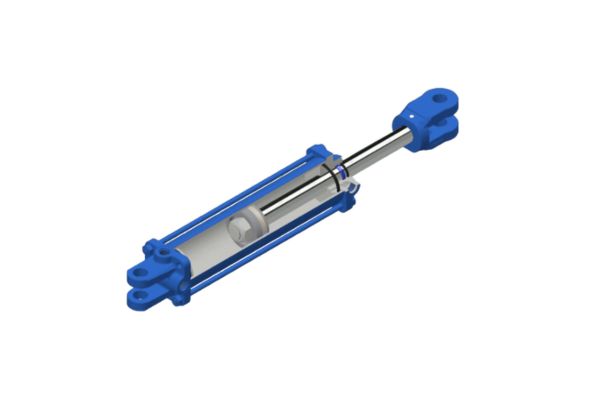
Pascal’s Law: The Secret to Hydraulic Force
The entire operation of a hydraulic cylinder is built on a simple yet powerful physics principle discovered centuries ago. This principle explains how you can use a liquid to multiply force, turning a small input into a massive output. Understanding this is the first step to understanding how a hydraulic cylinder works.
What is the basic principle of force multiplication?
The secret lies in Pascal’s principle, which states that pressure applied to a fluid in a closed container is transmitted equally throughout that fluid. Imagine squeezing a water balloon; the pressure is felt evenly across its entire surface. Hydraulic systems use this same idea but with oil in a steel container to do useful work.
Here’s the deal:
- You start with a closed, sealed system.
- The system is filled with an incompressible fluid, like oil.
- Any pressure you introduce is passed on to every part of the system.
How does this apply to a cylinder?
This principle is what makes a cylinder a force multiplier. By applying a small force to a small piston, you generate pressure that is then transferred to a much larger piston. Because the pressure is the same, the larger piston’s surface area generates a proportionally larger output force.
But wait, there’s more:
- A pump creates pressure by pushing fluid into the cylinder’s small port.
- This pressure acts on a large piston head inside the cylinder.
- The result is a significant multiplication of force, allowing you to lift heavy loads with ease.
What are force, pressure, and area?
The relationship between these three elements is the core of hydraulic power, defined by the formula P = F/A. The pressure (P) from your hydraulic pump acts on the surface area (A) of the piston. This combination determines the total output force (F) your cylinder can produce.
The bottom line is:
- P: Pressure (from the hydraulic pump)
- F: Force (the output work)
- A: Area (the surface of the piston)
This principle is why even a compact hydraulic cylinder can produce an incredible amount of force compared to an electric motor of the same size.
| Component | Role in Pascal’s Law | Impact |
| Small Piston | Input force is applied here | Requires less initial effort |
| Hydraulic Fluid | Transmits pressure equally | Ensures consistent force transfer |
| Large Piston | Output force is generated here | Force is multiplied significantly |
This table highlights how the components work together to achieve force multiplication, the core principle of hydraulic power.
The Main Parts of a Hydraulic Cylinder
While the principle is simple, a hydraulic cylinder is made of several key components that must work together perfectly. Each part has a specific job, from containing the immense pressure to transferring the force. These components ensure the cylinder operates reliably for thousands of hours.
What are the cylinder barrel and end caps?
The cylinder barrel is the main body, a strong seamless tube precision-honed to house the piston. It is sealed at each end by caps. The cylinder bottom is the cap at the closed end, while the cylinder head (or gland) is where the piston rod passes through.
Here’s the breakdown:
- Barrel: The main body housing the piston.
- Cylinder Bottom (Cap): Seals the non-rod end.
- Cylinder Head (Gland): Seals the end where the rod passes through.
What are the piston and the piston rod?
Inside the barrel, the piston separates the two pressure chambers. When fluid enters one chamber, it pushes the piston, which is connected to the piston rod. The rod is a hard, chrome-plated shaft that transfers this linear force outside the cylinder to move your load.
You might be wondering:
- Piston: This part divides the barrel into two chambers.
- Piston Rod: This connects to the piston and extends out of the cylinder.
- Load Connection: The rod’s end attaches to the machinery component you want to move.
What is the role of sealing in the system?
Seals are the unsung heroes of any hydraulic cylinder, responsible for containing high-pressure fluid and keeping contaminants out. Piston seals prevent internal leakage between chambers, while rod seals prevent external fluid leaks. Wiper seals clean the rod as it retracts, protecting the entire system from dirt.
Think about it:
- Piston Seals: Prevent internal leaks between chambers.
- Rod Seals: Prevent external fluid leaks.
- Wiper Seals: Clean the rod upon retraction to stop contaminants.
Effective sealing is the most critical factor for maintaining pressure, ensuring the cylinder operates efficiently and avoids premature failure.
| Component | Primary Function | Material |
| Cylinder Barrel | Contains pressure; houses the piston | Honed Steel |
| Piston | Separates pressure zones (A/B chambers) | Steel or Ductile Iron |
| Piston Rod | Transfers linear force to the load | Hard Chrome-Plated Steel |
This data shows that each core component is made from robust materials designed to withstand high pressure and wear.
How does a hydraulic cylinder work to create motion?
Now that you understand the parts, let’s look at how they create movement. A double-acting cylinder, the most common type, uses hydraulic fluid to power movement in two directions: extending and retracting. This controlled push-and-pull action is what makes hydraulic systems so versatile.
How does the “push” stroke work?
To extend the cylinder, pressurized fluid from the pump is directed into the ‘A’ chamber at the cap end. This pressure acts on the full face of the piston, pushing it forward. As the piston moves, it forces the attached rod to extend out of the cylinder.
Here’s the deal:
- Fluid enters Port A at the cap end.
- Pressure builds behind the full area of the piston.
- The piston rod extends outward, creating a “push” force.
Why does the cylinder retract?
To retract the cylinder, the flow of hydraulic fluid is reversed. Pressurized fluid is now sent into the ‘B’ chamber at the rod end. Since the rod takes up space, the fluid acts on a smaller surface area, but it still generates enough force to push the piston back, pulling the rod into the cylinder.
So what happens?
- Fluid enters Port B at the rod end.
- Pressure builds on the rod side of the piston.
- The piston rod retracts inward, creating a “pull” force.
How are speed and force controlled?
You have precise control over the cylinder’s movement by managing the hydraulic fluid. The speed of the piston rod is determined by the fluid’s flow rate—more flow means faster movement. The force the cylinder exerts is determined by the system’s pressure—more pressure means a stronger push or pull.
The bottom line is:
- More Flow: Faster movement.
- Less Flow: Slower movement.
- More Pressure: Higher force output.
By independently managing flow rate and pressure, you gain precise control over both the speed and power of your hydraulic actuator.
| Action | Fluid Enters Chamber… | Piston/Rod Movement |
| Extend (Push) | Chamber A (Cap End) | Piston moves away from cap, rod extends |
| Retract (Pull) | Chamber B (Rod End) | Piston moves toward cap, rod retracts |
This table clearly illustrates the opposing fluid paths that enable the cylinder’s push and pull functionality.
The Role of Hydraulic Fluid
The fluid in your hydraulic system does much more than just sit there. It is a highly engineered liquid that serves multiple critical functions simultaneously. The health and cleanliness of this fluid are paramount to the performance and longevity of your entire hydraulic system.
What does the fluid do besides transfer power?
While its primary job is to transmit power, hydraulic fluid also plays a vital role in lubricating moving parts like the piston, seals, and rod. It also helps to dissipate heat generated during operation. This ensures components move smoothly and prevents overheating and premature wear.
Here’s a closer look:
- It efficiently transmits power.
- It lubricates all internal moving parts.
- It helps cool the entire hydraulic system.
Why must the fluid be incompressible?
Hydraulic fluid is almost perfectly incompressible, which is key to its effectiveness. Because the oil doesn’t compress under pressure, force is transferred instantly from the pump to the piston. This ensures your machine responds immediately and operates without a “spongy” or delayed feeling.
You might be wondering:
- Efficiency: No energy is wasted compressing the fluid itself.
- Responsiveness: Force is transferred almost instantly.
- Predictability: Movement is smooth and stable.
Why is it vital to keep your fluid clean?
Contamination is the number one cause of hydraulic component failure. Dirt, water, or metal particles in the fluid will score surfaces, destroy seals, and clog sensitive valves. Keeping your fluid clean through proper filtration and maintenance is the single most important thing you can do to protect your investment.
Think about it:
- Transmits power from the pump to the cylinder
- Lubricates all internal components
- Dissipates heat away from critical areas
- Carries contaminants to the system filter
The condition of your hydraulic fluid is a direct indicator of your system’s health; clean fluid means a long-lasting, reliable hydraulic cylinder.
| Fluid Property | Importance to Cylinder Operation | Consequence of Neglect |
| Incompressibility | Enables immediate power transfer | Spongy, inefficient operation |
| Lubricity | Reduces friction and wear on seals/parts | Premature component failure |
| Cleanliness | Prevents scoring and damage | Clogged valves, worn seals, total failure |
This analysis confirms that each property of the fluid is directly linked to the operational integrity and lifespan of the cylinder.
Single-Acting vs. Double-Acting Cylinders
Hydraulic cylinders come in two primary configurations: single-acting and double-acting. Your choice between them depends entirely on the job you need to do. One offers simplicity and is powered in one direction, while the other provides powered control over the entire movement cycle.
What is a single-acting cylinder?
A single-acting cylinder uses hydraulic pressure for movement in only one direction—typically the extension (push) stroke. The retraction stroke is accomplished by an external force, such as a spring inside the cylinder or the weight of the load itself. They are simpler in design, with only one hydraulic port.
Here’s the deal:
- Hydraulic pressure pushes in one direction only.
- Return is handled by gravity or an internal spring.
- A simpler design with only one fluid port.
What is a double-acting cylinder?
A double-acting cylinder uses hydraulic power for both the extension and retraction strokes, giving you complete control over movement. It has two hydraulic ports—one for the cap end (A chamber) and one for the rod end (B chamber). This is the most common type used in heavy machinery like excavators and loaders.
What’s the difference?
- Hydraulic pressure is used for both extension and retraction.
- It provides complete control over the full work cycle.
- It’s a more complex design with two fluid ports.
Which type of cylinder do you need?
The choice is straightforward: if you only need powered force in one direction, a single-acting cylinder is a cost-effective choice. If you need to both push and pull a load with powered control, you absolutely need a double-acting cylinder. Your application dictates the right design.
Here’s a simple guide:
- Single-Acting: Best for simple lifting and clamping, like a car jack.
- Double-Acting: Necessary for applications requiring powered control in both directions.
Your choice between single- and double-acting cylinders directly depends on whether your application requires powered force for retraction.
| Feature | Single-Acting Cylinder | Double-Acting Cylinder |
| Powered Stroke | One direction (usually extend) | Both extend and retract |
| Return Stroke | Gravity, spring, or external load | Hydraulic pressure |
| Ports | One | Two |
| Common Use | Tippers, Jacks, Clamps | Excavators, Presses, Steering |
The table provides a clear comparison, making it easy to select the correct cylinder type based on operational requirements.
Why Choose a Hydraulic Cylinder?
In a world with many ways to create motion, including electric and pneumatic systems, hydraulic cylinders remain the top choice for heavy-duty applications. Their unique combination of power, durability, and reliability makes them indispensable in demanding industries. They provide a level of force that other technologies struggle to match.
What is unmatched power density?
Power density refers to how much force can be generated from a component of a certain size. A relatively small hydraulic cylinder can produce an incredible amount of force, far more than an electric motor or pneumatic cylinder of a similar size. This allows you to design powerful yet compact machinery.
Here’s the key point:
- Massive force from a compact component.
- Higher force-to-size ratio than electric actuators.
- Enables powerful yet compact machine designs.
Why are they so durable in harsh environments?
Hydraulic cylinders are built to last in the toughest conditions. Their robust, sealed construction protects internal components from dirt, dust, and moisture. This makes them the ideal choice for demanding industries like mining, construction, forestry, and agriculture, where reliability is not optional.
But wait, there’s more:
- Sealed systems protect internal parts from debris.
- Robust steel construction resists physical impact.
- They are reliable in extreme temperatures and dirty conditions.
Is hydraulics always the best choice?
While incredibly powerful, hydraulics may not be the best solution for every single application. For tasks that require extremely high speeds or the intricate, data-rich precision of robotic automation, electric actuators can sometimes be a better fit. However, for raw power and durability, hydraulics are unmatched.
You should know that:
- Hydraulics offer a high force-to-size ratio.
- They have excellent durability and a long service life.
- They are reliable in the toughest conditions.
- Speed and force control are simple and effective.
You should choose hydraulics when your primary need is raw power and robust reliability in a compact form factor.
| System Type | Best For… | Key Advantage |
| Hydraulic | High force, heavy loads, harsh conditions | Unbeatable power density |
| Pneumatic | High speed, clean environments, lower force | Speed and simplicity |
| Electric | High precision, complex control, data feedback | Precise positioning and control |
This comparison clarifies that system selection is based on the primary job requirement, with hydraulics excelling in high-force applications.
How Cylinders Work Together in a System
In many advanced machines, a single cylinder isn’t enough. Complex movements often require two or more cylinders to work together in a coordinated fashion. By intelligently controlling the flow of hydraulic fluid, you can make cylinders move in perfect synchronization or in a specific, planned sequence.
How does synchronized movement work?
In applications like a vehicle’s steering system, two cylinders are often mechanically linked to work in opposition. As one cylinder extends (pushes), it forces the other to retract (pull). This creates a balanced, synchronized movement that allows for smooth and precise control of the machinery.
Here’s the deal:
- Two or more cylinders move perfectly in unison.
- This is essential for applications like vehicle steering.
- It ensures a balanced and coordinated motion.
What is a master-slave configuration?
A master-slave setup is a clever way to synchronize cylinders without a mechanical link. In this system, the fluid leaving one port of the “master” cylinder is routed directly to the input port of a “slave” cylinder. This forces the slave cylinder to move in direct proportion to the master, creating a hydraulically locked motion.
You might be wondering:
- One “master” cylinder controls one or more “slave” cylinders.
- The fluid exiting the master directly feeds the slave.
- This creates a hydraulically locked, sequential movement.
How is sequencing done with pressure valves?
You can also make cylinders operate in a specific order using pressure-sequencing valves. These valves direct fluid to the cylinder that requires the least amount of pressure to move first. Once that cylinder completes its stroke, the pressure builds, opening the valve to the next cylinder in the sequence.
The bottom line is:
- Steering Systems: One cylinder pushes while the other pulls.
- Telescopic Cylinders: Multiple stages extend in a set sequence.
- Machine Tool Clamping: Multiple clamps engage in a specific order.
By intelligently routing hydraulic fluid, you can coordinate multiple cylinders to perform complex, synchronized mechanical tasks.
| Synchronization Method | How It Works | Typical Application |
| Mechanical Linkage | A physical link connects two cylinder rods | Vehicle Steering |
| Master-Slave Flow | Fluid output from one cylinder feeds another | Synchronized lifting platforms |
| Pressure Sequencing | Valves direct flow based on pressure needs | Automated clamping fixtures |
This table breaks down the different methods for coordinating multiple cylinders, each suited for a specific type of mechanical task.
Conclusion
By understanding Pascal’s law, the core components, and the role of hydraulic fluid, you’ve demystified how a hydraulic cylinder works. You have solved the problem of not knowing where your machine’s power comes from and are now equipped to make more informed decisions about its operation and maintenance. The power is now in your hands.
At Topa, we are committed to engineering the most reliable hydraulic solutions on the market; explore our custom hydraulic cylinder services to see how we can empower your next project.
Frequently Asked Questions (FAQ)
Can I use a different type of oil in my cylinder?
No, you should not. Using the manufacturer-specified hydraulic fluid is critical, as its viscosity and additives are designed specifically for your system’s seals and operating temperatures.
What’s the best way to maintain a cylinder?
The best way is through regular inspection and clean fluid. Keep the piston rod clean, check for leaks around seals, and follow a strict fluid and filter change schedule.
How do I know if my cylinder seals are failing?
The clearest signs are external oil leaks around the rod or a noticeable loss of power. If the cylinder drifts or feels “spongy,” internal piston seals are likely worn.
Can I repair a scratched piston rod?
Yes, minor scratches can sometimes be polished out. However, deep gouges or damage to the chrome plating will shred seals and require the rod to be professionally re-chromed or replaced.
What’s the best cylinder for constant, fast work?
The best option is a high-performance, double-acting cylinder with high-quality seals and potentially integrated cushioning. This design handles the stress of high cycles and prevents damage from the piston slamming into the end caps.