
How to Identify Hydraulic Tie Rod Cylinder Parts During Inspection
Unplanned downtime from a failed cylinder can bring your entire operation to a standstill, costing both time and profit. Every idle minute reduces productivity and pushes back project deadlines. To protect your bottom line, you need clarity on the essential hydraulic tie rod cylinder parts. This guide highlights each critical component so you can recognize problems early, address them quickly, and minimize costly downtime before it disrupts your schedule.
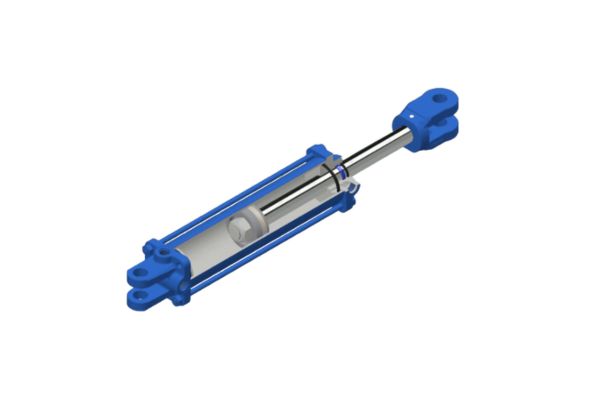
Barrel: hydraulic tie rod cylinder parts
The cylinder barrel is the main housing, a seamless steel tube that contains the system’s intense pressure. It serves as the sturdy backbone where all the work happens. Its integrity is fundamental to the cylinder’s function and safety.
What is the cylinder barrel’s main role?
Here’s the deal: the barrel acts as the core pressure chamber, housing the piston and guiding its movement. You can think of it as the cylinder’s main body, responsible for containing immense force.
- Acts as the primary pressure vessel
- Houses the piston assembly
- Made from high-strength seamless steel
Why does barrel smoothness matter so much?
A perfectly smooth, honed interior surface is vital for extending the life of your piston seals. Any scratches or imperfections will quickly wear down seals, leading to internal leaks and a loss of power.
- Reduces friction for efficient movement
- Ensures proper piston seal performance
- Prevents premature wear and tear
| Feature | Description | Importance for Your Operations |
| Material | Typically high-strength, seamless steel | Ensures the cylinder can withstand intense operating pressures without failure. |
| Interior | Honed to a mirror-smooth finish | Critical for extending seal life and enabling efficient piston movement. |
| Function | Main body and pressure chamber | Houses all internal components and contains the hydraulic force. |
| A perfectly maintained barrel surface is your first line of defense against internal leaks and power loss. | ||
Piston & Rod: hydraulic tie rod cylinder parts
The piston and rod work together to convert hydraulic pressure into mechanical force. The piston is the “engine” inside the barrel, while the rod is the “driveshaft” that delivers power. Their synergy is what makes your equipment move.
How do the piston and rod work together?
You might be wondering: how does the force get out? The piston separates the barrel’s two pressure chambers, and as fluid pushes it, the attached rod transmits that linear force to your machine’s linkage.
- Piston converts fluid pressure to force
- Rod transmits that force externally
- They are a single, connected assembly
What makes a piston rod strong and effective?
Here’s the kicker: the rod’s surface must be flawless to protect the seals. It is typically made from high-tensile steel and plated with hard chrome to resist damage and corrosion, ensuring a smooth path through the seals.
- High-tensile steel for strength
- Hard chrome plating for durability
- Polished surface to protect seals
| Component | Primary Function | Why It Matters for Your Equipment |
| Piston | Converts fluid pressure into linear force. | It’s the “engine” of your cylinder, directly responsible for generating motion. |
| Piston Rod | Transmits the piston’s force to the load. | It’s the “driveshaft” that connects the cylinder’s power to the work. |
| Damage to either of these core components will result in an immediate loss of cylinder function. | ||
Ends: Sealing hydraulic tie rod cylinder parts
The cylinder head and cap are the components that seal both ends of the barrel. They are held together by the tie rods and are responsible for containing high-pressure fluid. They also house the ports and guide the rod.
What are the cylinder head and cap?
But wait, there’s more: these aren’t just simple plugs. The cylinder cap seals the “blind” or base end, while the cylinder head seals the “rod end” and contains the critical rod gland assembly.
- Cylinder Head: The end where the rod exits.
- Cylinder Cap: The closed base of the cylinder.
Why is the rod gland in the head vital?
Think about it this way: the rod gland is a multi-part seal system that prevents external leaks. It includes a rod seal to contain pressure and a wiper seal to scrape dirt off the rod, protecting the entire system from contaminants.
- Houses the rod seals
- Guides the moving piston rod
- Prevents external contamination
| Component | Location | Key Function |
| Cylinder Head (Gland) | The end where the piston rod exits. | Seals around the moving rod and guides its movement. |
| Cylinder Cap | The closed end opposite the rod. | Seals the base of the cylinder barrel to contain pressure. |
| These end components are essential for maintaining a sealed, pressurized system. | ||
Seals: Vital hydraulic tie rod cylinder parts
Seals are the most common failure point in any hydraulic cylinder. These small but mighty components are responsible for containing immense pressure and preventing leaks. Without effective seals, a cylinder is useless.
What types of seals are used?
It gets better: there’s a specific seal for every job. Piston seals prevent internal bypass, rod seals stop external leaks, and wiper seals protect the system from dirt. O-rings often serve as static seals between non-moving parts.
- Piston seals
- Rod seals
- Wiper seals
- O-rings and wear bands
Why do seals fail and what are the signs?
Let’s dig a little deeper: seals fail due to age, contamination, heat, or physical damage from a scored rod or barrel. The clearest signs of failure are visible fluid leaks, a loss of power, or cylinder “drifting” under load.
- Contamination or improper fluid
- High temperatures or age
- Visible leaks or cylinder creep
| Seal Type | Function | Common Sign of Failure |
| Piston Seal | Prevents fluid from bypassing the piston. | Cylinder drifts, creeps, or loses power. |
| Rod Seal | Prevents fluid from leaking externally. | Visible hydraulic fluid on the piston rod. |
| Wiper Seal | Scrapes dirt from the rod on retraction. | A scored piston rod and premature seal failure. |
| Proper seal maintenance is the most cost-effective way to ensure cylinder longevity. | ||
Mounts: Crucial hydraulic tie rod cylinder parts
The mounting style determines how a cylinder is attached to a machine. Choosing the right mount is critical for directing force correctly and preventing damage. The mount must absorb the cylinder’s force without creating harmful side-loads.
What are the main mounting types?
Here’s the deal: mounts can be fixed or allow for pivoting. Common types include clevis mounts, which use a pin to pivot, and flange mounts, which bolt rigidly to a frame for straight-line force.
- Clevis mounts
- Trunnion mounts
- Flange mounts
How do you choose the right mounting style?
You might be wondering: what’s the difference? You should choose a pivoting mount like a clevis if the cylinder needs to swing through an arc. For rigid, straight-line pushing, a flange mount is superior.
- Consider the need for pivoting
- Ensure proper load alignment
- Match the mount to the force direction
| Mount Type | Best For | Why It’s Chosen |
| Clevis Mount | Applications requiring pivoting or movement. | Allows the cylinder to swing, preventing side-loading. |
| Flange Mount | Applications needing rigid, straight-line force. | Provides a strong, fixed connection for pressing or clamping. |
| Proper mounting selection is crucial for the cylinder’s long-term mechanical health. | ||
Tie Rods: Defining hydraulic tie rod cylinder parts
The tie rods are the long, external threaded rods that give this cylinder type its name. They are the structural bolts that hold the entire assembly together under pressure. This design offers unique advantages for industrial use.
What is the purpose of tie rods?
But wait, there’s more: tie rods do more than just hold the cylinder together. They absorb the tremendous axial forces generated by the hydraulic pressure, relieving stress on the barrel and end caps.
- Hold the cylinder assembly together
- Absorb massive operational loads
- Enable easy disassembly for service
Are tie rod cylinders better than welded?
For industrial settings, yes, because they are designed for serviceability. You can easily disassemble a tie-rod cylinder to replace seals or internal components, which is impossible with a welded design.
- Pro: Easy to service and repair
- Con: Can be bulkier than welded designs
| Feature | Tie Rod Cylinder | Welded Cylinder |
| Construction | Head and cap are held by external rods. | Head and cap are welded directly to the barrel. |
| Serviceability | Easy to disassemble and repair in the field. | Difficult or impossible to repair; often replaced. |
| The service-friendly design of tie-rod cylinders significantly reduces total cost of ownership. | ||
Fluid Ports: Input hydraulic tie rod cylinder parts
Fluid ports are the threaded connections where hydraulic hoses attach to the cylinder. These are the entry and exit points for the hydraulic fluid that powers the entire system. Their size and location are critical for performance.
What are hydraulic fluid ports?
Think about it this way: ports are the gateways for hydraulic fluid. They come in various thread types, such as NPT or SAE O-ring Boss, which determines the type of fitting you can use for a leak-free connection.
- Inlets and outlets for hydraulic fluid
- Commonly SAE or NPT thread types
- Found on the end caps or barrel
Why does port size and location matter?
It gets better: the port’s diameter directly controls the fluid flow rate, which dictates your cylinder’s speed. Undersized ports will “starve” the cylinder, preventing it from reaching its maximum operational speed.
- Port size controls cylinder speed
- Location affects ease of installation
- Thread type ensures a leak-proof connection
| Port Factor | Impact on Your System’s Performance |
| Port Size | Directly controls the maximum flow rate, which determines your cylinder’s speed. |
| Thread Type | Determines which fittings you can use and affects connection reliability. |
| Location | Affects ease of plumbing and can help avoid interference with components. |
| Port selection is a key engineering detail that directly influences dynamic performance. | |
Cushions: Optional hydraulic tie rod cylinder parts
Cushions are an optional feature designed to decelerate the piston at the end of its stroke. They are small shock absorbers built into the end caps. This prevents the piston from slamming into the ends of the cylinder.
What is a hydraulic cylinder cushion?
Here’s the inside scoop: a cushion uses a small spear or plunger on the piston to restrict the flow of escaping hydraulic fluid just before the end of the stroke. This traps a small volume of fluid, creating a hydraulic brake that slows the piston down smoothly.
- Reduces end-of-stroke shock
- Dampens operational noise
- Prevents mechanical damage
Do you need cushions on your cylinder?
Let’s dig a little deeper: you absolutely need cushions in high-speed or heavy-load applications. They are essential for preventing destructive impacts that can damage the cylinder, the machine’s frame, and the load itself.
- Essential for high cycle speeds
- Critical for moving heavy loads
- Protects shock-sensitive equipment
| Scenario | Cushion Recommended? | Reason |
| High-Speed Operation | Yes | Prevents the piston from slamming into the end cap, reducing shock and wear. |
| Moving Heavy Loads | Yes | Smoothly decelerates the mass, protecting both the cylinder and machine frame. |
| Slow, Light-Duty | No | The additional cost is not justified if impact forces are naturally low. |
| Cushions are a vital feature for protecting high-performance machinery from self-destruction. | ||
Conclusione
Knowing these parts empowers you to diagnose problems accurately and reduce costly downtime. When you face cylinder issues, don’t wait for a complete failure. Our mission is to provide the expertise you need to keep your operations moving and maximize productivity.
FAQ
Q1: Can I repair my own hydraulic tie rod cylinder parts?
It’s possible, but not recommended for critical applications. Proper repair requires specialized tools and knowledge; incorrect assembly can lead to immediate failure and safety risks.
Q2: What’s the most common part to fail?
Seals are by far the most common failure point. They are wear items constantly subjected to friction, pressure, and potential contamination, causing them to degrade over time.
Q3: How often should I inspect my cylinder parts?
Daily visual inspections for leaks around the rod seal are crucial. Listen for unusual noises and look for signs of damage as part of your routine equipment checks.
Q4: Is a leaking cylinder a serious problem?
Yes. A leak is a clear sign of seal failure, which causes a loss of efficiency and allows contaminants into the system, risking damage to other expensive components.
Q5: Why are tie rods used instead of a welded design?
The primary advantage is serviceability. The tie rod construction allows the cylinder to be completely disassembled for inspection and repair, which is far more cost-effective than replacing an entire welded cylinder.