
How to Avoid Replacing Agricultural Hydraulic Cylinders Too Frequently?
You can avoid frequent replacement by implementing a rigorous contamination control strategy and choosing purpose-built components designed for your specific farming loads. Imagine you are in the middle of the peak harvest season, and your tractor’s main lift arm suddenly drops because of a seal failure. This downtime is not just frustrating; it costs you thousands in lost productivity and emergency repair fees. By understanding the root causes of wear, you can significantly delay replacing agricultural hydraulic cylinders and keep your machinery in the field where it belongs.
Why Does Side Loading Speed Up Replacing Agricultural Hydraulic Cylinders?
Side loading accelerates the need for replacing agricultural hydraulic cylinders because it creates uneven pressure on the internal bearings and seals. This occurs when the load is not perfectly aligned with the cylinder’s stroke, causing the rod to push against the side of the gland. You will notice increased friction and heat, which eventually leads to metal-on-metal contact.

Aligning Your Equipment
Proper alignment ensures that the force is transmitted directly through the center of the piston rod. If your mounts are slightly off, the resulting lateral force will grind down the wear bands.
- Check for bent mounting pins regularly.
- Ensure that the cylinder is not binding during its full range of motion.
- Use spherical bearings to allow for minor self-alignment.
Here is the deal: Even a few degrees of misalignment can triple the wear rate on your rod seals. If you ignore this, you’ll be dealing with leaks long before the cylinder reaches its expected service life.
Evaluating the impact of alignment helps prevent catastrophic galling. The following table summarizes the relationship between alignment and component life.
| Factor | Impact on Cylinder | Recommended Action | |
| Minor Misalignment | Increased seal friction | Install spherical mounts | |
| Major Misalignment | Rod galling and bending | Re-index mounting points | |
| Perfect Alignment | Maximum service life | Regular pin lubrication |
By maintaining strict alignment, you protect the rod surface and prevent the internal scoring that makes the cylinder unrepairable.
How Does Oil Contamination Force Replacing Agricultural Hydraulic Cylinders?
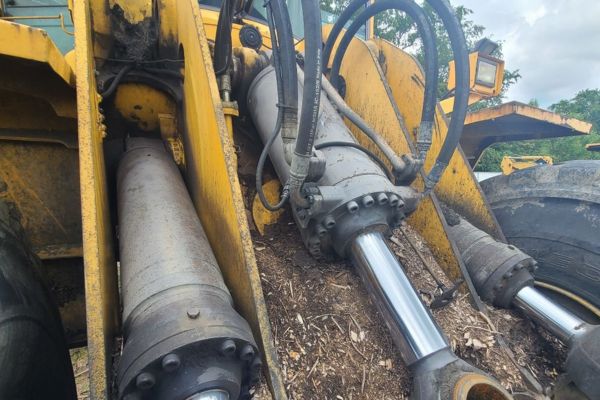
Contaminated hydraulic fluid acts like liquid sandpaper, grinding away the precision-honed surfaces and forcing the premature replacing agricultural hydraulic cylinders. When dirt or metal particles enter the system, they bypass the seals and score the cylinder barrel. This creates internal bypass leaks that reduce your equipment’s lifting power.
Managing Particle Debris
Hard particles are the primary enemy of your hydraulic system’s longevity. These contaminants often enter through damaged rod wipers or during messy oil changes in the field.
- Install high-efficiency filters on your return lines.
- Always clean the area around fill caps before adding fluid.
The best part? A cleaner system doesn’t just save your cylinders; it protects your pumps and valves too. Keeping the oil pure is the cheapest insurance policy you can buy for your tractor.
The analytical data suggests that contamination is responsible for nearly 80% of hydraulic failures. Check the contamination types below to prioritize your cleaning efforts.
| Contaminant Type | Source | Resulting Damage | |
| Silica (Dirt) | Environment/Wipers | Scored barrels and rods | |
| Metal Shavings | Component Wear | Valve sticking and piston damage | |
| Fiber/Lint | Cleaning Rags | Clogged orifices and pump cavitation |
Can Proper Rod Selection Stop Replacing Agricultural Hydraulic Cylinders?
Selecting the correct rod diameter and finish is vital for preventing the frequent replacing agricultural hydraulic cylinders on heavy-duty implements. If a rod is too thin for the intended column load, it will bend under pressure, making the unit useless. Furthermore, the surface finish must be precise to hold a microscopic film of oil for lubrication without causing leaks.
Finding The Right Diameter
A rod that is undersized for your application will eventually succumb to fatigue or sudden buckling. You must match the rod’s strength to the maximum pressure your tractor’s pump can deliver.
- Consult your manufacturer’s load charts before swapping cylinders.
- Consider upgraded alloy steels for high-stress applications.
Think about this: A rod that bends even slightly will never seal correctly again. You might think you’re saving money with a lighter cylinder, but the replacement costs will quickly prove otherwise.
Analyzing rod specifications ensures your equipment can handle the toughest soil conditions. Refer to this comparison for rod selection criteria.
| Rod Characteristic | Benefit | Risk if Ignored | |
| Large Diameter | High buckling resistance | Reduced retraction speed | |
| Induction Hardening | Improved impact resistance | Surface cracking | |
| Chrome Plating | Corrosion protection | Seal abrasion from flaking |
Choosing a rod with the right balance of strength and finish significantly extends the time between repairs.
Why Is Tube Quality Key to Replacing Agricultural Hydraulic Cylinders?
High-quality tube materials prevent the “ballooning” effect that leads to the inevitable replacing agricultural hydraulic cylinders. If the cylinder wall is too thin or made of low-grade steel, it can expand under high-pressure spikes. Once the tube loses its perfect cylindrical shape, the piston seals can no longer maintain a tight fit.
Preventing Ballooned Tubes
Ballooning usually happens at the center of the stroke where the tube is most vulnerable to internal pressure. You can identify this by a loss of power or “drifting” when the cylinder is under load.
- Only use tubes with certified wall thicknesses.
- Avoid exceeding the rated PSI of your specific cylinder model.
Here is the deal: A ballooned tube cannot be fixed; it must be replaced. By choosing a cylinder with a higher safety factor, you avoid the cost of a full unit replacement after a single pressure spike.
Technical evaluations show that material yield strength is the primary defense against tube deformation. The table below outlines tube material considerations.
| Tube Property | Importance | Typical Farming Standard | |
| Wall Thickness | Pressure containment | Sch 80 or higher | |
| Honed Finish | Seal life | 16-32 micro-inch | |
| Material Grade | Tensile strength | ST52 or E355 |
Investing in superior tube quality ensures the cylinder remains structurally sound throughout its operational life.
Does Environment Impact Replacing Agricultural Hydraulic Cylinders?
Harsh agricultural environments, filled with caustic fertilizers and moisture, make replacing agricultural hydraulic cylinders a common chore if they are not properly protected. Corrosion on the rod surface creates pits that tear through seals every time the rod retracts. If you work in coastal areas or use heavy chemicals, your equipment is at constant risk.

Handling Caustic Fertilizers
Chemicals used in modern farming can eat through standard chrome plating in a single season. You need to be proactive in cleaning your equipment after every application.
- Wash down your cylinders after spraying chemicals.
- Use protective rod boots in extremely abrasive environments.
Look at it this way: Five minutes with a pressure washer can save you five hours in the repair shop. It is the simplest way to keep your hydraulic components from rusting away.
Analyzing environmental data helps you choose the right protective coatings. See the common environmental threats and solutions below.
| Environmental Threat | Primary Damage | Best Defense | |
| Liquid Fertilizer | Chemical pitting | Nickel-Chrome plating | |
| Animal Waste | Accelerated oxidation | Stainless steel rods | |
| Dust/Grit | Wiper wear | Hardened rod surfaces |
Proper environmental shielding keeps the rod surface smooth and the internal oil clean and free of rust.
Can Temperature Control Delay Replacing Agricultural Hydraulic Cylinders?
Controlling operating temperatures is essential to avoid the early replacing agricultural hydraulic cylinders due to seal failure. Excessive heat causes seals to harden and become brittle, losing their ability to flex and maintain a seal. Conversely, extreme cold can make seals snap if they are cycled too quickly before the oil warms up.
Guarding Against Seal Brittleness
Most standard polyurethane seals are rated for temperatures up to 200°F. If your system runs hotter than this, you are effectively cooking your seals until they leak.
- Monitor your oil temperature during long work days.
- Ensure your hydraulic oil cooler is clean and functioning.
The secret is: By keeping your oil within the optimal range, you keep your seals soft and pliable. This allows them to “breathe” with the pressure and maintain a perfect seal for years.
Thermal analysis indicates that oil life is halved for every 18°F increase above its operating limit. Use the following table to manage your system’s heat.
| Temperature Range | Effect on Seals | Action Required | |
| < -20°F | Brittle/Snap risk | Warm up system slowly | |
| 100°F – 160°F | Optimal performance | Standard maintenance | |
| > 210°F | Hardening/Cracking | Check cooler and oil levels |
Maintaining stable temperatures protects the chemical integrity of your seals and the lubricity of your oil.
Why Does Over-Pressurization Cause Replacing Agricultural Hydraulic Cylinders?
Operating beyond the manufacturer’s rated PSI is a primary cause for replacing agricultural hydraulic cylinders prematurely. When pressure exceeds the design limits, it can lead to seal extrusion, where the seal material is forced into the tiny gaps between metal parts. This not only destroys the seal but can also crack the cylinder’s end caps or mounts.
Identifying Seal Extrusion
You can often spot extrusion by looking for small “nibbles” or bits of rubber in your hydraulic filters. This is a clear sign that your system pressure is set too high for your cylinder’s build.
- Regularly check your relief valve settings.
- Don’t “crank up” the pressure to get a little more lift.
It’s a simple fact: Pushing a cylinder past its limit might finish the job today, but it will break the machine tomorrow. Always stay within the bounds of your equipment’s engineering.
Analyzing pressure cycles helps identify hidden stresses on your hydraulic system. Review these pressure-related failure points.
| Component | Failure Mode | Prevention | |
| Piston Seal | Extrusion/Blow-by | Proper seal hardness (Durometer) | |
| End Cap | Thread shearing | Heavy-duty tie rods/welds | |
| Cylinder Port | Cracking/Leaking | Reinforce port welds |
Respecting pressure limits prevents the structural failures that make a cylinder completely unserviceable.
Can Worn Bushings Lead to Replacing Agricultural Hydraulic Cylinders?
Neglecting the small bushings in your mounts can lead to the expensive replacing agricultural hydraulic cylinders. When a bushing wears out, it creates “play” or slop in the mounting point, which leads to shock loading. This mechanical vibration fatigues the metal and can cause the mounting eyes to crack or break off entirely.
Identifying Soft Metal Wear
Agricultural equipment often uses soft bronze or plastic bushings designed to wear out before the steel components do. If you can “wiggle” the cylinder in its mount, the bushing is already gone.
- Inspect pivot points every 50 hours of operation.
- Keep all grease zerks full and functioning.
The deal is: Replacing a twenty-dollar bushing is much easier than replacing a thousand-dollar cylinder. Don’t let a small maintenance item turn into a major capital expense.
Mechanical analysis shows that loose mounts are the leading cause of fatigue cracks in cylinder welds. The table below highlights the importance of mount maintenance.
| Part | Warning Sign | Repair Strategy | |
| Pivot Pin | Grooving/Flattening | Replace pin and grease | |
| Bushing | Oval-shaped hole | Press in new bushing | |
| Mounting Eye | Hairline cracks | Professional weld or replace |
Keeping your mounting interface tight ensures that all forces are distributed evenly across the cylinder’s structure.
Does Lack of Maintenance Mean Replacing Agricultural Hydraulic Cylinders?
A “fix it when it breaks” mentality always results in replacing agricultural hydraulic cylinders more often than necessary. Small wear parts, like wear bands and wipers, are designed to be sacrificial components. If you do not replace them during scheduled intervals, they will fail and take the expensive barrel and rod with them.
Monitoring Wear Bands
Wear bands prevent the metal piston from touching the metal cylinder wall. Once these bands wear thin, you will get “scuffing” inside the barrel that no new seal can ever fix.
- Follow the manufacturer’s suggested service hours.
- Open the cylinder for an internal inspection once a year.
Think of it this way: Maintenance is a choice between a small, planned expense and a large, unplanned disaster. Smart operators always choose the former.
Statistical evidence proves that proactive maintenance can double the lifespan of agricultural hydraulics. Check these critical maintenance items.
| Item | Frequency | Benefit | |
| Rod Wiper | Weekly check | Keeps dirt out of seals | |
| Seal Kit | 2000 Hours | Prevents external leaks | |
| Hydraulic Oil | Annually | Maintains lubrication |
By staying ahead of wear, you ensure that your cylinders remain in peak condition for many seasons.
Can External Damage Result in Replacing Agricultural Hydraulic Cylinders?

Accidental impacts in the field are a frequent reason for replacing agricultural hydraulic cylinders. A single rock strike on an extended rod can create a burr that shreds the main seal the very next time it retracts. Since agricultural work often involves debris and tight spaces, your cylinders are constantly in the line of fire.
Protecting Exposed Rods
Whenever possible, park your equipment with the rods retracted to keep them shielded from the elements and physical damage. For exposed cylinders, consider installing simple metal shields or guards.
- Inspect the rod surface daily for nicks or scratches.
- Use a fine whetstone to gently smooth out small burrs before they hit the seal.
Bottom line: An ounce of protection in the field is worth a pound of cure in the shop. Keeping your rods clean and dent-free is the best way to avoid a mid-season breakdown.
Analysis of field failures shows that external damage is often preventable with better shielding. The table below summarizes protection methods.
| Risk Factor | Damage Type | Protection Method | |
| Flying Debris | Rod pitting | Steel rod guards | |
| Tight Corners | Dented barrels | Protective cages | |
| Salt/Chemicals | Surface rust | Protective rod sleeves |
Reducing the exposure of your cylinder’s moving parts significantly lowers the risk of sudden, impact-related failures.
Conclusion
Maintaining your agricultural equipment is a battle against friction, contamination, and time. By addressing these 10 critical areas, you can stop the cycle of frequent breakdowns and lost revenue. Our goal is to provide you with the most durable components that withstand the unique pressures of the farming industry. If you are tired of dealing with leaks and loss of power, contact us today to find a purpose-built solution. We are dedicated to helping you achieve maximum uptime with precision-engineered hydraulic technology that is built to last.
FAQ
Why do agricultural hydraulic cylinders fail so often?
They usually fail because of contamination, side loading, over-pressure, corrosion, and poor maintenance.
How can I make my agricultural hydraulic cylinders last longer?
Keep the oil clean, check alignment, avoid overload, protect the rod surface, and replace worn parts on time.
Can dirty hydraulic oil damage the cylinder?
Yes. Dirty oil can scratch internal surfaces, damage seals, and reduce lifting performance.
What are the signs that a cylinder needs attention?
Common signs include oil leaks, slow movement, weak lifting force, drifting under load, and unusual rod damage.
Is regular maintenance better than waiting for failure?
Yes. Regular inspection and small repairs cost far less than replacing a complete hydraulic cylinder during peak season.