
How To Build A Custom Hydraulic Cylinder From Your Sketch?
Building a hydraulic cylinder from a napkin sketch is entirely possible by transforming your conceptual dimensions and force requirements into precise engineering blueprints through CAD modeling and material stress analysis. This process bridges the gap between a rough idea and a high-performance mechanical component ready for industrial application. To successfully build a custom hydraulic cylinder, you must translate the stroke length, bore size, and mounting style from your initial drawing into a manufacturable design that meets safety standards.
How Do You Translate A Sketch Into Technical Specs?
Translating a sketch into technical specifications involves identifying the core functional requirements like operating pressure, required force, and environmental conditions. To build a hydraulic cylinder accurately, an engineer must first determine the cylinder’s bore size based on the output force needed at your system’s pressure. Here is the thing… even a simple drawing contains vital clues about the mounting geometry and spatial constraints that dictate the final assembly.
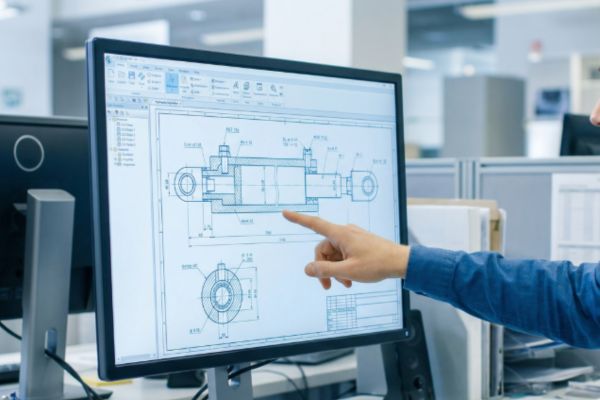
- Determining the specific bore and rod diameters for buckling resistance.
- Selecting port types (NPT, SAE, or BSPP) based on your existing hose fittings.
- Calculating the retracted and extended lengths to ensure mechanical clearance.
Can CAD Software Improve Your Initial Design?
CAD software is essential because it allows for 3D visualization and interference checking before a single piece of metal is cut. It transforms your 2D lines into a volumetric model where every bolt hole and seal groove is precisely placed. You see, this digital twin serves as the master blueprint for the CNC machinery, ensuring that the physical part matches your vision exactly.
- Stress simulation to find weak points in the rod clevis.
- Weight calculation for shipping and installation planning.
- Automatic generation of a Bill of Materials (BOM) for procurement.
By moving from paper to a 3D model, you eliminate the risk of manual measurement errors and ensure that the cylinder integrates seamlessly with your equipment’s pivot points.
| Design Phase | Input Data | Output Result |
| Concept | Napkin Sketch | Preliminary 3D Model |
| Engineering | Force/Pressure Math | Validated Bore & Rod Size |
| Final Review | Customer Approval | Production Ready Blueprints |
This transition ensures that your “napkin idea” survives the rigors of heavy-duty operation by grounding it in verified mechanical principles.
Which Materials Are Best To Build A Hydraulic Cylinder?
The best materials to build a hydraulic cylinder are typically high-tensile honed steel tubes for the barrel and hard chrome-plated steel for the piston rod. Choosing the right alloy ensures that the cylinder can withstand internal pressure spikes and external environmental corrosion without failing. It gets better, because selecting specialized materials like stainless steel can extend the life of your equipment in marine or chemical processing environments.
Does The Rod Coating Affect Performance?
The rod coating is critical because it provides the smooth surface necessary for the high-pressure seals to function without leaking. Hard chrome plating is the industry standard for its hardness and low friction coefficient. Believe it or not, even a microscopic scratch in the coating can act like a file, shredding your seals every time the rod retracts.
- Chrome thickness of 0.0005″ to 0.001″ per side.
- Surface finish of 12 to 16 Ra for optimal seal lubrication.
- Induction hardening for added resistance to physical impact.
Selecting the correct material combination prevents premature wear and ensures that your custom cylinder performs reliably under the most demanding workloads.
How Do You Calculate The Required Force?
To calculate the required force when you build a hydraulic cylinder, you must multiply the area of the piston by the operating pressure of the hydraulic system. This basic physics calculation ensures that your cylinder has enough “push” or “pull” to move the intended load. Wait, there’s more, because you also need to account for friction and a safety factor to ensure the cylinder doesn’t stall under real-world conditions.
- Calculate piston area using (Bore Diameter / 2)² x 3.14.
- Multiply area by PSI (pounds per square inch) for total force.
- Subtract rod area for accurate “pull” or retraction force calculations.
Why Is The Safety Factor So Important?
A safety factor is vital because hydraulic systems often experience unexpected pressure spikes or mechanical resistance that exceeds the theoretical load. Designing a cylinder to operate at exactly 100% capacity is a recipe for catastrophic failure. You might wonder what a safe margin is, and typically, a 1.5x to 2.0x factor is recommended for industrial machinery.
- Compensating for fluid friction within the hoses and valves.
- Accounting for mechanical efficiency losses in the pivot joints.
- Providing a buffer for lifting heavy loads on uneven terrain.
Accurate force calculations prevent you from under-powering your machine or over-stressing the cylinder’s mechanical connections.
| Bore Size | Pressure (PSI) | Theoretical Force (Lbs) |
| 2.0 Inch | 2,500 | 7,850 |
| 3.0 Inch | 2,500 | 17,671 |
| 4.0 Inch | 2,500 | 31,416 |
What Mounting Styles Fit Your Napkin Sketch?
The mounting style you choose when you build a hydraulic cylinder determines how the force is transferred to your machine and how much movement the cylinder can accommodate. Your sketch might show simple pin holes, but an engineer might suggest a spherical bearing to compensate for slight misalignments. Think about this, the wrong mount can lead to side-loading, which is the leading cause of rod bending and seal failure.

- Clevis mounts for simple pivoting applications like dump trailers.
- Trunnion mounts for high-tonnage oscillation and space-saving.
- Flange mounts for rigid, linear power transfer in industrial presses.
Are Spherical Bearings Better Than Standard Bushings?
Spherical bearings are superior when your machine frame is prone to flexing or if the load doesn’t move in a perfectly straight line. They allow the cylinder to tilt slightly without putting stress on the rod or internal wear rings. They significantly reduce the “hidden” maintenance costs associated with premature pivot pin wear.
- Self-aligning capability to handle 3 to 5 degrees of movement.
- Greaseable designs for easier long-term maintenance.
- Hardened steel construction for heavy-duty impact resistance.
Choosing the correct mounting hardware ensures that the cylinder remains aligned throughout its full stroke, protecting the internal components from uneven wear.
| Mount Type | Best Use Case | Movement Allowed |
| Clevis | Trailers / Implements | Single Plane Pivot |
| Spherical Eye | Excavators / Loaders | Multi-Axis Pivot |
| Front Flange | Stationary Presses | Rigid Linear Only |
How Do You Select The Right Seal Package?
Selecting the right seal package is the most critical step to build a hydraulic cylinder that remains leak-free for years of service. Seals must be chosen based on the type of hydraulic fluid used, the maximum operating temperature, and the speed of the rod. The truth is, a seal that works perfectly in a warehouse might fail in minutes if exposed to the sub-zero temperatures of a Northern winter.
- U-cup seals for reliable high-pressure dynamic sealing.
- Wiper seals to prevent dirt and moisture from entering the barrel.
- Buffer seals to protect the main seal from extreme pressure spikes.
Can Environmentally Friendly Fluids Affect Seals?
Environmentally friendly or fire-resistant fluids often contain chemicals that can cause standard Nitrile (Buna-N) seals to swell or dissolve. If your application uses biodegradable oil, you must upgrade to Viton or specialized Polyurethane compounds. You see, matching the seal chemistry to the fluid is the only way to prevent the dreaded “weeping” rod that leads to environmental fines.
- Viton (FKM) for high heat and aggressive chemical resistance.
- Low-temperature Nitrile for outdoor mobile equipment.
- Teflon (PTFE) back-up rings to prevent seal extrusion.
A robust seal package acts as the final line of defense, keeping the high-pressure oil inside and the environmental contaminants outside.
| Seal Type | Material | Temp Range (°F) |
| Main Seal | Polyurethane | -40 to +230 |
| Rod Wiper | Metal Encased | -30 to +200 |
| Static Seals | Buna-N (90 Dur) | -40 to +250 |
Investing in high-quality seals during the initial build phase prevents the labor-intensive teardowns required to fix “cheap” leaks later on.
Why Is Internal Honing Essential For Longevity?
Internal honing is essential because it creates the perfect surface finish for the piston seals to glide over without losing pressure. When you build a hydraulic cylinder, the inside of the tube must be polished to a mirror-like finish with a cross-hatch pattern that holds a microscopic film of oil. Here is the thing… without this oil film, the seals would run “dry,” generating heat that would eventually melt the seal material.
- Removing surface irregularities left behind by the manufacturing process.
- Ensuring the tube is perfectly round (cylindrical) over the entire stroke.
- Creating a 16-32 Ra finish for optimal seal life and lubrication.
Does Honing Prevent Internal Bypassing?
Honing prevents internal bypassing by ensuring that the piston seal makes 360-degree contact with the barrel wall at all times. If the tube is “out-of-round,” oil will leak past the piston, causing the cylinder to “drift” or lose its holding position. You might be wondering if you can skip this step, but an unhoned tube will destroy a set of piston seals in just a few hundred cycles.
- Consistent pressure holding for safety-critical lifting.
- Reduced friction for smoother, faster cylinder operation.
- Prevention of “scoring” marks that lead to permanent barrel damage.
Precise internal finishing is what separates a professional industrial cylinder from a low-quality component that fails under pressure.
| Process Step | Goal | Equipment Used |
| Boring | Size Diameter | Vertical Lathe |
| Honing | Surface Finish | Sunnen Honing Machine |
| Inspection | Quality Control | Air Gauging |
The cross-hatch pattern created during honing is the “secret sauce” that allows hydraulic seals to survive millions of cycles without failure.
How Do Port Sizes Affect Cylinder Speed?
Port sizes affect cylinder speed by limiting the volume of oil that can enter or exit the barrel at any given time. If you build a hydraulic cylinder with ports that are too small, the fluid will experience high friction and heat, slowing down your machine’s cycle time. Believe it or not, undersized ports can also cause a vacuum effect during fast retraction, leading to pump cavitation and noisy operation.

- Matching port size to the GPM (gallons per minute) of your pump.
- Selecting O-ring Boss (ORB) ports for leak-free, high-pressure performance.
- Using oversized ports for high-speed applications like wood splitters.
Can Port Placement Prevent Trapped Air?
Port placement is crucial because air trapped inside a hydraulic cylinder causes “spongy” operation and erratic movement. Ideally, ports should be located at the highest point of the cylinder when mounted to allow air to naturally migrate back to the reservoir. It gets better, because adding “bleeder” screws can make the initial system commissioning much faster and safer.
- Top-mounted ports to eliminate air pockets automatically.
- Dual-port designs for flexible plumbing on custom machine frames.
- Integrated check valves for load-holding security.
Optimizing your port geometry ensures that your cylinder reacts instantly to control valve inputs without hesitation or overheating.
What Testing Protocols Ensure Reliability?
Testing protocols are the only way to verify that your custom-built cylinder is safe for field use. After you build a hydraulic cylinder, it must undergo a high-pressure bypass test to ensure that the internal seals and external welds can handle the load. Think about this, a weld that looks perfect on the outside could have hidden porosity that only reveals itself when hit with 3,000 PSI of hot oil.
- Static pressure testing at 1.5x the rated working pressure.
- Low-pressure leak testing to ensure seals are seated correctly.
- Cycle testing to verify smooth movement without binding.
Is Bypass Testing Necessary For New Builds?
Bypass testing is necessary to confirm that the piston seals are not allowing oil to cross from the cap end to the rod end. If a cylinder “bypasses” internally, it will lose power and potentially drop a heavy load, creating a major safety hazard. Modern test benches can detect even a single drop of internal leakage, guaranteeing your cylinder is 100% efficient.
- Verifying that the piston nut is torqued to the correct specification.
- Checking the rod gland for oil “weeping” under high load.
- Measuring “drift” over a 30-minute period to ensure load holding.
A rigorous testing phase provides the peace of mind that your custom component will perform exactly as promised the moment it is installed.
| Test Type | Duration | Pass Criteria |
| Proof Pressure | 5 Minutes | Zero Visible Leaks |
| Bypass Test | 2 Minutes | < 1 Drop / Minute |
| Full Stroke | 10 Cycles | No Mechanical Binding |
How Do You Manage Lead Times For Custom Orders?
Managing lead times for custom orders requires a streamlined design process and a reliable supply of raw materials like honed tubing. When you decide to build a hydraulic cylinder from a sketch, the timeline is often dictated by how quickly the engineering drawings can be finalized and approved. The truth is, most delays in custom manufacturing happen because of missing information at the start of the project.
- Providing clear dimensions for pin sizes and port locations upfront.
- Utilizing standard seal sizes to avoid long waits for custom rubber.
- Choosing a manufacturer with in-house machining and welding capabilities.
Can “Standard” Components Speed Up Custom Builds?
Using standardized rod ends, clevises, and glands can shave weeks off your production schedule without compromising the custom nature of your cylinder. By designing around common industrial sizes, you benefit from “off-the-shelf” availability for the internal parts while still having a custom barrel length. You see, this “hybrid” approach gives you the best of both worlds: a perfect fit and a faster delivery.
- Standardized 1″ or 2″ pin holes for easy machine integration.
- Common rod diameters (1.5″, 2.0″, 2.5″) for immediate chrome plating.
- Stocked seal kits that are available worldwide for future repairs.
A smart design strategy minimizes the “wait time” and gets your machine back into production faster than a purely “from scratch” approach.
| Production Phase | Timeline (Standard) | Timeline (Expedited) |
| Engineering | 3-5 Days | 24 Hours |
| Machining | 1-2 Weeks | 3-5 Days |
| Assembly & Test | 2-3 Days | 12 Hours |
Strategic planning and component standardization are the keys to avoiding the long lead times usually associated with custom engineering.
Conclusion
Transforming a simple napkin sketch into a high-performance hydraulic cylinder is a journey that combines your vision with our engineering expertise. We have explored how material selection, force calculations, and professional testing work together to create a component that fits your unique application perfectly. Our goal is to remove the complexity of custom manufacturing, providing you with a seamless path from concept to completion. If you are ready to turn your ideas into reality and optimize your machinery with precision-built components, contact us today.
FAQ
Q1: Can I send a photo of my napkin sketch for a quote?
Yes, a clear photo of your sketch is a great starting point. We can use it to provide a preliminary estimate and then move into professional CAD drawings once you’re ready to proceed.
Q2: What’s the best way to measure my existing cylinder if I don’t have drawings?
You should measure the bore (internal diameter), the rod diameter, and the “pin-to-pin” distance when the cylinder is fully closed and fully open. These five measurements are enough for us to recreate your cylinder.
Q3: How do I know if I need a custom cylinder or if a standard one will work?
If your machine has a unique mounting bracket or if you need a specific stroke length that isn’t a multiple of 2 inches, a custom build is usually the best and safest choice.
Q4: Can I choose a specific color for my custom cylinder?
Absolutely. We offer various professional finishes, including high-gloss industrial paint and heavy-duty powder coating in almost any RAL color to match your equipment.
Q5: How do I know if my sketch is “safe” to build?
Our engineering team performs a full review of every sketch. If we find that your dimensions or mounting style might lead to a failure, we will suggest modifications to ensure the cylinder is safe and durable.